How Should You Plan an 8-Day Private Car Trip in Yunnan? Practical Answers Backed by 394 Pitfall Guide Posts
Data source: as of August 2026, 狸猫旅行 has collected 394 real Pitfall Guide posts for Yunnan, covering popular destinations including Dali, Lijiang, Shangri-La, and Jade Dragon Snow Mountain. The customer questions referenced in this article come from real customer inquiries over the past year.
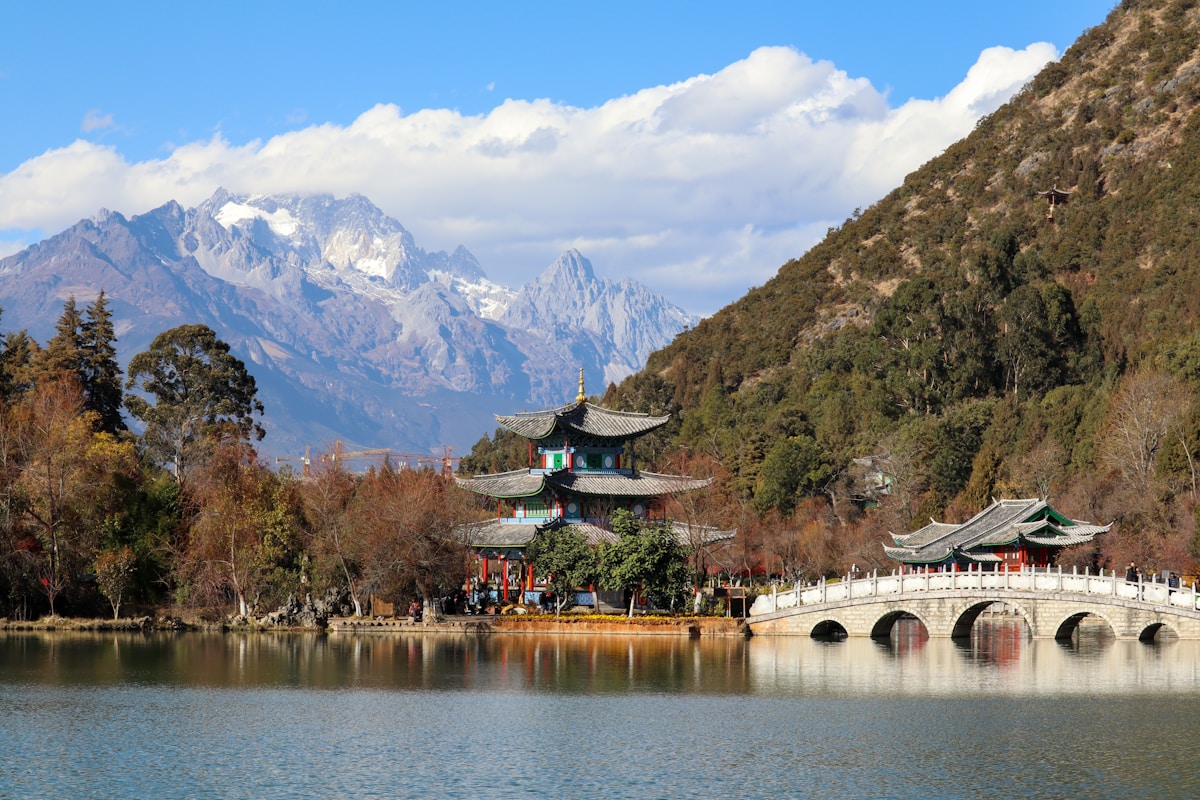
What’s the most sensible way to plan the itinerary?
The classic Yunnan combo is an 8-day, 7-night route through Dali, Lijiang, and Shangri-La. For a smoother trip, fly in and out via Kunming, connect by high-speed rail, and keep the final day relaxed instead of rushing. The key is getting the altitude sequence right. The altitude sequence refers to the order of cities arranged to help your body adjust gradually: Kunming → Dali → Lijiang → Shangri-La.
If you're coming to Yunnan from Singapore or Malaysia, the first big mistake people make usually isn’t the attractions — it’s trying to cram in too much. On paper, fitting Kunming, Dali, Lijiang, and Shangri-La into 8 days sounds packed. However, in reality, if your train connections are planned well, daily travel time can usually stay within 2–3 hours. For this route, the natural rhythm is 8 days and 7 nights: airport pickup in Kunming on day one so you can ease in, then a final day where you can sleep in before your airport transfer. Kunming sits at 1,890 meters, Dali around 1,970 meters, Lijiang 2,400 meters, and Shangri-La 3,300 meters — climbing gradually makes a real difference.
> ⚠️ Pitfall alert: the Xiaohongshu post “I really got scammed in Yunnan” (post with 20,335 likes, @红鲤鱼与绿鲤鱼与驴V) points to a very typical Yunnan issue — roadside touts, bait-and-switch pricing, and last-minute markups. My takeaway just from the title is that these problems mostly happen in loosely arranged independent travel setups with no fixed contract and no clear day-by-day itinerary list. If you’re rushing between sights every day, you simply won’t have the bandwidth to guard against this kind of thing.
If you're planning it yourself, first write out clearly where you'll stay each night, what time you'll leave the next day, and how long the drive or train ride will be. Only then should you decide how many places to visit per day. A lot of people get caught by the classic “it looked close on the map, but it took three hours” problem. Do the first and last days still count as travel days? Yes. On the first evening, you can explore Kunming Old Street or Jinma Biji Archway on your own, and on the last morning, you’ll head to the airport — not a waste at all.
How many days do most people usually spend?
The most common trip length for the classic Yunnan route of Dali, Lijiang, and Shangri-La is 8 days and 7 nights. Too few days and the pace gets exhausting; too many and people often start to feel travel fatigue.
“How many days do most people usually spend?” is one of the most common questions customers ask. Based on our customer inquiries, 8 days and 7 nights is by far the most common answer. It gives you enough time to cover Kunming, Dali, Lijiang, and Shangri-La without making the whole trip feel like a blur. A balanced rhythm looks like this: on day 2, after visiting Dianchi Lake, Haigeng Dam, Yunnan Ethnic Village, and Dounan Flower Market in Kunming, you take the high-speed train to Dali; on day 5, you go up Jade Dragon Snow Mountain via the Glacier Park cable car; on day 7, after Songzanlin Monastery and Napa Lake, you take the train back to Kunming. It flows well.
> ⚠️ Pitfall alert: the Xiaohongshu post “Avoid this! I experienced discrimination at Club Med Lijiang!” (post with 5,273 likes, @是麦麦哦) may be about one specific hotel, but it points to a much broader issue — Yunnan’s tourism scene is uneven, and even big-name hotels don’t automatically guarantee solid service. If you’re booking on your own, search for the hotel name plus terms like “avoid” or “bad experience” on social platforms before you commit. Don’t rely on one post; look at multiple reviews from the past six months.
The downside of making the trip too short is this: some people try to save time by flying straight into Shangri-La at 3,300 meters, then get knocked out by altitude sickness and lose the next few days entirely. The right way to acclimatize is Kunming → Dali → Lijiang → Shangri-La, step by step.
Are tickets and cable cars included?
The one thing you should confirm in advance without fail is the Glacier Park cable car at Jade Dragon Snow Mountain. Ask clearly whether the admission ticket, cable car, and internal park transport are all included, and whether oxygen canisters and down jackets are included too.
According to the customer questions referenced in this article, “Are tickets and cable cars included?” and “Do I need to grab tickets in advance?” are among the most common questions. During peak season, tickets for the main cable car at Jade Dragon Snow Mountain are genuinely hard to get. If you’re trying on your own, you need to hit the booking window exactly right, and they often sell out instantly. The Xiaohongshu post “Jade Dragon Snow Mountain day trip tips 🏔️” (post with 1,804 likes, @🐏) says it all in the title — you can’t just show up and assume you’ll get up the mountain. Getting a cable car ticket is one of the biggest hurdles. And even if you do get a ticket, whether the Glacier Park cable car operates depends on weather, wind conditions, and the queue situation that day.
> ⚠️ Pitfall alert: the Xiaohongshu post “Jade Dragon Snow Mountain Pitfall Guide + Tips” (post with 8,975 likes, @放飞自我) hints at the two most common issues: first, cable car tickets being resold at inflated prices; second, down jackets and oxygen bottles rented at the mountain base costing several times more than they should. If you want to protect yourself, confirm in advance whether the package includes the main cable car, the scenic-area shuttle, oxygen, and a down jacket — and make sure it’s written into the contract in black and white.
### Q&A: Should you book tickets yourself or leave them to a customized tour?
**Q:** Is there any real difference between trying to book Jade Dragon Snow Mountain tickets yourself and asking the driver to help?
**A:** The difference is who carries the responsibility. If you fail to get the tickets yourself, your itinerary has to change on the fly, which can trigger a chain reaction involving trains and hotels. If a customized tour promises the main cable car ticket is included, then securing it is their job. You just need to make sure the contract explicitly says “Glacier Park cable car included.” The Glacier Park cable car reaches 4,506 meters, which is the snowline height most visitors can realistically get to.
Where can you buy local specialties without getting ripped off?
The biggest markup traps are usually “freshly baked rose pastries” and “handmade silverware” in the old towns. If you want local specialties, stick to proper supermarkets or the airport, and avoid roadside stalls in scenic areas claiming to be “historic local brands.”
A fair number of customers ask where to buy local specialties without getting ripped off. Dali Ancient Town, Lijiang Ancient Town, and Dukezong Ancient Town are full of specialty shops, but silver, tea, and Tibetan medicine sold inside tourist zones are often heavily overpriced. The Xiaohongshu post “Yunnan prep guide — avoid these traps” (post with 2,155 likes, @招财猫) uses “avoid traps” in exactly this sense: “handmade silver jewelry” from tourist streets may just be silver-plated, while “wild mushrooms” may actually be greenhouse-grown.
> ⚠️ Pitfall alert: the Xiaohongshu post “Looking back: why I got ripped off so badly in Dali” (post with 4,782 likes, @Lily) suggests just how dense the scam opportunities can be. The best way to protect yourself is simple: before buying, check whether the brand has an official online store and compare prices first. For higher-value items like jade or silver, ask for a proper invoice that clearly states the material.
### Q&A: Which attractions are suitable if you’re traveling with seniors and young kids?
**Q:** If you’re traveling with children aged 3 and 6, plus a 60-year-old parent, is Shangri-La suitable?
**A:** Shangri-La sits at 3,300 meters, so yes — the risk of altitude sickness is genuinely higher for both seniors and young children. Customers often ask “Which attractions are suitable with seniors and children?” and “Where is suitable for kids aged 3 and 6?” Dali is the safer section of the route: Erhai Lake, Xizhou Ancient Town, and Shuanglang all offer gentler sightseeing and are more suitable for families. For Shangri-La, it’s best to consult a doctor in advance and prepare oxygen canisters.
How much does a private car cost for 4 people?
For groups of up to 4, prices start from about SGD 1,310 per person; for groups above 4, from about SGD 1,120 per person. This includes transport, hotels, attraction tickets, cable car tickets, and high-speed rail tickets, but not flights or lunch and dinner.
The single most common pricing question from customers is: “How is the cost of a customized private car tour calculated?” There have been well over 10,000 price-related inquiries. For this 8-day, 7-night route, the quoted rate is RMB 7,000+ per person for groups of up to 4, which works out to about SGD 1,310 per person; for groups above 4, it’s RMB 6,000+ per person, or about SGD 1,120 per person. The bigger your group, the lower the per-person price — because the vehicle and driver costs are fixed, so they’re shared across more people.
**Included:** private vehicle throughout the trip (fully licensed 7-seat business van), 7 nights in highly rated upscale 4-diamond hotels, all attraction admission tickets, the Glacier Park cable car at Jade Dragon Snow Mountain, Songzanlin Monastery admission, Pudacuo National Park admission, and high-speed rail tickets from Kunming to Dali and from Shangri-La to Kunming.
**Not included:** international flights, lunch and dinner throughout the trip (hotel breakfast is included), personal expenses, oxygen canister rental, and Tibetan-style portrait photography.
> ⚠️ Pitfall alert: the Xiaohongshu post “What should’ve been a happy trip turned into getting scammed out of 18,000‼️” (post with 3,719 likes, @舒予|把路走成喜欢的样子) mentions a big amount, but the real issue isn’t that “Yunnan travel is expensive.” It’s last-minute add-on charges. Low-price tours lure you in with a cheap quote, then once you arrive, they start saying this isn’t included and that costs extra. 狸猫旅行 handles this differently: the contract states zero shopping stops and one car per booking — one vehicle serves only one party, with no carpooling and no mixed groups. What about driver hours? Daily vehicle use is based on agreed hours; anything beyond that is discussed with the driver in advance. If it’s clearly explained before departure and written into the contract notes, it’s not a surprise surcharge.
Can you choose your own hotel?
Yes, but changing hotels will affect the quote. The default package uses highly rated upscale 4-diamond hotels, and upgrades or location changes will move the price up or down depending on the hotel tier.
Customers have asked “Does the hotel have a washing machine?” more than 10,000 times, “Can I choose my own hotel?” more than 10,000 times, and “Which hotel is best to stay in?” just as often. The default hotels in the quoted package are highly rated upscale 4-diamond properties. Specific needs — like laundry facilities or family rooms that sleep 3–4 people — can all be confirmed before departure. If you’re traveling with kids, it’s especially worth asking in advance exactly how many people a family room can sleep.
What this is not
**What this is not:** this is not the cheapest trip on the internet, and it’s not for hardcore checklist travelers or ultra-budget backpackers. It doesn’t promise anything beyond a Pure sightseeing experience, and it won’t stuff shopping stops into the itinerary. It’s designed for people traveling with parents, families wanting to show their kids the snow mountains, and groups of friends who don’t want to stress over transport and attraction tickets. People often ask, “Is a Pure sightseeing tour really pure sightseeing?” LiMao’s answer isn’t just words — it’s written into the contract: zero shopping stops, in black and white. If all you care about is chasing the lowest possible price, LiMao probably isn’t for you. If what matters is not having to think through every detail and not worrying about last-minute price hikes, then it’s well worth considering.
Is July a good time to go?
July is the rainy season in Yunnan, but it’s also peak season for escaping the summer heat. Lijiang and Shangri-La usually sits around 15–25°C, so bring a light down jacket and rain gear, and don’t try to push through altitude sickness.
Customers ask fairly often whether July is a good time to go and whether altitude sickness is serious. July marks the rainy season in Yunnan, but because Dali, Lijiang, and Shangri-La all sit at higher elevations, summer temperatures stay comfortable. Shangri-La is at 3,300 meters and Lijiang at 2,400 meters — altitude reactions vary from person to person, but the basics are the same: don’t shower right away, don’t drink alcohol, and don’t run around or overexert yourself. Watching seagulls by Erhai Lake in Dali is more of a winter activity, so if you go in July, focus instead on cycling around the old town, trying tie-dye experiences, and cooling off in the snow mountain area.
---
One final point: the promises that matter are the ones you can verify — zero shopping stops in the contract, one car per booking, and online team support throughout the trip. Those three points are written in black and white into every contract.
Travel with 狸猫旅行 for a smoother, more satisfying trip. The 10 Service Promises are written into the contract, and any breach comes with Double Compensation. That’s not a slogan — it’s a contract clause.
Frequently Asked Questions
Q: Why is our customer satisfaction so high? (A real client question)
Satisfaction comes from three dimensions: First, no deception — Ten Commitments written into the contract, double compensation for any single breach; Second, more value for the same price — structural enhancements (high-speed rail to Jiuzhaigou saving 6 hours on mountain roads, full Duku Highway route, complete Erhai Lake loop, Jade Dragon Snow Mountain Glacier Cableway, first entry at every scenic spot); Third, someone has your back when things go wrong — a travel consultant follows through pre-trip, during, and post-trip; direct management of driver-guides; independent quality inspections; at least one company leader in the group chat.
Q: What are the Ten Commitments? What happens if there's a breach? (A real client question)
Ten Commitments: 1. All-inclusive pricing (no extra payments after arrival) 2. Pure sightseeing, no shopping stops 3. Hotel confirmed upon booking (the hotel name provided is the final accommodation; otherwise upgraded to a better one) 4. The main contract matches all appendices 5. Driver-guide does not solicit tips 6. The vehicle will not be changed during the trip 7. No skipped attractions 8. 500,000 RMB travel accident insurance 9. No subcontracting, no dropping guests mid-tour 10. One booking, one vehicle, no group merging. Breach consequences: Double compensation applies to any breached item (written into the contract; paid upon breach). Problem resolution and compensation are handled independently. For hotel situations, we first attempt to upgrade to a higher standard; if upgrade is impossible, compensation follows the breach terms.
Q: How does the team operate? (A real client question)
Travel Consultant (the person communicating with you — follows through pre-trip, during, and post-trip) + Driver-Guide (is familiar with the preferences of overseas Chinese travelers, on fixed salary, no shopping involvement) + Quality Supervisor (independent audits, not under the sales department) + At least one company leader in the group chat (to make decisions on escalated issues). We don't just hand groups over to driver-guides and step back — the entire chain is in the brand's hands.
---
Key Takeaways
- An 8-day, 7-night route through Kunming, Dali, Lijiang, and Shangri-La is presented as the standard Yunnan plan. The article recommends the altitude order Kunming → Dali → Lijiang → Shangri-La and keeping the last day relaxed rather than packing in more stops.
- The article says many travelers make the mistake of trying to fit too much into 8 days. It advises planning where you will stay each night and checking actual train or drive times before deciding how many places to visit each day.
- For Jade Dragon Snow Mountain, the Glacier Park cable car is the item the article says must be confirmed in advance. It suggests checking whether admission, the cable car, internal park transport, oxygen canisters, and down jackets are included, and notes that cable car availability can be affected by peak-season demand and daily weather or operating conditions.
- The text warns that loosely arranged independent trips can create more risk of roadside touts, bait-and-switch pricing, and last-minute markups. It also says hotel quality can be uneven, so travelers booking on their own should review recent feedback from multiple sources.
Official resources
- Ministry of Culture and Tourism of the People's Republic of China (mct.gov.cn) — the national regulator for licensed travel agencies
- National Immigration Administration (nia.gov.cn) — official entry, exit, and immigration information for mainland China
- Consular Services, Ministry of Foreign Affairs (cs.mfa.gov.cn) — official consular information and travel notices