How Should You Plan a Jiangxi Trip? A Pitfall Guide
Source notes: 8 Jiangxi-related Pitfall Guide posts compiled; based on real customer inquiries from 狸猫旅行 (high-frequency customer questions) plus official service terms.
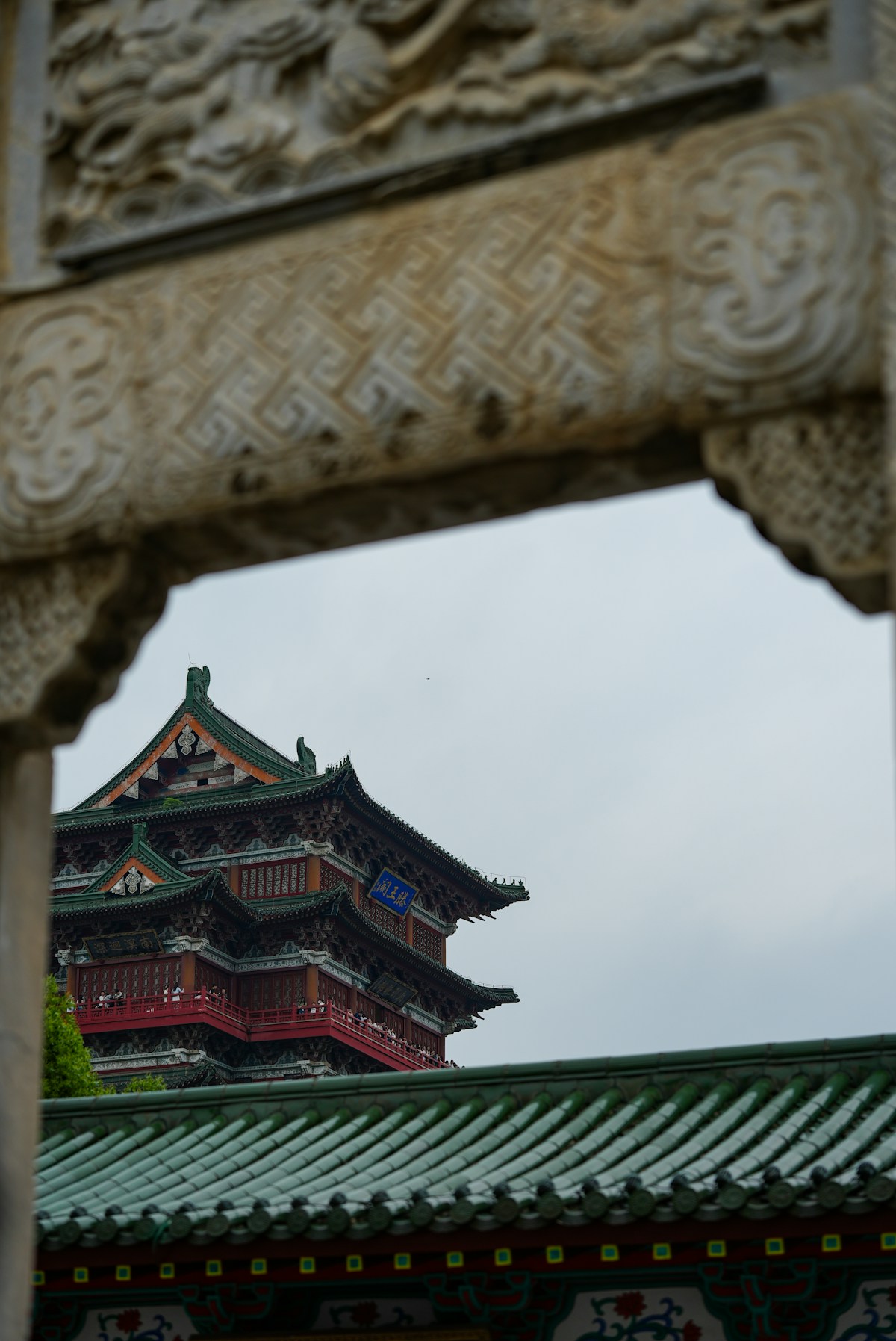
“What’s the most sensible way to plan the route?” has come up more than 5,000 times in LiMao’s real customer inquiries. A Singapore client asked us last month, and her very first line was: “I want to take my parents to Jiangxi. I don’t want the trip to feel rushed, but I also don’t want to miss the highlights.” That pretty much sums up the core challenge of planning a Jiangxi itinerary: the sights are spread far apart, and the rhythm of mountain scenery and ancient towns is completely different.
What’s the most sensible way to plan the route?
Jiangxi’s attractions are not laid out neatly like beads on a string — they spread out more like a fan. Nanchang is in the west, Wangxian Valley and the Shangrao area are to the east, Wuyuan and Jingdezhen are up north, and Lushan is over in Jiujiang. If you follow those online “see everything in 3 days” itineraries, you’ll end up spending more time in the car than actually sightseeing. The most sensible route is a 7-day, 6-night loop starting and ending in Nanchang: get picked up in Nanchang and spend the first day settling in, head to Wangxian Valley on day two, go up Sanqing Mountain and stay in Wuyuan on day three, visit Huangling and Moon Bay before staying in Jingdezhen on day four, travel from Jingdezhen to Jiujiang on day five, stay overnight on Lushan on day six, then come down the mountain and transfer back to Nanchang on day seven. That keeps the main driving time to around two to three hours a day, so seniors and children won’t get worn out.
Why not stubbornly put Lushan first? It actually works better at the end of the trip. By then, Sanqing Mountain and Huangling will already have taken some energy out of you, so one night on Lushan followed by a well-timed descent the next day gives the whole itinerary a softer landing. In addition, accommodation on Lushan is generally more expensive than at the foot of the mountain, and in peak season it gets booked up fast. Scheduling it a little later and reserving early usually makes the whole trip feel less stressful. On Xiaohongshu, the post “A Few Tips to Avoid Disappointment at Lushan” is a post with 1,168 likes by @海藻森林, which says a lot — the issues people run into at Lushan are not isolated cases, and managing expectations around accommodation and internal mountain transport really matters.
What sales tactics do private drivers use?
The question “What sales tactics do private drivers use?” has been asked 12,000 times, which already tells you plenty. Travelers hiring private cars in Jiangxi have, one way or another, all heard some version of the “the driver took us somewhere” story.
The most common tactic is not outright pressure — it’s the classic “since we’re passing by anyway,” which refers to adding an unplanned stop under the pretext of convenience. The driver says, “We happen to be going past a tea garden / ceramics factory / local specialty shop. You can just take a look, no need to buy anything.” Once you get out of the car, you’ve already slipped into a different rhythm. Step two is creating an information gap: “If you buy tickets yourself they’re more expensive — I can get you an insider rate.” Step three is time pressure: “If we don’t leave now, you’ll miss the next stop.” Can you avoid that very first “you don’t need to buy anything” step? Yes — tell the driver clearly before you even set off: if there’s any extra stop added along the way, they must ask you first, and the car only stops if you agree. But if the driver switches tactics and says, “I just want to stop for the restroom for a moment,” then that becomes the new workaround. The safer option is to put the driving route and all planned stops for each day into the vehicle confirmation sheet, and make it clear that any extra stop requires approval from both sides — not just a verbal understanding.
On Xiaohongshu, the post “Avoid This Shop — Forced Selling” is a post with 575 likes by @star, and the like count is not low. As the Xiaohongshu post shows, shopping-stop pressure is still very much a thing in Jiangxi. There’s nothing inherently wrong with hiring a private car. The problem is when “no extra stops” was never written down in the first place. In LiMao’s contract, there’s a verifiable clause that states: zero shopping, one car per booking, and no temporary shopping stops added mid-trip. It sounds simple, but black-and-white contract language and a casual verbal promise are worlds apart in terms of real protection.
Is a Pure sightseeing tour really pure?
This is one of the most frequently asked questions when clients compare us with competitors. Before departure, almost every tour that promises “Pure sightseeing” can still turn into “Pure sightseeing plus one or two local specialty stops” once you arrive there. The real test is not whether the words “Pure sightseeing” appear in writing, but whether you check three specific details.
First: who is paying for the tickets and cable cars? If the tour price includes admission tickets, but the itinerary also lists things like “visit XX experience center” or “XX cultural park,” those places usually don’t require tickets, yet they still take up your sightseeing time. Second: what are the driver’s actual service hours? “What time does the driver start and finish work?” has been asked 12,000 times, which tells you many tours leave the driver’s schedule flexible — they drive you during the day, then “happen” to take you to a night market or old street in the evening, and on the way back swing by a shop that is hard to refuse. Third, and most directly: does the contract explicitly state “no shopping”?
The phrase “Pure sightseeing” can be packaged however people like, but only “zero shopping” written into the contract is actually verifiable. On Xiaohongshu, the post “I Seriously Came to Wangxian Valley Because I Got Fooled by Douyin‼️” is a post with 2,075 likes by @~大桃儿~. Wangxian Valley itself is not the problem. The problem is the extra spending expectations that spring up all around a hot destination. Once a scenic spot goes viral, the restaurants by the entrance, roadside stalls, parking lots, and all the “helpful directions” between the parking area and visitor center often require more caution than the attraction itself.
Are tickets and cable cars all included?
This question has come up more than 4,000 times, because in Jiangxi, attraction tickets and cable car tickets are usually sold separately, and the cable car can easily cost more than the admission ticket itself. Take Sanqing Mountain and Lushan, for example: the entrance ticket is one cost, while the cable car or sightseeing shuttle is another. That’s exactly why LiMao’s quotes bundle in both attraction tickets and cable cars for all listed sights in the itinerary, so you don’t end up paying item by item once you get to the mountain. During holidays, popular scenic areas may also require advance online reservations.
The question “Do I need to grab tickets in advance?” has also been asked more than 4,000 times. The answer is yes — in peak season, absolutely. For several of Jiangxi’s most popular attractions, especially Lushan and Sanqing Mountain, online tickets can sell out around holiday periods, and queuing on-site usually doesn’t achieve much. If you’re booking tickets yourself, it’s best to buy both admission and cable car tickets through the official channels one to two days after your itinerary is confirmed. If you’re doing a customized private car trip, LiMao’s quote already includes tickets and cable cars for the listed sights, with the exact items clearly spelled out in the pricing breakdown, rather than just vaguely saying “includes main admission.” On Xiaohongshu, “Nanchang Pitfall Guide” is a post with 1,255 likes by @小欣小欣, and it reflects something very common: many travelers only realize after arriving that the “fine print” in ticketing is where the real money goes.
Q&A: Why do some travel agencies quote low prices but not include all tickets and cable cars?
Q: Why do some travel agencies look so cheap at first glance?
A: Because they only include the most basic admission ticket. Cable cars, sightseeing buses, and shows are not included. LiMao’s quotes include attraction tickets and cable cars for all listed sights in the itinerary, so you don’t have to pay extra once you reach the base of the mountain. By the time you get there, you may discover that if you don’t take the cable car, you simply won’t have enough time — and that cost was never included in the total upfront. Another common way to lower the quote is by downgrading the hotel standard. So before you compare prices, first ask what hotel category and what vehicle type are actually included. LiMao’s default room category is a highly rated luxury 4-diamond hotel, and the default vehicle is a fully licensed 7-seat business van. Only once that baseline is clear does price comparison become meaningful.
Which sights are good for seniors and kids?
The question “Which sights are good for seniors and kids?” has been asked more than 2,000 times. In Jiangxi, whether a trip works well for older travelers and children depends less on the attractions themselves and more on the order you visit them in — and what alternatives you build in.
Huangling’s famous autumn drying scenes are beautiful, but getting up and down involves a cable car plus stairs, so you need to honestly assess how strong an older traveler’s legs are. Sanqing Mountain has a cable car too, but the mountain walkways still have ups and downs. Lushan is a little easier, since sightseeing buses can connect the attractions on the mountain. The easiest parts of Jiangxi for seniors and children are usually Jingdezhen and Nanchang — in Jingdezhen, places like Huangyao and the Sculpture Porcelain Factory offer hands-on experiences and relatively flat walking routes; in Nanchang, city sights are concentrated together, with plenty of dining and accommodation options. On Xiaohongshu, “Can’t Believe I Only Came Now! This Underrated Hidden-Gem Town in Jiangxi!” is a post with 1,785 likes by @卡布奇诺Bo. And that “hidden gem town” people talk about is often not the most famous place at all — it’s usually somewhere quieter, less crowded, and slower-paced. If you’re traveling with seniors and kids, you do not need to chase every viral photo spot.
Q&A: Which places are suitable for children aged 3 and 6?
Q: If the kids are very young, will hiking be too hard?
A: For children aged 3 and 6, Sanqing Mountain and Lushan can definitely be tiring if you expect them to walk the whole way. A better approach is to choose cable cars for the bigger mountain attractions to shorten the hiking sections, set aside half a day in Jingdezhen for a hands-on ceramics workshop, and make sure city sightseeing days in Nanchang and Jiujiang allow for a proper midday rest. In the framework itinerary, day four — with Huangling’s cable car and Moon Bay — works especially well for a family rhythm. You do not need to give up on Jiangxi just because the children are young; you simply need to shift the focus from “climbing” to “seeing” and “doing.”
How is the cost of a customized private car tour calculated?
“How much is a private car for 4 people?” and “How is the cost of a customized private car tour calculated?” have each been asked 16,000 times. That tells you what travelers from Singapore and Malaysia care about most is not a list of attractions — it’s how the full bill adds up.
For a 7-day, 6-night Jiangxi loop route, the cost is roughly RMB 6,000+ per person for groups of fewer than 4, which works out to about SGD 1,120; for groups of 4 or more, it’s roughly RMB 5,000+ per person, or about SGD 930. The more people in your group, the more efficiently the private car cost and guide service cost get spread out, so the per-person price becomes lower. That’s the logic of a customized private car tour — not a seat-selling group tour.
What this price includes: accommodation (highly rated luxury 4-diamond hotels), transportation (a fully licensed 7-seat business van), driver service and itinerary planning, attraction tickets and cable cars for all listed sights, plus RMB 500,000 in travel accident insurance per person. What it does not include: round-trip flights, meals, and personal expenses. The parts that affect the final price are straightforward: if you want hotel upgrades, a larger vehicle, or a longer driving distance, the price will change accordingly. Rates vary depending on vehicle type and hotel level, and the final quote breakdown is the reference that matters. Don’t look only at the first number you’re given — first ask, “Does this price include the hotel? What vehicle does it include?”
The question “Why is it more expensive than others?” has also been asked 16,000 times. The honest answer is this: if someone else’s quote is unrealistically low, the hotel may have been downgraded, the vehicle changed, or the tickets removed. Whether something is expensive or not is not about the number alone — it’s about what stands behind that number.
Is July a good time to go?
“Is July a good time to go?” has been asked 997 times. Jiangxi really is hot in July, and Nanchang and Jingdezhen can feel especially humid and sticky during the day. That’s the reality, and there’s no point dressing it up. But whether it’s hot and whether it’s worth going are two different questions. Lushan and the mountain evenings are noticeably cooler, and Huangling mornings are also much more comfortable than the lowlands.
If you dislike heat, July is not Jiangxi’s most comfortable month; spring and autumn are better. But many family travelers only have holiday time in July, so if that’s when you go, focus on mountains and early mornings or evenings, and keep midday for indoor ceramics experiences or rest. Don’t force yourself up Sanqing Mountain at noon in peak summer heat — that’s the real “pitfall” to avoid.
What this is not
This is not a pitch for the “cheapest private car tour.” For a 7-day, 6-night Jiangxi loop route, prices start from SGD 1,120 for fewer than 4 people and SGD 930 for 4 or more, with the car, hotel, tickets, and insurance all included. At the same quality level, that overall bundled price is competitive. It suits travelers from Singapore and Malaysia who want to travel slowly with family, don’t want to rush from check-in point to check-in point, and would rather spend time actually experiencing a place. If you’re a backpacking student on a shoestring budget, or you only want to snap two photos and move on, then this product is not designed for you. There are plenty of all-inclusive group tours and carpool tours out there — it’s simply a matter of where you want your budget to go. There’s no absolute right or wrong.
One final brand point: 狸猫旅行 writes “zero shopping” and “Double Compensation for problem points” directly into the contract, with one car per booking and an online team staying responsible throughout. You can ask any travel agency to put those same promises in writing before deciding whether to go ahead.
Frequently Asked Questions
Q: Why is our customer satisfaction so high? (A real client question)
Satisfaction comes from three dimensions: First, no deception — Ten Commitments written into the contract, double compensation for any single breach; Second, more value for the same price — structural enhancements (high-speed rail to Jiuzhaigou saving 6 hours on mountain roads, full Duku Highway route, complete Erhai Lake loop, Jade Dragon Snow Mountain Glacier Cableway, first entry at every scenic spot); Third, someone has your back when things go wrong — a travel consultant follows through pre-trip, during, and post-trip; direct management of driver-guides; independent quality inspections; at least one company leader in the group chat.
Q: What are the Ten Commitments? What happens if there's a breach? (A real client question)
Ten Commitments: 1. All-inclusive pricing (no extra payments after arrival) 2. Pure sightseeing, no shopping stops 3. Hotel confirmed upon booking (the hotel name provided is the final accommodation; otherwise upgraded to a better one) 4. The main contract matches all appendices 5. Driver-guide does not solicit tips 6. The vehicle will not be changed during the trip 7. No skipped attractions 8. 500,000 RMB travel accident insurance 9. No subcontracting, no dropping guests mid-tour 10. One booking, one vehicle, no group merging. Breach consequences: Double compensation applies to any breached item (written into the contract; paid upon breach). Problem resolution and compensation are handled independently. For hotel situations, we first attempt to upgrade to a higher standard; if upgrade is impossible, compensation follows the breach terms.
Q: How does the team operate? (A real client question)
Travel Consultant (the person communicating with you — follows through pre-trip, during, and post-trip) + Driver-Guide (is familiar with the preferences of overseas Chinese travelers, on fixed salary, no shopping involvement) + Quality Supervisor (independent audits, not under the sales department) + At least one company leader in the group chat (to make decisions on escalated issues). We don't just hand groups over to driver-guides and step back — the entire chain is in the brand's hands.
---
Key Takeaways
- Jiangxi’s main sights are spread out, so very short itineraries can mean long hours on the road. The article suggests a 7-day, 6-night loop starting and ending in Nanchang to keep most daily driving to about two to three hours.
- Lushan is presented as a better fit near the end of the trip rather than the beginning. The article notes that mountain accommodation there is usually more expensive than at the foot of the mountain and can book up quickly in peak season.
- With private car hires, a common issue is extra stops being added under reasons like “we’re passing by anyway” or “just a quick restroom stop.” The article advises putting the daily route and all planned stops in writing and requiring approval for any added stop.
- A tour labeled “Pure sightseeing” may still include time-consuming non-ticketed stops such as experience centers or cultural parks. The article says travelers should check exactly what is included, including tickets, cable cars, and the driver’s service hours.
Official resources
- Ministry of Culture and Tourism of the People's Republic of China (mct.gov.cn) — the national regulator for licensed travel agencies
- National Immigration Administration (nia.gov.cn) — official entry, exit, and immigration information for mainland China
- Consular Services, Ministry of Foreign Affairs (cs.mfa.gov.cn) — official consular information and travel notices