How to Plan a 6-Day Shanghai Trip? East China Pitfall Guide Q&A (Based on 149 Posts)
Source: 149 real Xiaohongshu Pitfall Guide posts collected by 狸猫旅行 for East China routes + real customer inquiries
“What’s the most sensible way to plan the itinerary?” (5,000+ times)
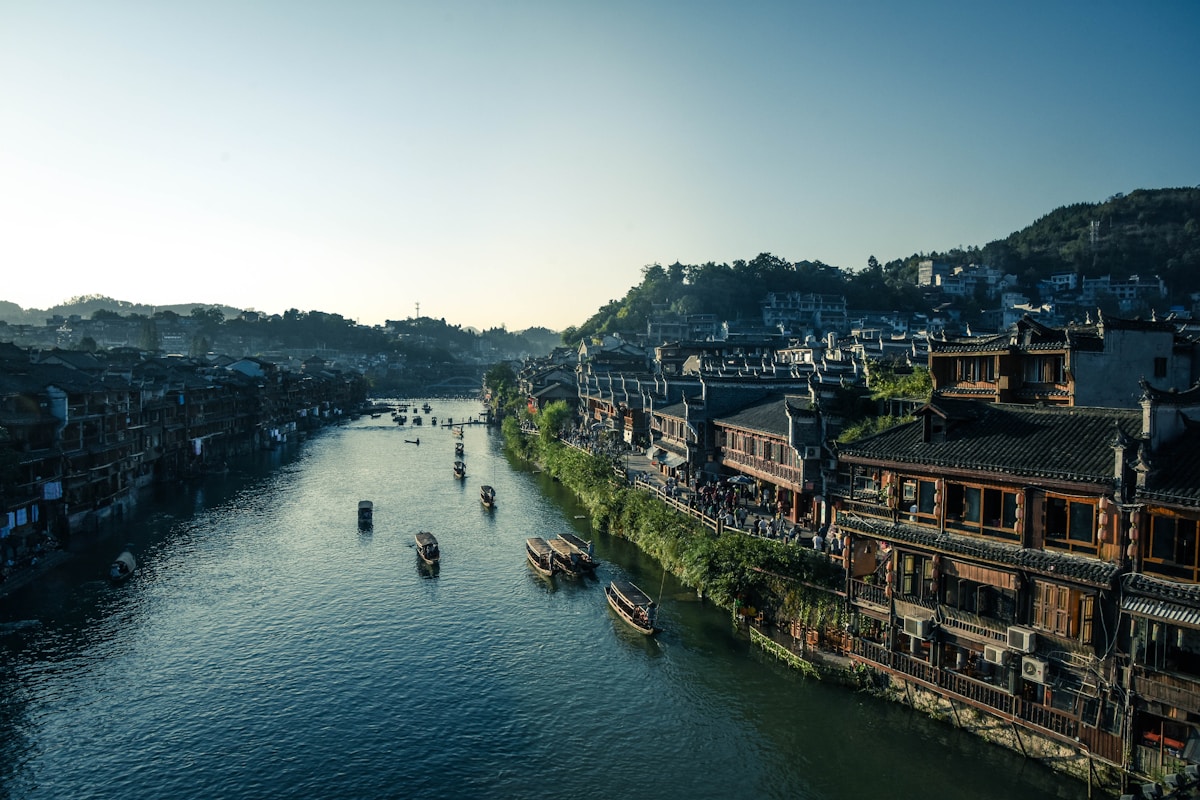
The five major East China cities cover a wide area, and each one has its own pace: Suzhou’s classical gardens, Wuzhen’s water-town atmosphere, Hangzhou’s West Lake, and Shanghai’s urban energy. If it’s your first time visiting from Singapore or Malaysia, it’s easy to try to cram in too much. A more sensible approach is to stay at least one night in each place, leave enough time for the old-town night views, and follow a loop like “Shanghai → Suzhou → Wuzhen → Hangzhou → Shanghai” so you’re not backtracking.
However, a lot of popular itineraries on travel platforms promise three cities in one day. It sounds efficient, but in reality you’re just hopping off the bus for photos at each stop. A popular Xiaohongshu post on Shanghai travel mistakes shows that many people only seek advice after having a bad experience. When an East China travel post gets hundreds of likes on Xiaohongshu, it usually means the issues it highlights are widespread.
**Step 1:** If the itinerary shows more than two cities in the same day, rule it out immediately.
**Step 2:** Can bad operators get around that? Absolutely. They’ll tell you, “The high-speed rail between cities is fast, you can make it.” But what you really need to look at is how long you’ll actually spend at each attraction, not just how fast the transfer is. Ask them to write the exact number of hours for each stop into the itinerary. If they won’t, it’s usually a rushed tour in disguise.
**Step 3:** If they say, “We can’t make it that detailed,” then ask them to write “no less than 2 hours at each attraction” into the contract. If they can’t even do that, don’t consider it.
In addition, water towns are another major pitfall. Many people treat Wuzhen as just a quick stop “on the way,” but visiting as part of a daytime tour group usually leads to a poor experience. Travelers frequently note the massive gap in experience between different old towns around Hangzhou. Choosing the wrong old town can affect your trip even more than choosing the wrong city. Wuzhen is worth staying overnight for—the real magic is in the evening and early morning, when the crowds thin out.
Suzhou’s gardens are the same story. As other travelers on Xiaohongshu have pointed out, a key rule applies across East China: timing matters even more than which attraction you choose. On public holidays, Lion Grove Garden gets so packed that you can barely see the rockeries. Your best bet is to enter with the first batch of visitors, shoot your photos before the tour groups arrive, and leave early.
“How many days do most people usually spend?”
A lot of clients ask, “Is 6 days enough?” What they really mean is, “Can I properly see Shanghai, Suzhou, and Hangzhou in 6 days?” The answer is that 6 days is enough, but it will feel rushed. What we usually arrange is 7 days and 6 nights: arrive in Shanghai and check in on Day 1, get dropped off at the airport on Day 7 based on your flight time, with the 5 days in between serving as your full sightseeing days. One client asked us directly: “Do Day 1 and Day 7 include sightseeing too?” If you arrive early on Day 1, you can take a walk along the Bund. If your flight is late on Day 7, you can do a little exploring before heading out. But we don’t schedule formal sightseeing on those days, because once flights are involved, it’s hard to enjoy sightseeing properly.
“How is the cost of a custom private car tour calculated?” (10,000+ times)
Price-related questions come up more than anything else. One client asked us directly about private car customization costs.
What this is not
This is not a whirlwind checklist of photo stops. A whirlwind checklist of photo stops refers to a rushed itinerary focused on brief visits for photos rather than meaningful sightseeing. A 6-day plan is about rhythm—2 days in the city, 2 days in the surrounding area, and 2 flexible days—not trying to squeeze in eight attractions in one day. Disneyland should be the only major activity planned for that day, rather than being crammed into the same day as downtown sightseeing.
When this isn’t a good fit
If you want an extreme speed-run style trip where you hit the Bund, Disneyland, and Zhujiajiao all in one day, then this plan is not for you. The whole point of spending 6 days is to slow the pace down.
Roughly how much should you budget for 6 days in Shanghai?
The starting price, quoted in SGD, is about SGD 380 per person per day for groups of fewer than 4, and about SGD 320 per person per day for groups of 4 or more. This includes the vehicle, driver-guide, hotel, admission tickets, and RMB 500,000 travel accident insurance. Disneyland tickets and cable car fees are listed separately based on actual cost. International flights are not included.
Travel with 狸猫旅行 for a higher level of satisfaction. Every promise is written into the contract—zero shopping stops, one vehicle per booking, and Double Compensation for any problem point. If we fail to deliver, compensation is paid according to the contract.
Frequently Asked Questions
Q: Why is our customer satisfaction so high? (A real client question)
Satisfaction comes from three dimensions: First, no deception — Ten Commitments written into the contract, double compensation for any single breach; Second, more value for the same price — structural enhancements (high-speed rail to Jiuzhaigou saving 6 hours on mountain roads, full Duku Highway route, complete Erhai Lake loop, Jade Dragon Snow Mountain Glacier Cableway, first entry at every scenic spot); Third, someone has your back when things go wrong — a travel consultant follows through pre-trip, during, and post-trip; direct management of driver-guides; independent quality inspections; at least one company leader in the group chat.
Q: What are the Ten Commitments? What happens if there's a breach? (A real client question)
Ten Commitments: 1. All-inclusive pricing (no extra payments after arrival) 2. Pure sightseeing, no shopping stops 3. Hotel confirmed upon booking (the hotel name provided is the final accommodation; otherwise upgraded to a better one) 4. The main contract matches all appendices 5. Driver-guide does not solicit tips 6. The vehicle will not be changed during the trip 7. No skipped attractions 8. 500,000 RMB travel accident insurance 9. No subcontracting, no dropping guests mid-tour 10. One booking, one vehicle, no group merging. Breach consequences: Double compensation applies to any breached item (written into the contract; paid upon breach). Problem resolution and compensation are handled independently. For hotel situations, we first attempt to upgrade to a higher standard; if upgrade is impossible, compensation follows the breach terms.
Q: How does the team operate? (A real client question)
Travel Consultant (the person communicating with you — follows through pre-trip, during, and post-trip) + Driver-Guide (is familiar with the preferences of overseas Chinese travelers, on fixed salary, no shopping involvement) + Quality Supervisor (independent audits, not under the sales department) + At least one company leader in the group chat (to make decisions on escalated issues). We don't just hand groups over to driver-guides and step back — the entire chain is in the brand's hands.
---
Key Takeaways
- A sensible East China loop is Shanghai → Suzhou → Wuzhen → Hangzhou → Shanghai, with at least one night in each place to avoid backtracking and leave time for evening old-town views.
- The article advises ruling out itineraries that put more than two cities in one day, and checking how many hours are actually allocated to each attraction rather than focusing only on transfer speed.
- Six days is enough for Shanghai, Suzhou, and Hangzhou, but it will feel rushed; the article says 7 days and 6 nights usually allows a more comfortable pace and keeps the overnight stay in Wuzhen.
- Wuzhen is described as better for an overnight stay because the best atmosphere is in the evening and early morning, and timing also matters in Suzhou’s gardens, which can get very crowded on public holidays.
- For a 6-day Shanghai trip, the article gives starting budgets of about SGD 380 per person per day for groups under 4 and about SGD 320 for groups of 4 or more, with Disneyland tickets, cable car fees, and international flights not included.
Official resources
- Ministry of Culture and Tourism of the People's Republic of China (mct.gov.cn) — the national regulator for licensed travel agencies
- National Immigration Administration (nia.gov.cn) — official entry, exit, and immigration information for mainland China
- Consular Services, Ministry of Foreign Affairs (cs.mfa.gov.cn) — official consular information and travel notices