Do You Need Travel Insurance for a Trip to China? What Does It Actually Cover? Pitfall Guide (Based on Frequently Asked Customer Questions)
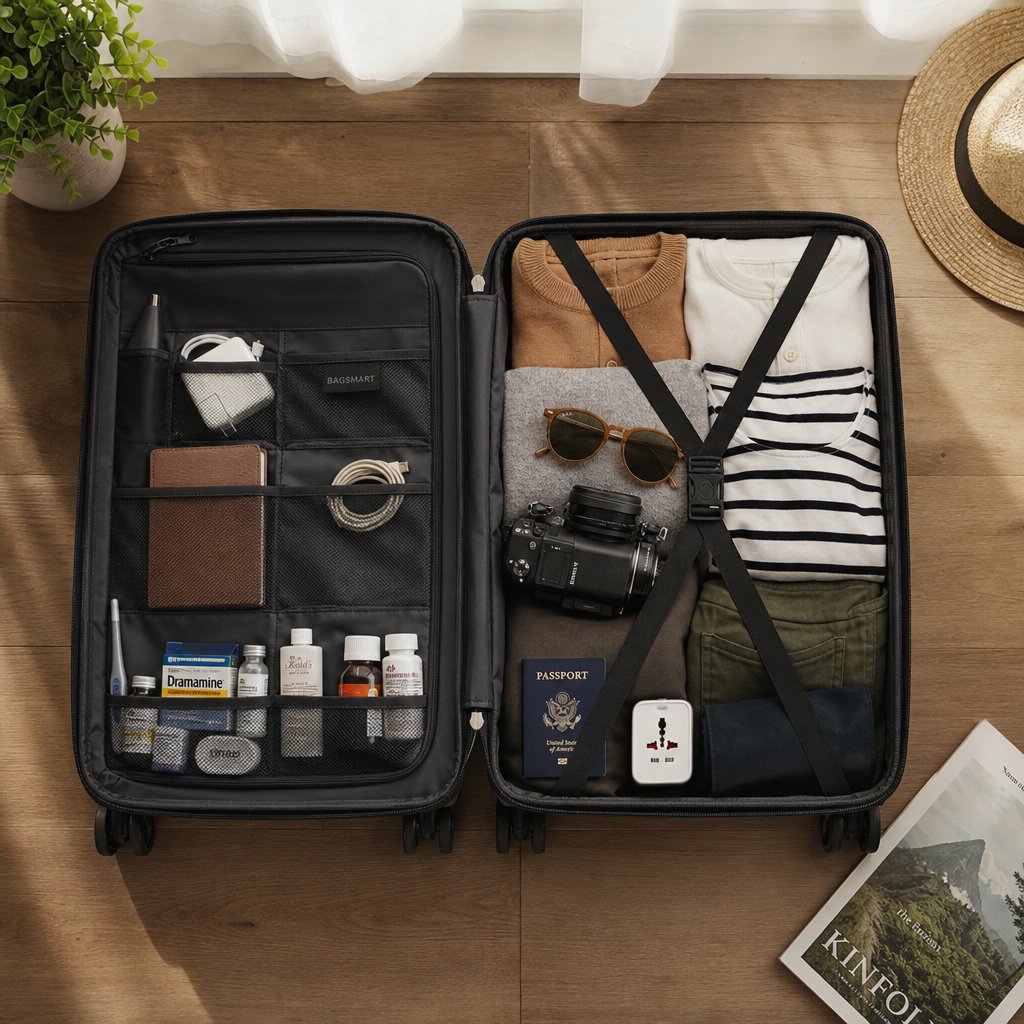
Real customer inquiries from 狸猫旅行, based on the most common client questions, covering pricing, insurance, contracts, transportation, and more.
Client question: “What exactly does the insurance cover?” — Many people only ask whether there is insurance, not what it actually pays for
Insurance is not just about being handed a receipt. The scope of coverage refers to what the insurance actually pays for: does it only cover third-party liability, or does it also cover your own trip cancellation, sudden illness, and lost belongings? Many travelers from Singapore and Malaysia assume that if they join a tour, everything is automatically covered. However, in reality, most basic liability policies do not include personal medical expenses or baggage loss. In LiMao’s quotes, each traveler is covered by travel accident insurance with a payout limit of RMB 500,000, which covers personal accidents during the trip and is already included in the tour price at no extra charge. That said, accident insurance does not cover losses such as trip cancellation, lost luggage, or emergency medical treatment due to sudden illness, so we recommend buying an additional commercial travel insurance policy to fill those gaps. LiMao will not make payout promises on behalf of an insurance company, but the scope of the insurance coverage will be clearly written into the contract. This is one of the most frequently asked trust-related questions, which shows that people care a lot about it but often do not know the details.
Q: Should I buy my own insurance too?
A: The answer is yes: we recommend it. The RMB 500,000 travel accident insurance per person is already included in LiMao’s quote, but trip cancellation, personal belongings, and emergency medical treatment for sudden illness are not covered under that policy. It’s a good idea to add your own commercial travel insurance, especially if you’re traveling with seniors or children.
Client question: “Is a Pure sightseeing tour really pure?” — Don’t just trust the label; ask how “Pure sightseeing” is defined
“Pure sightseeing” is one of the things travelers from Singapore and Malaysia care about most, but different agencies may define it very differently. Some so-called Pure sightseeing tours simply mean there is no forced shopping, while still including stops at “specialty stores” or “shopping breaks at rest stops.” Others may charge extra for internal park transport or cable cars. LiMao clearly states zero shopping in the contract, and each half-day on the itinerary is marked to show whether any shopping stops are included, so you know the nature of every stop in advance.
Here’s a simple three-step Pitfall Guide: if the itinerary says “Pure sightseeing,” ask directly whether it includes any shopping stops, hidden charges, or internal transportation fees. If the answer is vague, ask to have it written into the contract in black and white. If the contract does not include a zero-shopping clause, move on to another agency.
Client question: “What sales tricks do private-car drivers use?” — The more enthusiastically a driver recommends a place, the more cautious you should be
Drivers or guides will often suggest taking you “along the way” to certain restaurants, souvenir shops, jade stores, or other places, sometimes using lines like “there’s a government subsidy” or “locals get a discount here.” LiMao evaluates its drivers and strictly forbids them from changing the itinerary without authorization or recommending unapproved spending stops. If you encounter a driver taking a detour or making hard-sell recommendations, you can report it immediately in the group chat and our team will handle it online.
To protect yourself further: if a driver says, “Locals eat here—it’s cheap and authentic,” ask first, “Is this on the itinerary?” If they say, “You don’t have to buy anything, just have a look,” you should still firmly say, “I’m not going.” If they continue to take a detour, take photos or make a recording and contact the service manager directly. LiMao operates on a one-vehicle, one-booking basis.
Client question: “Can I see the business license and tourism permit?” — If they say no, you can usually rule them out right away
The basic rule is that any legitimate travel agency should be able to show its licenses. LiMao allows clients to review copies of its business license and travel permit. If the other party refuses and says things like “it’s an internal document” or “it’s inconvenient,” proceed with caution. Many travelers from Singapore and Malaysia are visiting China for the first time and are unfamiliar with how local travel agencies are qualified, which makes it easy to be swayed by verbal promises alone.
Client question: “Do I need to sign a contract before joining?” — No amount of verbal promises beats a written contract
Many travelers are told during the inquiry stage, “Don’t worry, no need to sign a contract—we’re a big company.” In fact, the opposite is true. LiMao insists on signing the contract before payment. The contract clearly states service standards, insurance responsibilities, refund terms, and the zero-shopping promise. That way, if any dispute comes up later, everything is backed by documentation.
Q: What if the contract does not mention insurance compensation?
A: Ask for it to be added. If a travel agency will not even put insurance responsibilities into the contract, you will have even less protection when it comes time to file a claim. The contract is your first line of defense.
What this is not
狸猫旅行 is not the best fit for backpackers or checklist-style travelers: we are not a bargain-basement group tour company, and we do not promise the “lowest price on the internet.” We are not offering a zero-shopping trip as a vague verbal assurance—we put the zero-shopping promise into the contract. And we are not an insurance company, so we cannot promise the outcome of any claim.
Pricing and what’s included / not included (subject to the actual quote details)
Prices vary depending on group size, vehicle type, hotel standard, and how spread out your destinations are. There are two pricing tiers: for fewer than 4 travelers, prices start at about SGD 380 per person per day; for 4 or more travelers, prices start at about SGD 320. The final rate is subject to the detailed quote provided by your travel consultant. What is usually included: transportation within the itinerary and driver service, itinerary planning and service coordination, standard twin rooms or basic room types at hotels (if accommodation is part of the product), and first-entry tickets for some attractions (depending on the product). What is usually not included: round-trip flights to and from China, visa fees, personal expenses, meals not specified in the agreement, internal park transportation or cable cars, and overtime vehicle charges. (The RMB 500,000 travel accident insurance per person is already included; commercial travel insurance is optional and should be purchased separately if desired.)
Extra pricing notes (two SGD price tiers and what’s included / not included)
Real customer inquiries from 狸猫旅行, based on the most common client questions. The two pricing tiers refer to “fewer than 4 travelers” and “4 or more travelers”: for fewer than 4 travelers, prices start at about SGD 380 per person per day; for 4 or more, prices start at about SGD 320. The final rate is subject to the detailed quote provided by your travel consultant. Included: transportation within the itinerary and driver service, itinerary planning and service coordination, standard twin rooms or basic room types at hotels (if accommodation is part of the product), and first-entry tickets for some attractions (depending on the product). Not included: round-trip flights to and from China, visa fees, personal expenses, meals not specified in the agreement, internal park transportation or cable cars, and overtime vehicle charges. (The RMB 500,000 travel accident insurance is already included; commercial travel insurance is an optional add-on.)
Client question: “What’s a sensible way to plan the itinerary?” — Don’t pack every single day to the brim
Itinerary-related questions come up all the time. Many first-time visitors to China want to hit every famous sight, but the result is often nonstop rushing from place to place, which is especially exhausting for seniors and children. LiMao plans the pace according to your group size and energy level. We do not push “marathon-style” itineraries, and we will also tell you clearly which arrangements are not suitable for seniors or kids.
Client question: “Which attractions are suitable if I’m traveling with seniors and kids?” — Not every viral spot works for the whole family
Many attractions require long walks or long waits in line, which can be tough when you’re traveling with seniors and children. When planning, LiMao notes the walking intensity for each attraction, whether there is barrier-free access, and the expected queue time, so you do not arrive and only then realize the site is too demanding.
Here’s a three-step Pitfall Guide: first ask, “How long is the walk from the parking area to the main sightseeing zone?” Then ask, “Are there stairs or steep slopes?” If they cannot answer clearly, ask to see recent real photos or reviews. If you are still unsure, the safest option is to plan only one main attraction for the day and leave plenty of time to rest.
One last thing: 狸猫旅行 puts zero shopping into the contract, operates on a one-vehicle, one-booking basis, and has an online team responsible for handling issues in real time. Those are three things you can verify directly.
Travel with LiMao for a higher-satisfaction trip—we only promise things you can verify: the 10 Service Promises are written into the contract, and problem points qualify for Double Compensation.
Frequently Asked Questions
Q: Is there travel insurance? (A real client question)
Yes. Each person receives 500,000 RMB travel accident insurance, included in the trip cost — no extra payment needed. Policy information is delivered along with the itinerary plan.
Q: What are the Ten Commitments? What happens if there's a breach? (A real client question)
Ten Commitments: 1. All-inclusive pricing (no extra payments after arrival) 2. Pure sightseeing, no shopping stops 3. Hotel confirmed upon booking (the hotel name provided is the final accommodation; otherwise upgraded to a better one) 4. The main contract matches all appendices 5. Driver-guide does not solicit tips 6. The vehicle will not be changed during the trip 7. No skipped attractions 8. 500,000 RMB travel accident insurance 9. No subcontracting, no dropping guests mid-tour 10. One booking, one vehicle, no group merging. Breach consequences: Double compensation applies to any breached item (written into the contract; paid upon breach). Problem resolution and compensation are handled independently. For hotel situations, we first attempt to upgrade to a higher standard; if upgrade is impossible, compensation follows the breach terms.
Q: Do I need a visa to visit China? (A real client question)
Many passport holders can enter China visa-free for 30 days. Before departure, our travel consultant provides online guidance on filling out the arrival card to ensure smooth entry. If there are special circumstances, the travel consultant will inform you of required documents in advance.
Q: Why is our customer satisfaction so high? (A real client question)
Satisfaction comes from three dimensions: First, no deception — Ten Commitments written into the contract, double compensation for any single breach; Second, more value for the same price — structural enhancements (high-speed rail to Jiuzhaigou saving 6 hours on mountain roads, full Duku Highway route, complete Erhai Lake loop, Jade Dragon Snow Mountain Glacier Cableway, first entry at every scenic spot); Third, someone has your back when things go wrong — a travel consultant follows through pre-trip, during, and post-trip; direct management of driver-guides; independent quality inspections; at least one company leader in the group chat.
Q: How does the team operate? (A real client question)
Travel Consultant (the person communicating with you — follows through pre-trip, during, and post-trip) + Driver-Guide (is familiar with the preferences of overseas Chinese travelers, on fixed salary, no shopping involvement) + Quality Supervisor (independent audits, not under the sales department) + At least one company leader in the group chat (to make decisions on escalated issues). We don't just hand groups over to driver-guides and step back — the entire chain is in the brand's hands.
---
Key Takeaways
- The article says travelers should look beyond whether a tour has insurance and check what it actually covers. In LiMao’s quote, travel accident insurance with a payout limit of RMB 500,000 per person is included, but it does not cover trip cancellation, lost luggage, or emergency medical treatment for sudden illness.
- Because of those gaps, the article recommends buying your own commercial travel insurance as additional protection, especially when traveling with seniors or children. It also says the insurance scope should be written clearly into the contract rather than relying on verbal statements.
- The article warns that the term “Pure sightseeing” can mean different things at different agencies. Travelers are advised to ask whether there are any shopping stops, hidden charges, or internal transportation fees, and to have any zero-shopping promise written into the contract.
- It also notes that private-car drivers may recommend restaurants or shops as if they are convenient or discounted, so travelers should check whether a stop is actually on the itinerary. If a driver makes an unauthorized detour or hard-sell recommendation, the article advises documenting it and contacting the service manager.
- Finally, the article says a legitimate travel agency should be able to show its business license and tourism permit. If an agency refuses to provide these and only gives verbal assurances, the article says travelers should be cautious.
Official resources
- Ministry of Culture and Tourism of the People's Republic of China (mct.gov.cn) — the national regulator for licensed travel agencies
- National Immigration Administration (nia.gov.cn) — official entry, exit, and immigration information for mainland China
- Consular Services, Ministry of Foreign Affairs (cs.mfa.gov.cn) — official consular information and travel notices