How to Plan 7 Days in Xi’an Without Getting Ripped Off: A Pitfall Guide (Based on 163 Posts)
Source note: The tips in this Pitfall Guide are compiled from 163 real Xiaohongshu posts about Xi’an, covering the questions people ask most about pricing, hotels, transportation, itineraries, tickets, shopping, and more. Price data comes from 狸猫旅行 Xi’an custom private-car tour quotes, and question frequency comes from real customer inquiries.
What’s the most sensible way to plan the itinerary?
The most sensible plan for covering Xi’an city, the eastern route, and Mount Hua is 7 days and 6 nights at a comfortable pace. At this pace, it won't feel rushed, and you can still see the key highlights. The question clients ask most often is: “What’s the most sensible itinerary?” It comes up all the time.
**The first pitfall is poorly planning your arrival and departure days.** A lot of people assume there’s nothing to do on the day they land or the day they fly out, but in Xi’an, many attractions aren’t restricted by flight schedules. If you arrive before noon, you can still spend the afternoon strolling around the City Wall or the Giant Wild Goose Pagoda area. If your return flight is in the evening, you can still fit in one smaller attraction that morning. Don’t leave both days completely empty, but don’t overpack them either. On arrival day, one easy city stop is enough.
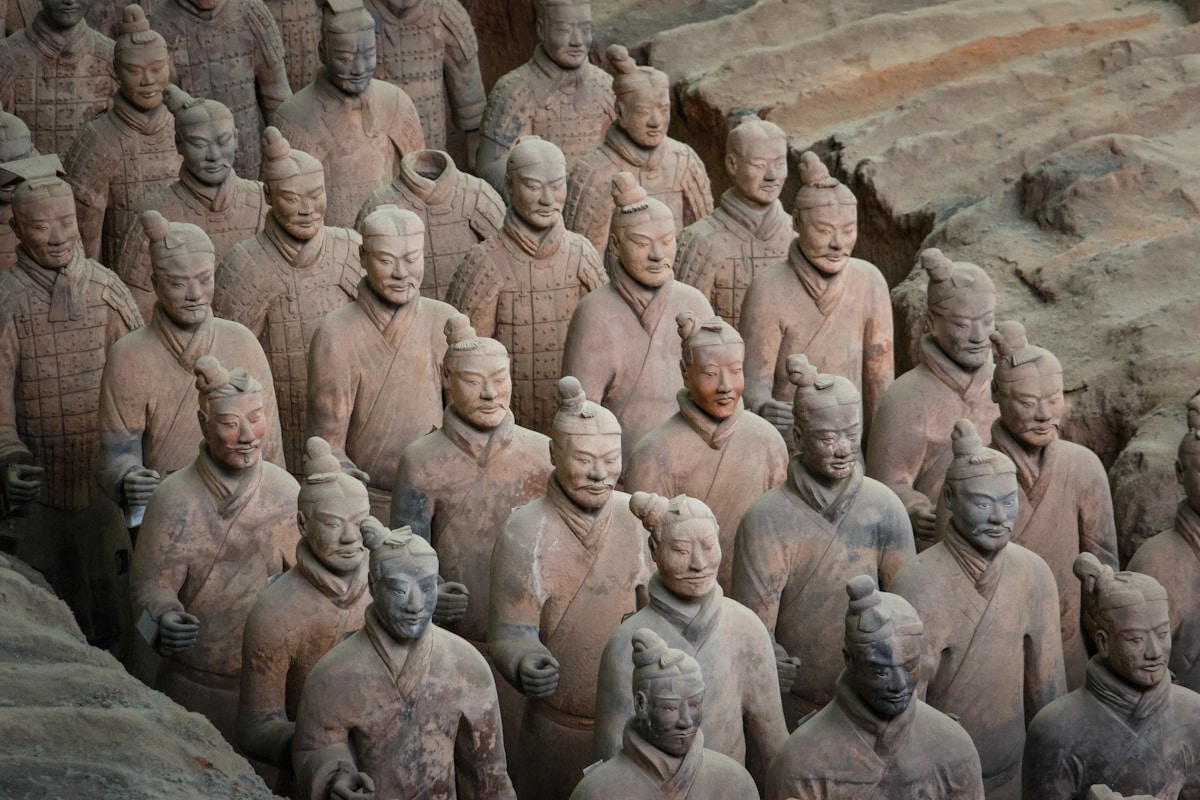
**The second pitfall is getting the order of your itinerary wrong.** The eastern route refers to the main sightseeing direction east of central Xi’an, including the Terracotta Army and Huaqing Palace. Mount Hua is also east of Xi’an, but in a different direction. The best way to plan it is to visit the Terracotta Army and Huaqing Palace on the same day, and give Mount Hua a full day of its own. Don’t force Mount Hua and the Terracotta Army into one day—you won’t enjoy either properly. A solid itinerary framework would be: Day 1 arrival and hotel check-in; Day 2 Terracotta Army + Huaqing Palace; Day 3 Shaanxi History Museum + Giant Wild Goose Pagoda + Great Tang All Day Mall; Day 4 City Wall + Beilin Museum + Yongxingfang; Day 5 Mount Hua; Day 6 Tang Paradise + Small Wild Goose Pagoda or Xi’an Museum + Qujiang Pool Heritage Park; Day 7 airport transfer and departure.
**The third pitfall is failing to get a ticket for the Shaanxi History Museum.** It’s free, but advance reservations are required, and in peak season it’s hard to get one. If you put it in your itinerary without booking ahead, chances are you won’t get in that day. Check the official release times before your trip. If you can’t reserve a spot, pivot early to the Xi’an Museum or the Archaeology Museum instead so you don’t waste a day. A Xiaohongshu post titled “Don’t Go to Xi’an Blind: A Handwritten Pitfall-Avoidance Guide” (post with 251 likes, @king图书) also warns about reservations and itinerary planning. The most common lesson in the comments is simple: “We got there and couldn’t get in.”
What sales tactics do private-car drivers use?
People ask about private-car drivers a lot, and what clients care about most is: “Do they use sales tactics?” Honestly—yes. And it’s not just private-car services; plenty of independent travelers run into the same thing.
**The first tactic is: “I’ll take you somewhere cheaper.”** For example, if you take a taxi to the Terracotta Army, the driver may tell you, “It’s super crowded there today—let me take you to another underground palace / imitation historical site instead. It’s cheaper and just as good.” The logic is simple: real Terracotta Army tickets have fixed prices, but imitation attractions come with commissions. A Xiaohongshu post titled “The Fake Terracotta Army Scam in Xi’an Is Wild” (post with 1,040 likes, @lalala孙孙) says it right in the title. The easiest way to avoid this scam is to stick to your original plan if the driver tries to change your destination. Can they get around that? Yes—they’ll say, “It’s also a legitimate attraction.” Your next move is to remember the full official name of the place you’re visiting, check the destination in your map app, and do not get out until you’ve arrived at the real site.
**The second tactic is: “I can help you buy tickets.”** A driver or a “helpful” person on the street may offer to buy tickets for you. That may mean inflated prices, or you may end up with bundled tickets or performance tickets you never wanted. Watch out for seemingly legitimate guide services that operate outside official attraction channels. A Xiaohongshu post titled “The most legitimate official guides for the Terracotta Army are here!!!” (post with 4,344 likes, @Ms.x) shows just how much demand there is for legitimate guides. The official way to book a guide is at the attraction’s official guide counter or audio-guide service point—not through people soliciting at the gate. Better yet, when you buy your ticket, ask staff directly: “Where do I book the official guide?” and ignore every outside recommendation.
**The third tactic is: “Let’s stop by a specialty shop on the way.”** A private-car driver might say it’s “a friend’s shop” or a “government-designated shop.” Places like that often sell tea, jade, and local specialties at heavily inflated prices. The simplest way to deal with this is to put the itinerary in writing before the trip and state clearly: “No shopping stops outside the itinerary.” If the driver still takes you there, you can stay in the car or refuse outright. If zero shopping is written into the contract, that’s a verifiable promise—not just a verbal assurance.
How much does a private car cost for 4 people? Why is it more expensive than others?
The most common topic people ask about is price, and clients are very direct: “How much is a private car for 4 people?” and “How is the cost of a custom private-car tour calculated?”
Xi’an custom private-car tours are not priced as a flat one-size-fits-all package. Based on 狸猫旅行’s Xi’an 7-day, 6-night quote, it’s about RMB 6,000+ per person for groups of up to 4 people (about SGD 1,120), and about RMB 5,000+ per person for groups larger than 4 (about SGD 930). The more people in your group, the lower the per-person cost. This quote assumes highly rated upscale 4-diamond hotels and a properly licensed 7-seat business vehicle.
**What’s included:** vehicle + driver + fuel + tolls + parking, hotel stay with breakfast, itinerary planning, airport pickup and drop-off, and the attraction tickets and cable car tickets listed in the itinerary. **What’s not included:** lunch and dinner, plus personal expenses. Clients ask all the time, “Are the entrance tickets and cable car tickets included?” The answer is yes—both are included in the quote, with exact items confirmed line by line by your travel consultant before departure.
**Why is it more expensive than others?** If you’re only comparing the vehicle rate, there will always be cheaper options on the market. The extra cost usually comes down to hotel standard, how new the vehicle is, whether “zero shopping” is actually real, and whether the team stays responsive throughout the trip. A 2019 vehicle and a 2025 vehicle can differ a lot in price. A driver who takes you to shopping stops and a driver bound by a zero-shopping contract also come with different costs. The key question isn’t “Who is cheaper?” but “What exactly has the cheaper one cut out?” You can ask directly: “Does the contract clearly state zero shopping? How is driver overtime charged? Can the hotel names be listed in advance?” The more detailed your questions, the easier it is to see where the hidden compromises are.
Which attractions are best for seniors and kids?
Questions about who a trip is suitable for are also very common. The most specific ones we hear are: “Which places are suitable for a 3-year-old and a 6-year-old?” and “Which attractions work well when traveling with seniors?”
Xi’an attractions that are friendly for both seniors and children include: the City Wall (mostly flat, with bikes and electric carts available), Giant Wild Goose Pagoda Square (open space, no climbing needed), Tang Paradise (easy walking), and the Shaanxi History Museum (indoors, though crowds can be heavy). Mount Hua should be approached with caution. Seniors and a 3-year-old should not attempt the more physically demanding sections beyond the cable car routes. Taking the West Peak cable car up, looking around nearby, and then coming back down is doable—but don’t attempt routes like the Plank Walk in the Sky. Mount Hua’s highest point is about 2,155 meters, so for seniors the main challenge is stamina and knee strain, not altitude sickness.
Xi’an city itself sits at roughly 400 meters above sea level, so you do not need to worry about altitude sickness. Clients ask environmental questions like “Is altitude sickness serious there?” quite often, but for Xi’an the answer is simple: altitude sickness is not an issue. In July, the real challenge is the heat, so sun protection and staying hydrated matter far more.
Where can you buy local specialties without getting scammed?
Shopping is another high-frequency topic. The principle for buying local specialties is the same as booking a private car: don’t let yourself get diverted by “it’s on the way anyway.” Muslim Quarter and Yongxingfang both have snacks and local specialties with clearly marked prices, and the biggest price differences are usually in the packaging. Loose items sold by weight are usually better value than boxed gift sets, though you do need to think about packaging and shelf life if you’re taking them home. Don’t buy jade, antiques, or calligraphy from mobile stalls outside scenic spots. Those aren’t Xi’an specialties—they’re just “tourist specialties.” A Xiaohongshu post titled “There Is One Way to Avoid the Xi’an Shopping Trap” (post with 1,226 likes, @秋梨膏🎰) exists for a reason: lots of people only start looking for solutions after they’ve already been burned. The safer move is to ask clearly about price and return/refund rules before you buy.
What this is not
This is not a guide for ultra-budget backpackers. A 7-day, 6-night custom private-car trip, starting from SGD 1,120 per person for groups of up to 4 people, is better suited to travelers who want a smoother experience, are traveling with family, and don’t want to spend energy fighting for tickets or figuring out transport. If you’re happy staying in hostels, taking buses, and organizing everything yourself, this article can still help you avoid pitfalls—but the product itself may not be the right fit for you. This is also not a rushed checklist-style trip. The pace of 7 days and 6 nights is designed to cover the key highlights without wearing you out, not the kind of schedule where you “do” eight attractions in one day.
Seasonal notes
Clients often ask, “Is July a good time to go?” It’s a common question. Xi’an is very hot in July, so outdoor attractions that involve lots of walking—like the Terracotta Army, the City Wall, and Huaqing Palace—are best scheduled for the morning. Save museums for the afternoon, or head back to the hotel for a rest. Sun protection and hydration are more important than anything else.
Q&A
A: Yes. In peak season, both the Shaanxi History Museum and the Terracotta Army should be reserved ahead of time through official channels. Ticket-related questions come up constantly, and failing to get tickets is one of the most common ways a Xi’an trip goes wrong.
A: Yes—and you absolutely should ask. Trust-related questions are very common. A legitimate custom private-car tour provider should be able to show you its licenses and contract. The contract should clearly spell out zero shopping, vehicle details, and the hotel list—those are all things you can verify.
In Xi’an, most travel pitfalls are not in the sights themselves, but in those moments when you feel too awkward to say no. What 狸猫旅行 can do is put zero shopping in the contract, assign one vehicle per booking with no mixed groups, and stay fully responsible and reachable throughout the trip—these aren’t just talking points; they’re all written down in black and white.
Travel with 狸猫旅行 for a higher-satisfaction trip—we only make promises you can verify: the 10 Service Promises are written into the contract, and problem points come with Double Compensation.
Frequently Asked Questions
Q: Why is our customer satisfaction so high? (A real client question)
Satisfaction comes from three dimensions: First, no deception — Ten Commitments written into the contract, double compensation for any single breach; Second, more value for the same price — structural enhancements (high-speed rail to Jiuzhaigou saving 6 hours on mountain roads, full Duku Highway route, complete Erhai Lake loop, Jade Dragon Snow Mountain Glacier Cableway, first entry at every scenic spot); Third, someone has your back when things go wrong — a travel consultant follows through pre-trip, during, and post-trip; direct management of driver-guides; independent quality inspections; at least one company leader in the group chat.
Q: What are the Ten Commitments? What happens if there's a breach? (A real client question)
Ten Commitments: 1. All-inclusive pricing (no extra payments after arrival) 2. Pure sightseeing, no shopping stops 3. Hotel confirmed upon booking (the hotel name provided is the final accommodation; otherwise upgraded to a better one) 4. The main contract matches all appendices 5. Driver-guide does not solicit tips 6. The vehicle will not be changed during the trip 7. No skipped attractions 8. 500,000 RMB travel accident insurance 9. No subcontracting, no dropping guests mid-tour 10. One booking, one vehicle, no group merging. Breach consequences: Double compensation applies to any breached item (written into the contract; paid upon breach). Problem resolution and compensation are handled independently. For hotel situations, we first attempt to upgrade to a higher standard; if upgrade is impossible, compensation follows the breach terms.
Q: How does the team operate? (A real client question)
Travel Consultant (the person communicating with you — follows through pre-trip, during, and post-trip) + Driver-Guide (is familiar with the preferences of overseas Chinese travelers, on fixed salary, no shopping involvement) + Quality Supervisor (independent audits, not under the sales department) + At least one company leader in the group chat (to make decisions on escalated issues). We don't just hand groups over to driver-guides and step back — the entire chain is in the brand's hands.
---
Key Takeaways
- For a 7-day Xi’an trip that includes the city, the eastern route, and Mount Hua, the article says 7 days and 6 nights is a comfortable pace. It recommends using arrival and departure days for light sightseeing if timing allows, rather than leaving both days completely empty.
- The suggested route is to visit the Terracotta Army and Huaqing Palace on the same day, while giving Mount Hua a full separate day. The article warns not to combine Mount Hua and the Terracotta Army into one day.
- A key planning risk is the Shaanxi History Museum, which is free but requires advance reservation and can be hard to book in peak season. If you cannot reserve it, the article advises switching early to Xi’an Museum or the Archaeology Museum instead.
- The article says private-car drivers and others may use sales tactics such as redirecting visitors to imitation attractions, offering to buy tickets, or adding shopping stops. It advises travelers to confirm the official attraction name, buy guide services only through official counters or service points, and put 'no shopping stops' in writing before the trip.
Official resources
- Ministry of Culture and Tourism of the People's Republic of China (mct.gov.cn) — the national regulator for licensed travel agencies
- National Immigration Administration (nia.gov.cn) — official entry, exit, and immigration information for mainland China
- Consular Services, Ministry of Foreign Affairs (cs.mfa.gov.cn) — official consular information and travel notices