Beijing Travel Guide
Where Beijing is, when to go, how to get there, how much it costs, what to see, what to eat — a complete guide for global overseas Chinese travelers. No marketing fluff—just practical, actionable travel advice.
Where Is Beijing
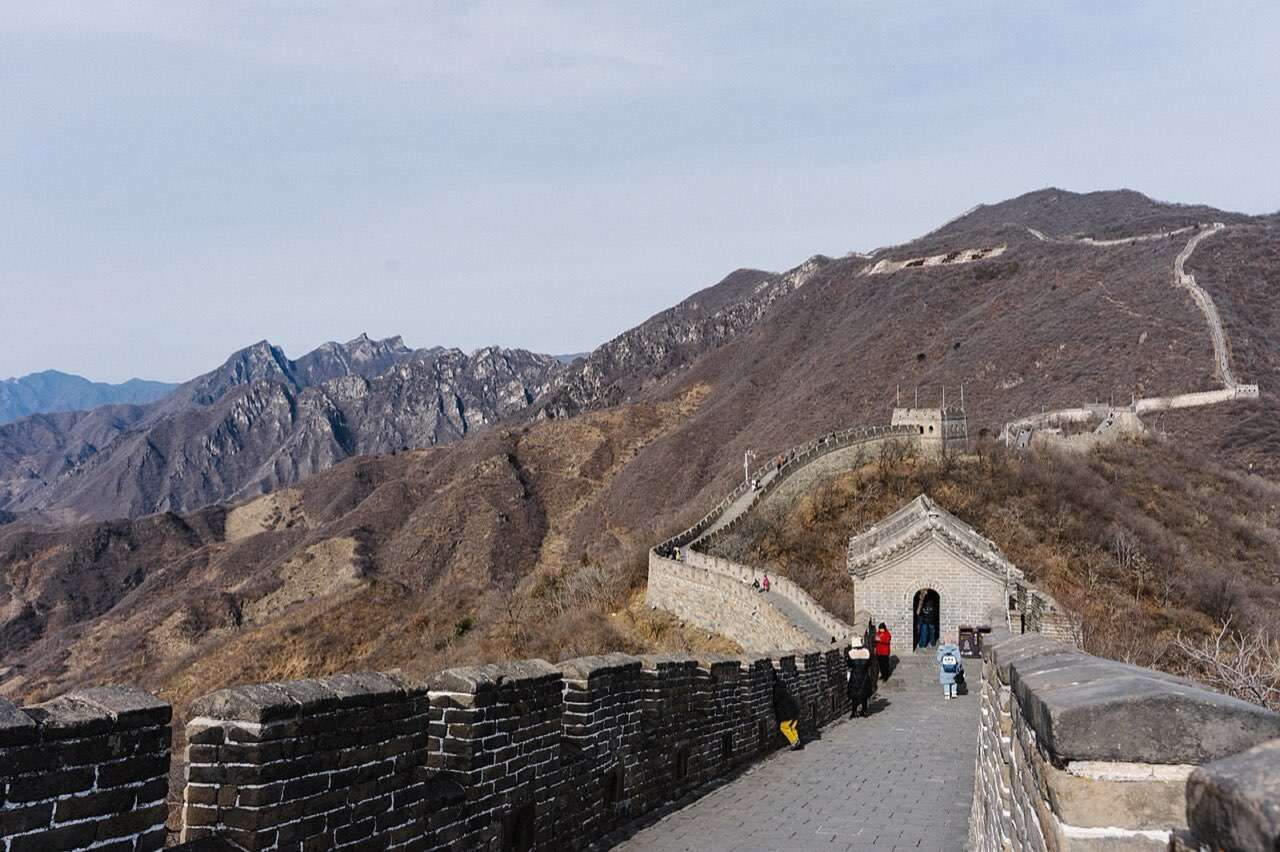
Beijing is China's capital, located at the northern end of the North China Plain. As the ancient capital of six dynasties, Beijing is home to landmarks such as the Palace Museum, the Great Wall, and the Summer Palace—there's nowhere else quite like it.
Location & Geography
Beijing lies at the northern end of the North China Plain, covering 16,400 km² and home to a resident population of 21.89 million. Bordered by the Yan Mountains to the north and the Taihang foothills to the west, it opens southeast onto the North China Plain. Beijing is China's political and cultural center and one of the cities with the highest number of UNESCO World Heritage sites — the Palace Museum, Great Wall, Summer Palace, Temple of Heaven, Zhoukoudian Peking Man Site, Ming and Qing Imperial Tombs, and the Grand Canal — seven World Heritage sites in a single city.
A trip to Beijing naturally follows the Central Axis: starting from the Temple of Heaven in the south, passing through Qianmen–Tiananmen Square–Palace Museum–Jingshan–Drum Tower, and ending at the Olympic Park (Bird's Nest, Water Cube) in the north. The Great Wall lies about 70 km north of the city center (Mutianyu) or 60 km (Badaling). The Summer Palace and Old Summer Palace are in the western suburbs. Yonghe Temple and the Confucius Temple sit within the North 2nd Ring Road. This Central Axis forms the framework of a Beijing itinerary — a 7-day itinerary follows it without backtracking.
Why Beijing Is Worth Visiting
Beijing holds China's greatest concentration of truly unforgettable experiences:
- Palace Museum — The largest and best-preserved imperial palace complex in the world, with 9,071 rooms, home to 24 emperors across the Ming and Qing dynasties
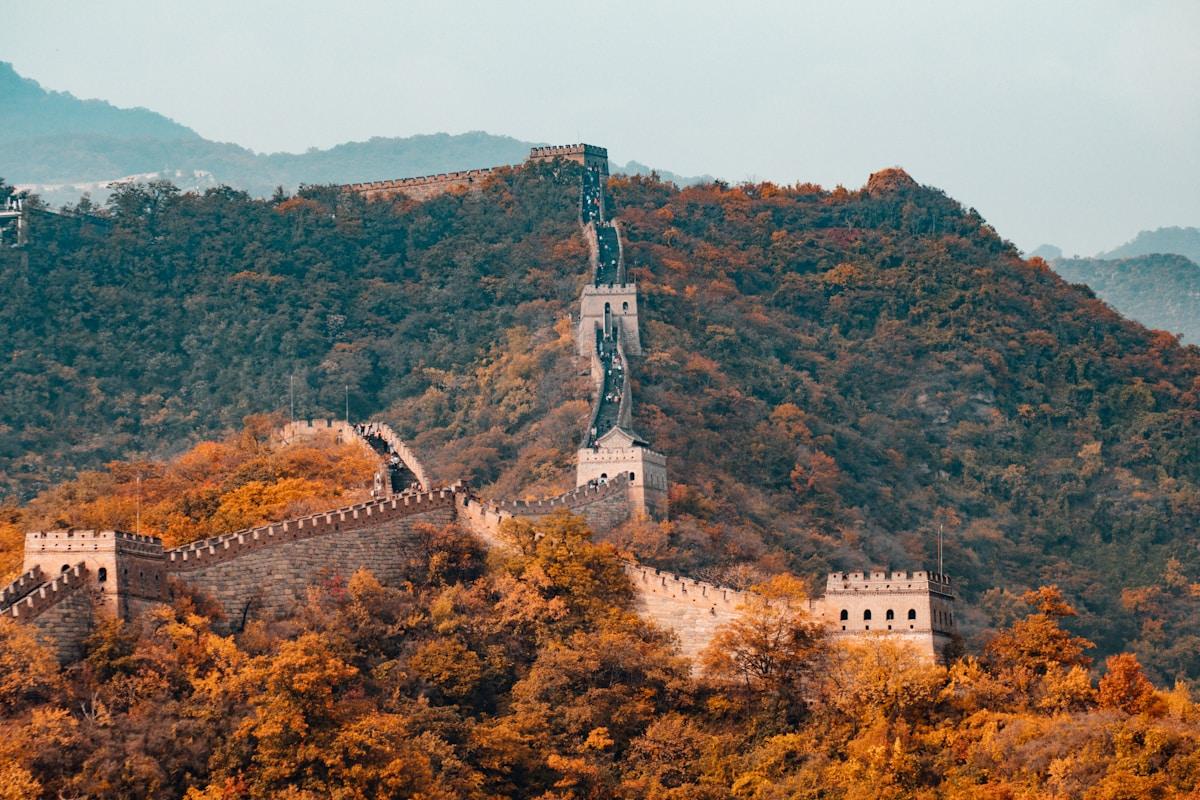
- Great Wall — One of the Seven Wonders of the World. The Mutianyu section is well-preserved, less crowded, scenically stunning, and has a cable car — ideal for families
- Summer Palace — China's best-preserved imperial garden, with the 728-meter Long Corridor adorned with over 14,000 painted scenes
- Temple of Heaven — Where Ming and Qing emperors worshipped heaven; the Echo Wall's acoustic marvel still amazes today
- Hutongs — Wudaoying and Shichahai, where the atmosphere of old Beijing still lingers — not the commercialized Nanluoguxiang
- National Museum — China's national museum, home to the Simuwu Ding and Four-Ram Square Zun — the finest national treasures of Chinese civilization
For overseas Chinese travelers from Singapore and Malaysia, Beijing's unique value lies in being the very core of Chinese civilization — the Palace Museum is not just a tourist attraction but a tangible symbol of 600 years of imperial power; the Great Wall is not just a wall but a physical testament to 2,000 years of Chinese history and frontier defense. Direct flights from Singapore/KL to Beijing take 4.5–6 hours, a manageable journey. Beijing is also the natural first stop for global Chinese travelers visiting China — strong cultural affinity, no language barrier, and excellent infrastructure.
Best Travel Seasons
Beijing has four distinct seasons, with spring and autumn being the best. Here's a month-by-month breakdown:
| Month | Temperature Range | Landscape Features | Rating |
|---|---|---|---|
| Mar–Apr | 5–18°C | Spring blooms, Yuyuantan cherry blossoms | ★★★★★ |
| May | 13–27°C | Blue skies and fragrant locust blossoms | ★★★★★ |
| Jun–Aug | 22–35°C | Summer holiday peak, occasional heat waves | ★★★ |
| Sep–Oct | 10–25°C | Crisp autumn air, Fragrant Hills red leaves | ★★★★★ |
| Nov | 2–14°C | Early winter chill, golden ginkgo leaves | ★★★★ |
| Dec–Feb | -5–5°C | Cold but few tourists; Palace Museum snow scenery is breathtaking | ★★★ (Winter) |
Bottom line: April–May and September–October are the best times to visit Beijing — sunny, comfortable temperatures, blossom or red leaf season. July–August is crowded and hot. November's golden ginkgo leaves are also beautiful. December–February, though cold, offers the Palace Museum in snow and the Great Wall in winter — a distinct charm, with fewer people and lower prices. Avoid the May Day and National Day Golden Weeks — extremely crowded.
What to Prepare Before You Leave
Visas, clothing, gear, ticket reservations — the biggest challenge when visiting Beijing is getting tickets.
Visa & Documents
Singapore passport holders: visa-free entry to China for up to 30 days, no advance application needed. Make sure your passport is valid for at least six months.
Malaysia passport holders: visa-free entry to China for up to 30 days (subject to 2026 policy). If your trip exceeds 30 days, apply for a visa in advance. Check the latest policy before traveling.
Beijing: There are no additional restrictions for foreign visitors — same as Shanghai or Guangzhou. All hotels can accommodate foreign guests — we verify accommodation for foreign guests in advance. The Tiananmen Square area occasionally has temporary restrictions (e.g., diplomatic events); our travel consultant checks notices ahead of time and adjusts the order.
Carry your passport with you at all times: Scenic areas and hotel check-ins require your passport. Tiananmen Square security checks require ID. It's advisable to carry a photocopy as backup.
Ticket Reservations — Beijing's Biggest Pitfall
Nearly all major Beijing attractions require advance reservations — this is the biggest difference from Yunnan or Xinjiang:
- Palace Museum — Daily cap of 80,000 visitors; during peak season tickets must be booked 7 days in advance and often sell out instantly
- National Museum — Also requires advance booking; tickets are extremely hard to get during peak season
- Tiananmen Square — Requires reservation at least 1 day in advance; same-day entry is not permitted
- Chairman Mao Memorial Hall — Requires advance booking; limited opening hours
- Temple of Heaven, Summer Palace, Yonghe Temple — On-site tickets available but advance online booking is still recommended
Industry common trick: Travel agencies promise "all tickets included" but don't guarantee availability — upon arrival they say "bookings are full" and switch to "exterior view of the Palace Museum." Or they use group tickets but you queue 3–4 hours during peak season. Our approach: The travel consultant handles booking 7 days in advance — all travelers' passport information is pre-entered and we're ready the moment tickets are released. During the off-season (November–March) booking is generally smooth. If we genuinely can't secure Palace Museum tickets during peak season — we refund the ticket fee and upgrade you to a free in-depth Prince Gong's Mansion guided tour (2.5 hours). You won't leave empty-handed.
Clothing Checklist
Beijing has four distinct seasons — prepare accordingly:
- Spring/Autumn (Apr–May, Sep–Oct): Light jacket + long-sleeve T-shirts; cool mornings and evenings around 15°C, daytime 22–25°C
- Summer (Jun–Aug): Mainly short sleeves; bring a sun hat and SPF50+ sunscreen; occasional 35°C highs
- Winter (Dec–Feb): Long down coat, thermal underwear, wool hat, scarf, gloves — temperatures drop to -5 to -10°C
- Shoes: A good pair of walking shoes — the Palace Museum involves 3–4 hours of walking, and the Great Wall requires walking even after the cable car
- Accessories: Sunglasses (sun can be harsh even in autumn/winter), face mask (occasional haze or dust storms)
Special note: Indoor heating in Beijing is very strong (20–25°C in winter) while it's freezing outside — dress in layers for easy on-and-off. The Palace Museum and Great Wall have no storage for large luggage; travel light on the day.
Gear Checklist
- Sun protection: SPF50+ sunscreen, UV400 sunglasses, sun hat — UV is strong even in spring and autumn
- Medication: Cold medicine (temperature swings in winter–spring can cause chills), stomach medicine (diet changes may cause discomfort), band-aids, lip balm (dry winter air)
- Electronics: Power bank (phone battery drains fast during half-day Palace Museum or National Museum visits), car charger adapter
- Other: Thermos (hot water in the vehicle), wet wipes, some snacks
- Luggage: Recommended — one large suitcase + one carry-on per person. Popular Beijing souvenirs include Daoxiangcun pastries, Tongrentang health products, and Palace Museum merchandise.
Note: Lighters and liquids over a certain size are prohibited inside the Palace Museum. Large luggage must be stored at the Visitor Center outside the Meridian Gate.
How to Get to Beijing & Getting Around
Beijing's attractions cluster along the Central Axis — but staying in the right location matters more than anything.
Getting to Beijing
Fly into Beijing Daxing International Airport (PKX) or Beijing Capital International Airport (PEK) — either works.
From Singapore:
- Direct: Singapore–Beijing, about 6 hours (Singapore Airlines, Air China, and other carriers)
- Transit: Singapore–Guangzhou/Xiamen–Beijing, total 7–8 hours, lower cost
From Malaysia (Kuala Lumpur):
- Direct: KL–Beijing, about 5.5 hours (AirAsia, Malaysia Airlines offer direct flights)
- Transit: KL–Guangzhou/Shenzhen–Beijing, total 7–8 hours
Recommendation: Daxing Airport is about 46 km from the city center; Capital Airport is about 25 km. Beijing Capital Airport is closer to the city center, while Daxing is newer and larger. Both have express rail links to the city. Book flights 1–2 months in advance; prices double during peak seasons (summer holidays, Chinese New Year, National Day).
City Transport
Many of Beijing's main attractions are clustered around the Central Axis — drive times aren't long but traffic congestion is severe. Drive times between major attractions:
- Tiananmen–Palace Museum: Walkable (the Palace Museum is right behind Tiananmen)
- Tiananmen–Temple of Heaven: About 15 minutes by metro or 20 minutes by car
- City center–Mutianyu Great Wall: About 1.5 hours by car
- City center–Summer Palace: About 40 minutes by car
- City center–Badaling Great Wall: About 1.5 hours by car
Transport mode choices:
- Private car / Custom tour (recommended): 7-seat business vehicle with driver-guide; flexible stops, a flexible itinerary, ideal for families of 4–6. Beijing has complex traffic restrictions — tourist vehicles have permits and the driver-guide knows the optimal routes
- Metro + taxi: Beijing's metro network is comprehensive; suitable for budget-conscious independent travelers. However, transferring between the Palace Museum and Summer Palace involves a lot of walking
- Self-drive: Not recommended. Beijing has complex driving restrictions (license-plate-based restrictions + out-of-town vehicle restrictions) and parking is difficult
- Group tour bus: Cheapest but most exhausting — 6 AM wake-ups daily, 2-hour shopping stops, 1 hour per attraction. There have even been cases of elderly travelers collapsing after 3 a.m. departures.
Key takeaway: Transportation in Beijing usually isn't the biggest expense, but staying in the right location is critical. Competitors promise "hotel within the 3rd Ring Road" but upon arrival you discover it's actually in the 5th or 6th Ring — adding 1.5–2 hours of daily commute. Our contract specifies 4-star hotel within the 3rd Ring Road; we disclose the hotel name before departure.
Travel Arrangements: Industry Common Practice vs Our Approach
How Much Does a Trip to Beijing Cost?
The estimates below are based on a 7-day, 6-night itinerary covering Beijing's Central Axis, the Great Wall, and the city's classic gardens. Priced in USD with RMB/MYR/USD reference.
The following costs are based on a 7-day 6-night trip entering and exiting Beijing, covering the Palace Museum + Great Wall + Summer Palace + Temple of Heaven + National Museum + Prince Gong's Mansion. Prices include all transport, accommodation, tickets, and insurance; excluding round-trip flights and lunch/dinner. Actual prices vary with group size, hotel tier, and season.
Cost Notes
- Included: Full private vehicle (fuel/tolls/parking included), 4-star hotel within the 3rd Ring Road (breakfast included), attraction tickets (Palace Museum / Temple of Heaven / Mutianyu Great Wall with cable car / Summer Palace / Old Summer Palace / Yonghe Temple / National Museum / Prince Gong's Mansion), ¥500K travel accident insurance, wireless audio guide headsets, airport transfers
- Not included: Round-trip flights to/from Beijing, lunch & dinner (not pre-arranged; the driver-guide recommends local eateries), personal expenses, Bird's Nest / Water Cube interior visits (exterior view is free), Universal Beijing Resort (not recommended to include)
- Estimated meal costs: Lunch + dinner approx. USD 5–15 per person/day (approx. RMB 50–110) — you'll eat very well: Peking duck, zhajiang noodles, Mongolian hot pot
- Estimated flight costs: Singapore/KL round-trip to Beijing, book early: USD 225–450; peak season: USD 450–900
Actual prices vary with vehicle type and hotel tier. Tell us your group size and travel dates and our travel consultant will provide an accurate quote.
Four Must-Visit Places
The Palace Museum, Mutianyu Great Wall, Summer Palace, Temple of Heaven — highlights and pitfall warnings for each.
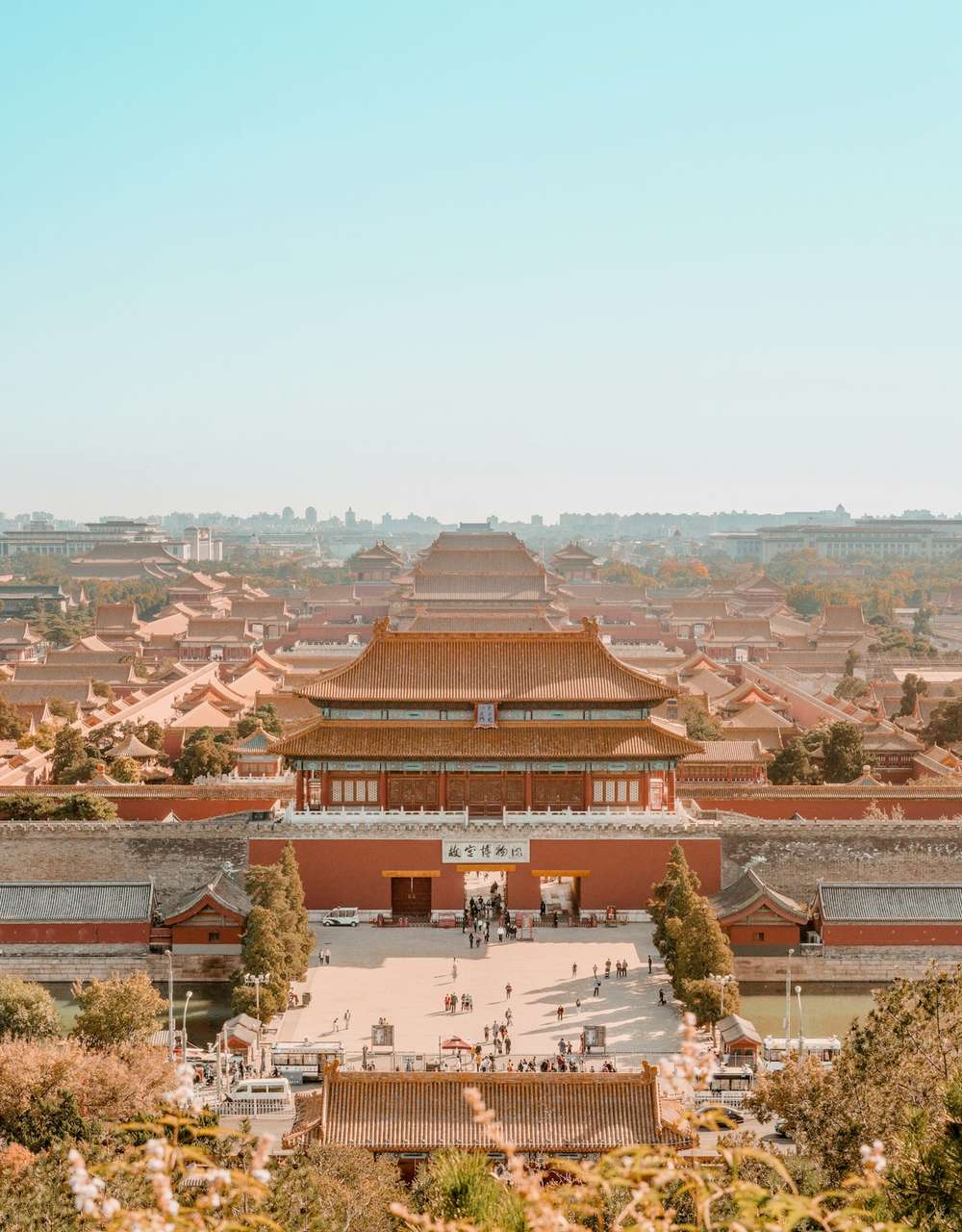
The Palace Museum, formerly known as the Forbidden City, was built in the 4th year of the Yongle reign of the Ming Dynasty (1406). It was the imperial palace of 24 emperors across the Ming and Qing dynasties. Covering 720,000 m² with 9,071 rooms, it is the largest and best-preserved wooden ancient architectural complex in the world. It was inscribed as a UNESCO World Heritage site in 1987.
Highlights:
- · Three Great Halls of the Central Axis — Hall of Supreme Harmony, Hall of Central Harmony, Hall of Preserving Harmony: the core architecture symbolizing imperial power
- · Six Eastern & Western Palaces — Residences of the imperial consorts; the stories of Empresses in the Palace (Zhen Huan Zhuan) unfolded here
- · Imperial Garden — The rear palace garden with scholar rocks and ancient cypresses; a good place to sit and rest
- · Treasure Gallery & Clock Gallery — Optional visits; exquisite imperial collections
Recommended route: Enter via the Meridian Gate, exit via the Gate of Divine Prowess; follow the highlights route for 3–4 hours — Central Axis Three Great Halls + Six Eastern & Western Palaces + Imperial Garden. No "visit every single room" exhaustion route. If you get tired, exit via the Gate of Divine Prowess anytime to your waiting vehicle. The Palace Museum has 9,071 rooms — seeing them all takes a week. We select the most worthwhile ones for you.
Mutianyu Great Wall is located in Huairou District, Beijing, about 70 km from the city center. It is one of the finest sections of the Ming Great Wall. Stretching 5,400 meters, it features crenellations on both sides (most other sections have only single-sided), with over 90% vegetation cover — in autumn the hills are ablaze with red leaves, making it the most scenic Great Wall section. Cable car access and a toboggan slide down make it ideal for families.
Key facts:
- · Cable car up and down — Elderly and children don't need to hike; ride up, walk a short section, come back
- · Toboggan slide down — Optional; kids absolutely love sliding from the mountain top to the base
- · 60% fewer people — Less than half the crowds of Badaling; photos without dodging heads
- · 90% vegetation cover — Autumn red leaves fill the mountains; the most beautiful autumn Great Wall scenery in China
Recommended route: Cable car up, then walk along the wall for 2–3 watchtowers (about 1–1.5 hours), enough for plenty of photos and appreciation. If you're fit, walk further; if not, walk a short section and return by cable car or toboggan. We allocate a full 3–4 hours — no rushing.
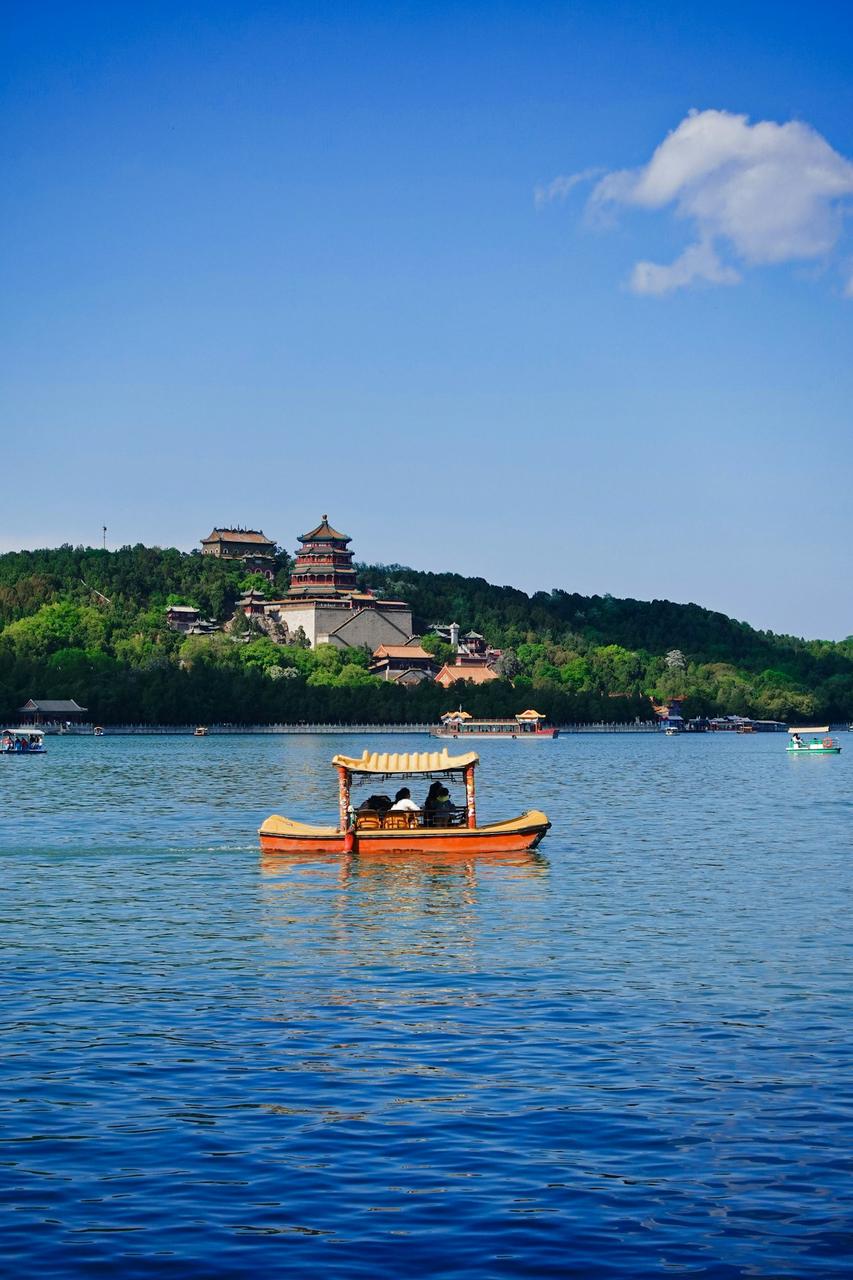
The Summer Palace is China's best-preserved imperial garden, built during the Qianlong reign of the Qing Dynasty (1750). It covers 290 hectares, three-quarters of which is water. Inscribed as a UNESCO World Heritage site in 1998. The Long Corridor stretches 728 meters with over 14,000 painted scenes — the longest gallery in the world. The Tower of Buddhist Incense rises 36 meters and is the Summer Palace's icon.
Highlights:
- · Long Corridor — 728 meters, 14,000+ painted scenes, each a story
- · Tower of Buddhist Incense — Climb to the top for a panoramic view of Kunming Lake; on clear days you can see the Western Hills
- · Marble Boat — The marble vessel in Kunming Lake, built by Empress Dowager Cixi
- · Seventeen-Arch Bridge — Connects the East Causeway and South Lake Island; the bridge's stone lions each have a unique expression
Recommended route: A morning 2–3 hour highlights loop — enter via the East Palace Gate → Long Corridor → Tower of Buddhist Incense → Marble Boat → exit via the North Palace Gate or Ruyi Gate. In the afternoon, visit the Old Summer Palace (Western-style ruins). The two gardens complement each other: the Summer Palace shows preserved beauty; the Old Summer Palace shows the moving power of ruins.
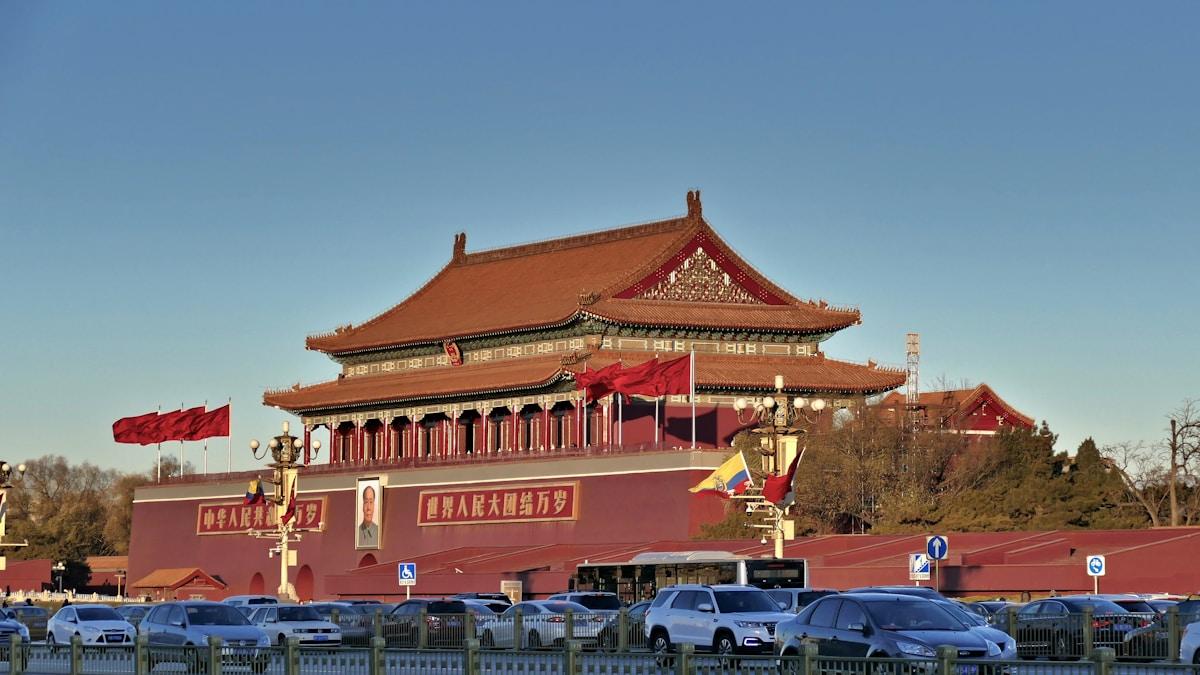
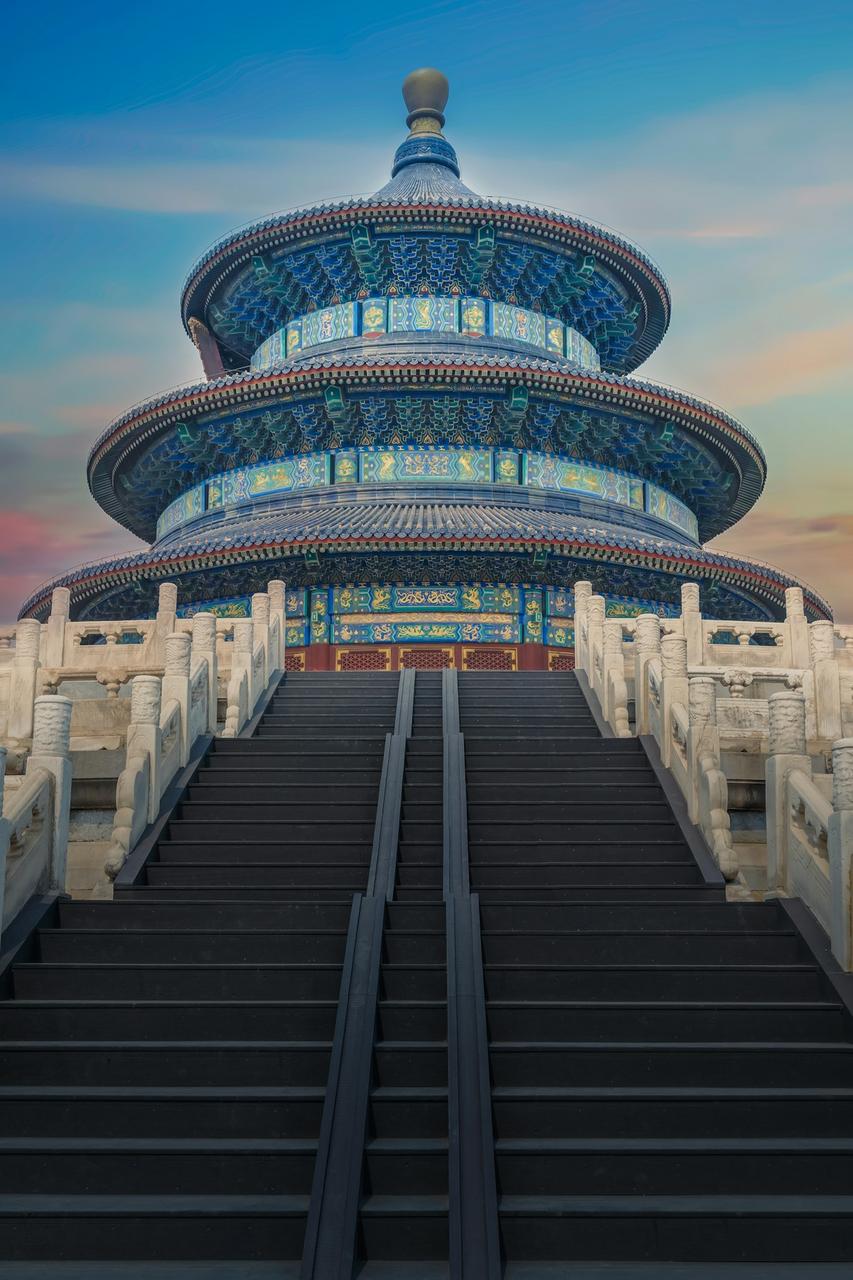
The Temple of Heaven was where Ming and Qing emperors worshipped heaven and prayed for good harvests. Built in the 18th year of the Yongle reign of the Ming Dynasty (1420), it covers 273 hectares — four times the size of the Palace Museum. The Hall of Prayer for Good Harvests is the Temple of Heaven's icon — a triple-eaved circular hall, entirely wooden structure without a single nail. The Echo Wall is an acoustic marvel — two people standing at opposite ends of the circular wall can clearly hear each other speaking against it. Inscribed as a UNESCO World Heritage site in 1998.
Highlights:
- · Hall of Prayer for Good Harvests — Triple-eaved round hall; blue glazed tiles are stunning in sunlight
- · Echo Wall — The acoustic marvel of the circular wall; you can test it yourself
- · Circular Mound Altar — Where the emperor worshipped heaven; standing on the center stone, your voice resonates extraordinarily
- · Ancient Cypress Grove — Centuries-old cypresses; the morning light is the best; locals exercise here at dawn
Best time: 8:00–10:00 AM — the morning light on the Hall of Prayer for Good Harvests' blue glazed tiles is at its most beautiful. In the morning you can also see Beijing seniors doing their morning routines — tai chi, shuttlecock kicking, Peking opera singing — this is authentic Beijing life.
What to Eat in Beijing
Peking duck, zhajiang noodles, Mongolian hot pot, douzhi — restaurants locals eat at, not kickback traps.
Beijing cuisine is an essential part of this trip. The recommendations below are not tour-group kickback restaurants — they're where locals eat daily. Prices are in RMB with USD reference.
Other Worth Trying
- Luzhu Huoshao — Pork intestine and lung with flatbread; Beijing's hardcore comfort food. Love it or hate it — no middle ground.
- Chaogan — Pork liver and intestine in thickened broth, eaten with steamed buns. Yaoji Chaogan (where Biden visited).
- Tanghulu — Candied hawthorn on a stick; buy one from a street vendor in winter and eat as you walk.
- Lüdagunr, Wandouhuang — Traditional Beijing pastries; buy from Daoxiangcun as gifts to take home.
- Arctic Ocean Soda — Old Beijing orange soda; the perfect pairing with Mongolian hot pot.
Meal cost reference: Lunch + dinner approx. USD 5–15 per person/day (approx. RMB 50–110) can get you excellent food. Tour group meals cost ¥30–40 per person but are poor quality — mass-produced, pre-made dishes. Find local restaurants yourself — the same money gets you three times better food.
About Beijing Travel
Start Planning Your Beijing Trip
Tell us your group size and travel dates — our travel consultant will customize your Beijing itinerary.
Brand-Operated · Fully Licensed · ¥500K Travel Insurance · No Tipping
Key Takeaways
- Beijing is China's capital at the northern end of the North China Plain, with major sights including the Palace Museum, the Great Wall, the Summer Palace, and other sites along the city's Central Axis.
- The guide recommends April to May and September to October as the best times to visit because the weather is comfortable and seasonal scenery is at its best. It also notes that July to August is hot and crowded, and advises avoiding the May Day and National Day holiday periods.
- Singapore passport holders can enter China visa-free for up to 30 days, while Malaysia passport holders can also enter visa-free for up to 30 days under a policy the article says is subject to 2026 rules. Travelers should check the latest policy, ensure their passport is valid for at least six months, and carry it with them during the trip.
- A key practical issue in Beijing is advance ticket booking, since nearly all major attractions require reservations. The article specifically says this is one of the biggest travel pitfalls in the city.
Official resources
- Ministry of Culture and Tourism of the People's Republic of China (mct.gov.cn) — the national regulator for licensed travel agencies
- National Immigration Administration (nia.gov.cn) — official entry, exit, and immigration information for mainland China
- Consular Services, Ministry of Foreign Affairs (cs.mfa.gov.cn) — official consular information and travel notices