Fujian Travel Guide
Gulangyu Island international architecture, Nanputuo Temple, Nanjing Tulou, Yunshuiyao Ancient Town, sailing and beachcombing — a complete guide for global overseas Chinese travelers. Minnan culture + islands + World Heritage tulou. Not marketing fluff; a real, actionable travel guide.
Where Is Fujian
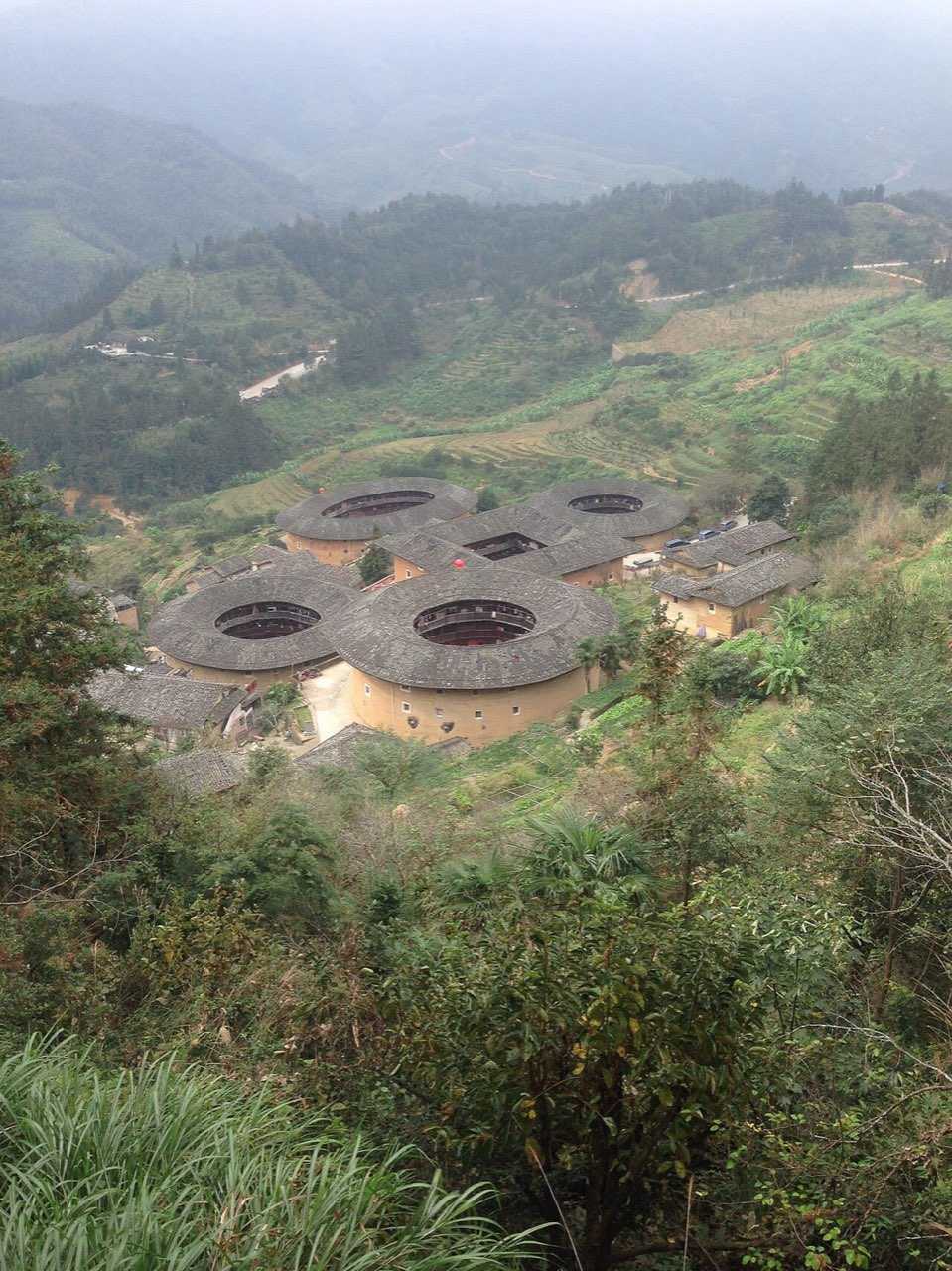
China's southeastern coast, facing Taiwan across the strait — the core region of Minnan and Hakka culture.
Location
Fujian Province is located on China's southeastern coast, bordering Zhejiang to the north, Jiangxi to the west, Guangdong to the south, and facing Taiwan across the Taiwan Strait to the east. Its coastline stretches 3,752 km — second longest in China. The terrain is predominantly hilly and mountainous — "eight parts mountain, one part water, one part farmland." Forest coverage is 65.95% — #1 in China. It has a subtropical maritime monsoon climate: warm winters, hot summers, average annual temperature 17–21°C.
Fujian’s main tourist area is the Minnan Triangle — Xiamen, Quanzhou, Zhangzhou. The vast majority of first-time visitors enter through Xiamen: Gulangyu Island's international architecture, Nanputuo Temple, Huandao Road, Nanjing Tulou, Yunshuiyao Ancient Town — one itinerary combines islands, Buddhist sites, World Heritage tulou, and an ancient town. Fujian was also the starting point of the Maritime Silk Road; Quanzhou was once one of the largest ports in the East.
Why Visit
Fujian offers China's most distinctive "island + World Heritage + Minnan culture" crossover experience:
- Gulangyu Island — World Cultural Heritage, showcase of historic consular architecture, no cars or motorcycles — a pedestrian paradise
- Nanjing Tulou — World Cultural Heritage, unique Hakka circular earthen buildings, Hegui Lou has stood on marshland for over 200 years
- Yunshuiyao Ancient Town — Filming location for the movie The Knot: thousand-year-old paths, century-old banyans, babbling streams
- Nanputuo Temple — Minnan Buddhist sanctuary, a thousand-year-old temple that still draws large numbers of worshippers
- Huandao Road — Xiamen's most beautiful coastline, perfect for cycling or strolling, sea breeze in your face
- Sailing & Beachcombing — Veteran fishermen take you to dig clams and catch crabs; sail out to see Xiamen's skyline
- Minnan Cuisine — Satay noodles, oyster omelette, ginger duck, sea worm jelly, Buddha Jumps Over the Wall — a classic Minnan delicacy
For overseas Chinese travelers departing from Singapore and Malaysia, Fujian's unique value lies in this: Minnan culture and Chinese diaspora culture are directly connected — many trace their ancestry to Fujianese migrants who moved south. Satay noodles and bak kut teh share origins; Minnan dialect and Singaporean Hokkien are mutually intelligible. Coming to Fujian doesn't feel like "going abroad" — it feels like "coming home." Direct flights from Singapore/Malaysia to Xiamen take just 3.5–4.5 hours — one of China’s nearest island-and-World-Heritage getaways.
Best Travel Seasons
Fujian is suitable for travel most of the year, but it’s best to avoid typhoon season from July to September. Month-by-month breakdown:
| Month | Temperature | Landscape | Rating |
|---|---|---|---|
| Mar–Apr | 13–22°C | Spring flowers are in bloom, Gulangyu bougainvillea in full bloom | ★★★★★ |
| May | 18–27°C | Early summer, comfortable sea breeze, best beachcombing season | ★★★★☆ |
| Jun–Aug | 25–33°C | Hot, typhoon season begins, summer vacation crowds | ★★☆ |
| Jul–Sep | 26–33°C | Peak typhoon period — not recommended | ★ (Avoid) |
| Oct–Dec | 15–26°C | Crisp autumn, low typhoon probability, best season | ★★★★★ |
| Jan–Feb | 8–16°C | Mild winter, fewer crowds and lower prices | ★★★ |
Verdict: March–May and October–December are Fujian's golden windows — clear skies, comfortable temperatures, low typhoon risk. July to September brings a high risk of flight cancellations and ferry suspensions due to typhoons, so it’s not recommended. January–February: cooler but fewer crowds and lower prices; Gulangyu Island has its charm even in winter. Avoid Labor Day (May 1) and National Day (Oct 1) Golden Weeks — Gulangyu becomes packed.
What to Prepare Before Departure
Visa requirements, typhoon season, clothing, and gear — here’s what to prepare.
Visa & Documents
Singapore passport holders: 30-day visa-free entry to China. No advance visa application needed. Ensure passport validity exceeds 6 months.
Malaysian passport holders: 30-day visa-free entry to China (current 2026 policy). If your trip exceeds 30 days, apply for a visa in advance. Check the latest policy before you travel.
Fujian: No additional restrictions for foreign visitors — same as visiting Beijing or Shanghai. Xiamen, Quanzhou, and Zhangzhou are open to all foreign visitors with valid documents; no special permits required.
Carry ID at All Times: Passport required for attractions and hotel check-in. Gulangyu ferry tickets require real-name registration with passport number. Carry a photocopy as backup.
Typhoon Season Notes
Fujian's typhoon high season is July–September each year — pay special attention:
- Typhoon Alerts: Monitor Central Meteorological Observatory typhoon warnings before departure. Yellow alert or higher may cause flight cancellations
- Gulangyu Ferry Tickets: Ticket sales suspended during typhoon days, pier closed; purchased tickets can be refunded or rescheduled
- Beachcombing: All beachcombing and sailing activities are canceled during typhoon weather, and the itinerary will need to be adjusted.
- Itinerary Flexibility: We recommend traveling March–May and October–December to avoid typhoon season. If a typhoon hits, your travel consultant will notify you in advance and adjust the itinerary — with the same trip length and overall quality of experience
Recommendation: Don't schedule Fujian trips during July–September. If your only option is the summer holiday period — late August has the highest typhoon probability; early July is relatively better but still not recommended. Check weather 7 days before departure; typhoon tracks are viewable on China Weather Network or the Windy App.
Clothing Checklist
Fujian has a subtropical maritime climate — warm winters, hot summers. Pack according to the season:
- Mar–May / Oct–Dec: Long-sleeve T-shirt + light jacket — the sea breeze is cool in the morning and evening; daytime 20–25°C, comfortable
- Jun–Sep: Pack mostly short sleeves — daytime above 30°C; SPF50+ sunscreen essential
- Jan–Feb: Long sleeves + fleece / thin down jacket — morning/evening 8–10°C, daytime ~15°C
- Bottoms: Long pants are recommended for walking around the tulou and ancient towns; shorts fine for the island
- Shoes: One pair of comfortable walking shoes — Gulangyu is entirely on foot; don't wear new shoes. Sandals/slippers — for the beach and hotel
- Accessories: Sunglasses, hat (wide-brim), sun protection face scarf — island UV is intense
- Swimwear: Sailing and beachcombing may involve water — bring a set
Special Note: Gulangyu is entirely on foot after landing; cobblestone paths can be slippery — wear good walking shoes. When the sea wind is strong, a light jacket isn't enough — bring a windbreaker. SPF50+ sunscreen is essential — island UV is much stronger than in the city.
Gear Checklist
- Sun Protection: SPF50+ sunscreen, sunglasses (UV400), wide-brim hat
- Medication: Motion sickness pills (Gulangyu ferry is short but some get seasick), stomach medicine (too much seafood may cause discomfort), cold medicine, band-aids, mosquito repellent (tulou mountain area has insects)
- Electronics: Power bank (you'll be out all day on Gulangyu), waterproof phone pouch (for beachcombing)
- Other: Thermos (for hot water in the car), wet wipes, small snacks, raincoat or folding umbrella (essential during rainy and typhoon seasons)
- Luggage: We recommend one large suitcase and one carry-on per person. Fujian has many specialties — Tieguanyin tea, dried meat, stuffed pastries, lacquerware
Note: Gulangyu is entirely on foot after landing; recommend storing luggage at the hotel. Bring a small backpack for the island — just water, sunscreen, and a power bank.
How to Get to Fujian & Get Around
Fujian’s main attractions are concentrated in the Minnan Triangle, with Xiamen as the hub and relatively short driving distances between sites.
Getting to Fujian
Fly into Xiamen Gaoqi International Airport (XMN) — this is where most travelers arrive.
From Singapore:
- Direct: Singapore → Xiamen, ~4.5 hours (Xiamen Airlines, SilkAir, etc.)
- Connecting: Singapore → Guangzhou/Shenzhen → Xiamen, total ~6–7 hours, lower price
From Malaysia (Kuala Lumpur):
- Direct: Kuala Lumpur → Xiamen, ~4 hours (Xiamen Airlines has direct flights)
- Connecting: Kuala Lumpur → Guangzhou/Shenzhen → Xiamen, total ~6–7 hours
From Malaysia (Penang):
- Connecting: Penang → Kuala Lumpur → Xiamen, total ~5–6 hours
Recommendation: Xiamen is one of the most convenient Chinese cities for direct flights from Southeast Asia. Book flights one to two months in advance; prices double in peak season (summer break, Chinese New Year). Xiamen Airlines often runs promotions with generous baggage allowance. You can also fly into Quanzhou Jinjiang Airport (1.5 hours from Xiamen) for more flight options.
Intra-Province Transport
Most Fujian itineraries focus on the Minnan Triangle — Xiamen, Zhangzhou, Quanzhou. Driving distances between attractions:
- Xiamen city → Gulangyu Ferry Pier: ~15 min drive + 8 min ferry
- Xiamen → Nanjing Tulou: ~2.5–3 hours by highway
- Xiamen → Yunshuiyao Ancient Town: ~2.5 hours by highway (same direction as tulou)
- Xiamen → Quanzhou: ~1.5 hours by highway
- Xiamen → Zhangzhou: ~1 hour by highway
Transport Mode Options:
- Private Car / Custom Tour (Recommended): 7-seat business vehicle + driver-guide, flexible stops, controllable schedule. Ideal for 4–6 person family trips. Tulou day trip involves 5–6 hours round-trip driving — private car is most comfortable
- Bullet Train + Taxi: Xiamen–Quanzhou–Fuzhou connected by bullet train, good for inter-city transfers. But the tulou sites are in the mountains — taxis are inconvenient
- Self-Drive: Roads are good but tulou mountain roads are winding — tiring for drivers
- Group Tour Bus: Cheapest but most exhausting — Gulangyu group tours don’t allow free exploration, and tulou visits get only 1 hour
Core Takeaway: Fujian is much smaller than Yunnan — transport isn't the biggest cost item. But Gulangyu ferry tickets must be booked in advance, and tulou in the mountains requires a private car — choosing the right transport mode makes a world of difference in experience. The key is avoiding Gulangyu group-tour traps and fake tulou attractions.
Travel Arrangements: Industry Norm vs. Our Approach
How Much Does a Fujian Trip Cost
This pricing is based on a 5-day, 4-night Minnan itinerary. USD primary, with RMB/MYR/USD reference.
The following costs are based on a 5-day, 4-night trip, Xiamen entry/exit, Gulangyu + Nanputuo + Huandao Road + Tulou + Sailing & Beachcombing. Prices include full transport, accommodation, attraction tickets, and insurance; exclude round-trip flights and lunch/dinner. Actual prices vary with group size, hotel tier, and season.
Cost Notes
- Included: Full private vehicle (with fuel/tolls/parking), hotel (with breakfast), attraction tickets (including Gulangyu round-trip ferry tickets), RMB 500K travel accident insurance, sailing + beachcombing experience fee, airport transfers
- Not Included: Round-trip flights from origin to Xiamen, lunch/dinner (recommended but not included — driver-guide recommends local eateries), personal expenses, visa fees (Singapore, Malaysia and most other passports enjoy visa-free entry)
- Meal Cost Reference: Lunch + dinner average USD 5–10/person/day (approx. RMB 50–80) — eat very well: satay noodles, oyster omelette, ginger duck, sea worm jelly
- Flight Reference: Singapore/Kuala Lumpur ↔ Xiamen round trip, advance booking USD 150–300 peak season USD 300–525
Actual prices vary with vehicle type and hotel tier. Tell us your group size and travel dates, and your travel consultant will provide an exact quote.
Five Must-Visit Places
Gulangyu, Nanputuo Temple, Huandao Road, Nanjing Tulou, Sailing & Beachcombing — what to see and what to avoid for each.
Gulangyu Island lies southwest of Xiamen Island, covering 1.88 km², separated from Xiamen by a 500-meter strait. After the 1842 Treaty of Nanjing, it became a treaty port. Thirteen countries established consulates on the island, leaving behind a wealth of Western architecture. In 2017, it was inscribed on the World Cultural Heritage list. Motor vehicles are banned on the island — no cars, no motorcycles; entirely on foot.
Highlights:
- · International Architecture Expo — Consulate sites of 13 nations, Catholic church, Japanese police station, British consulate
- · Most Beautiful Corner — Instagram-famous spot, a triangular intersection where two roads meet, extremely photogenic
- · Sunlight Rock (Riguangyan) — the island’s highest point (92 m), panoramic views of the island and Xiamen across the water
- · Shuzhuang Garden — Seaside private garden, "Boundless Sea and Sky" inscribed plaque
Best Time: Year-round. Early morning is most pleasant with fewest people; afternoon Sunlight Rock offers panoramic views. Peak season (Jul–Aug, During the Golden Weeks, it gets packed — Gulangyu is small; crowds sharply degrade the experience.
Nanputuo Temple is located at the foot of Wulao Peak in southern Xiamen Island. Founded in the Tang Dynasty, it has over a thousand years of history. It is the Buddhist sanctuary of Minnan, named after Mount Putuo in Zhejiang. The temple complex climbs the hillside in tiers, bustling with worshippers. It is adjacent to Xiamen University — one of China's most beautiful campuses.
Highlights:
- · Mahavira Hall — Main hall, grand architecture, eighteen arhats on both sides
- · Wulao Peak — Peak behind the temple; climb to overlook Xiamen University and the coastline
- · Xiamen University — View from outside only (advance reservation required for entry), one of China's most beautiful campuses
- · Vegetarian Food — Nanputuo vegetarian cakes and noodles, made by the temple and often sold with long lines
Recommended Route: Morning: Nanputuo Temple (1–2 hours), exterior view of Xiamen University. Wulao Peak climb depends on fitness — steps are steep; not recommended for elderly or children. Free incense inside the temple — no need to buy outside.
Huandao Road is Xiamen's coastal ring road, approximately 43 km long — one of China's most beautiful seaside highways. Zengcuo'an is a small fishing village along Huandao Road, dubbed "China's most artistic fishing village" — dotted with creative shops, guesthouses, and seafood snacks.
Highlights:
- · Baicheng Beach — Huandao Road starting point, fine sand, watch the sunset
- · Music Square — Seaside sculpture plaza, great for photos
- · Zengcuo'an — Artistic fishing village, browse shops, eat seafood snacks
- · Cycling — Huandao Road has a dedicated bike lane, making it one of the best places for a coastal ride
Best Time: Year-round. The coast is at its most beautiful in the evening — the sun sets over the sea. Summer afternoons are intense; recommended after 4pm. Zengcuo'an is lively at night; daytime is quieter and more pleasant.
Nanjing Tulou is located in Nanjing County, Zhangzhou City, about 2.5–3 hours' drive from Xiamen. It was inscribed on the UNESCO World Heritage List in 2008. Tulou are unique Hakka communal residential buildings — circular or square, three to five stories tall, with each building housing dozens of families. Yunshuiyao Ancient Town was the filming location for the movie The Knot, known for its thousand-year-old stone path and century-old banyan trees.
Highlights:
- · Hegui Lou — Built on marshland, it has stood for more than 200 years — an architectural miracle, 5 stories tall
- · Huaiyuan Lou — The best-preserved double-ring circular tulou, exquisite wood carvings
- · Yunshuiyao Ancient Town — Thousand-year-old path, century-old banyans, babbling streams
- · Hakka Culture — Learn about the Hakka southern migration and their clan-based communal living tradition
Recommended Route: Depart Xiamen in the morning and arrive at around 10:30. First: Yunshuiyao Ancient Town (1 hour), then Hegui Lou + Huaiyuan Lou (2 hours). Have lunch at a Hakka restaurant near the scenic area. Return to Xiamen at 15:00, arrive ~18:00.
Sailing + beachcombing is a quintessential Fujian experience — veteran fishermen take you out to see Xiamen's skyline; at low tide, dig for clams and catch crabs on the mudflats. Beachcombing depends on the tides — only possible at low tide; at high tide, you see nothing.
Highlights:
- · Sailing Out — See Xiamen's skyline and Gulangyu panorama from the sea
- · Beachcombing for Clams — At low tide, dig for clams, catch crabs, collect shells on the mudflats
- · Fisherman Guidance — Veteran fishermen teach you beachcombing techniques, not just digging blindly
Notes: Beachcombing depends on tides — low tide times vary by date. After the beachcombing activity ends in the afternoon, you return to Xiamen around 17:00, so book your return flight after 18:00. Your travel consultant will inform you of the day's tide times before departure.
What to Eat in Fujian
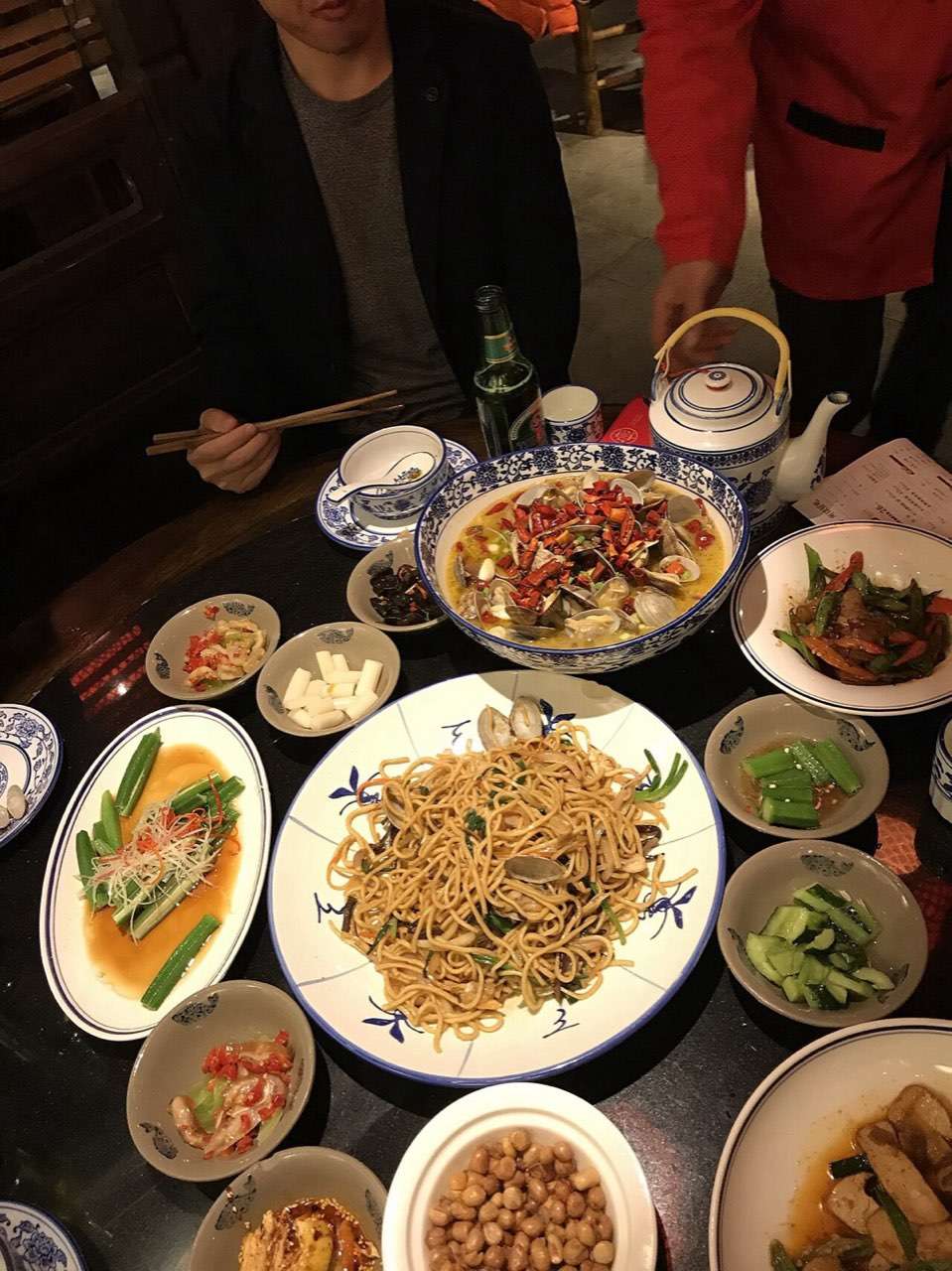
Satay noodles, oyster omelette, ginger duck, sea worm jelly, Buddha Jumps Over the Wall — local eateries, not kickback restaurants.
Minnan cuisine is one of the highlights of this trip. Many overseas Chinese travelers trace their ancestry to Fujian — satay noodles and bak kut teh share cultural roots; eating in Fujian feels more like "coming home." The following recommendations are not tourist-trap kickback restaurants, but places locals eat at daily. Prices in RMB with USD reference.
Other Worth Trying
- Mee Sua Soup (Mian Xian Hu) — a Minnan breakfast dish of thin wheat noodles cooked into a thick soup, with large intestine, vinegar-marinated pork, shrimp
- Braised Meat Zongzi (Shao Rou Zong) — Minnan glutinous rice dumplings with pork belly, shiitake mushrooms, dried shrimp, dipped in sauce
- Four Fruit Soup (Si Guo Tang) — Summer cooling dessert: lotus seeds, barley, mung beans, white fungus
- Tong'an Sealed Pork (Tong'an Feng Rou) — Xiamen Tong'an famous dish: square-cut pork belly slow-braised until tender
- Tieguanyin Tea — Anxi Tieguanyin, Fujian's famous tea; the lightly oxidized ("qing xiang") style is most renowned
Meal cost reference: Lunch + dinner average USD 5–10/person/day (approx. RMB 50–80) — eat very well. Group tour meals are ¥30–40/person but low quality. Find local eateries yourself and eat three times better for the same money.
About Fujian Travel
Start Planning Your Fujian Trip
Tell us your group size and travel dates, and your travel consultant will customize your Fujian itinerary.
Brand-Operated · Fully Licensed · RMB 500K Travel Insurance · Tipping Strictly Prohibited
Key Takeaways
- Fujian is on China’s southeast coast facing Taiwan, with most first-time visitors entering through Xiamen and focusing on the Minnan Triangle of Xiamen, Quanzhou, and Zhangzhou. The province is known for a mix of islands, Minnan culture, Buddhist sites, and World Heritage tulou.
- Key sights named in the guide include Gulangyu Island, Nanputuo Temple, Huandao Road, Nanjing Tulou, and Yunshuiyao Ancient Town. The article also highlights sailing, beachcombing, and Minnan foods such as satay noodles, oyster omelette, ginger duck, sea worm jelly, and Buddha Jumps Over the Wall.
- The guide says the best travel periods are March to May and October to December, with clear skies, comfortable temperatures, and lower typhoon risk. It advises avoiding July to September because typhoons can disrupt flights, ferries, and outdoor activities.
- Singapore and Malaysian passport holders are described as eligible for 30-day visa-free entry to China, with passport validity needing to exceed 6 months and longer stays requiring a visa in advance. Fujian has no additional foreign visitor restrictions beyond normal China entry rules, but passports are needed for hotel check-in, attractions, and Gulangyu ferry ticket registration.
- The article warns that typhoon season can lead to flight cancellations, ferry suspensions, and the cancellation of beachcombing and sailing. It also advises avoiding the Labor Day and National Day holiday periods because Gulangyu becomes very crowded.
Official resources
- Ministry of Culture and Tourism of the People's Republic of China (mct.gov.cn) — the national regulator for licensed travel agencies
- National Immigration Administration (nia.gov.cn) — official entry, exit, and immigration information for mainland China
- Consular Services, Ministry of Foreign Affairs (cs.mfa.gov.cn) — official consular information and travel notices