Guangxi Travel Guide
Where Guangxi is, when to go, how to get there, how much it costs, what to see, what to eat — a complete guide for global overseas Chinese travelers. Not marketing fluff — practical travel reference you can actually use.
Where Is Guangxi
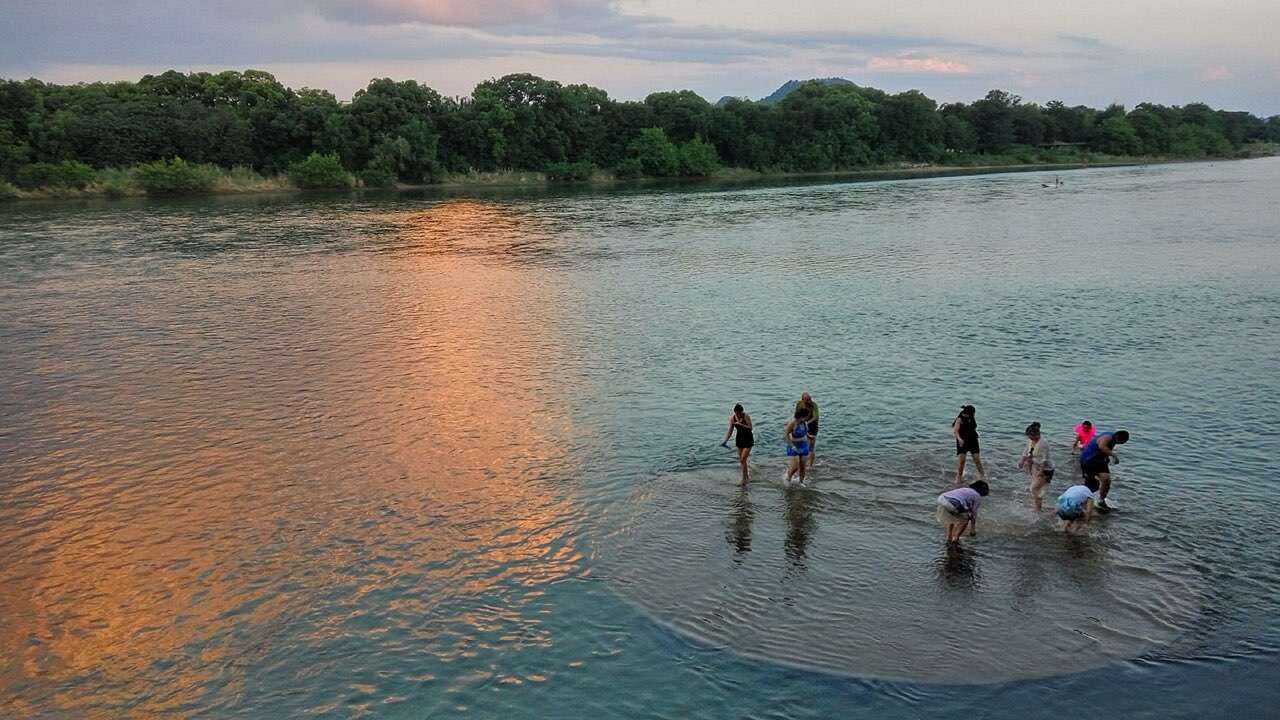
China's southern frontier — the Li River's karst landscape is the finest under heaven, where karst peaks, rice terraces, and minority cultures converge.
Geography
Guangxi Zhuang Autonomous Region lies in southern China, bordering Vietnam and facing the Gulf of Tonkin to the south. It has a subtropical monsoon climate — warm and humid year-round. The terrain slopes from northwest to southeast, dropping from Mao'er Mountain at 2,141m in the northwest to coastal plains below 50m in the southeast — this dramatic elevation range creates Guangxi's rich spectrum of landscapes, from mountain terraces to the Li River water system.
Guangxi travel is primarily concentrated in northern Guangxi — Guilin and Yangshuo. The Li River winds south from Guilin city to Yangshuo over 83 km, representing the essence of Chinese karst scenery. The Longji Rice Terraces lie in Longsheng County north of Guilin — one of the world's finest terrace landscapes. First-time visitors almost universally choose the classic Guilin–Yangshuo–Longji route — Li River bamboo rafting trips, Yulong River, Yangshuo West Street, Longji Rice Terraces — the core focus of this guide.
Why Visit
Guangxi offers China's most classic ink-painting scenery and rich minority culture:
- Li River — The backdrop of the RMB 20 banknote; For 83 km, karst peaks line both banks.; the premium Yangdi-to-Nine-Horse Fresco Hill section can be explored on a 1.5-hour bamboo raft ride
- Longji Rice Terraces — These terraces have been carved into the hillsides since the Yuan Dynasty and are both vast and beautifully sculpted.; April–May irrigation period creates mirror effects; September–October brings golden rice waves
- Yangshuo West Street — "Foreigners' Street," a nightlife district blending Chinese and Western cultures with bars, food, and handicrafts
- Yulong River — A quieter tributary of the Li River, the Yulong River is known for its multi-person bamboo rafts and misty, ink-painting-like morning scenery.
- Multi-ethnic Culture — Zhuang, Yao, Miao, and Dong peoples have lived here for generations; Huangluo Yao Village is the "World's Longest Hair Village"
- Scenic City — in Guilin, the city and the landscape blend seamlessly; "Guilin's landscape is the finest under heaven" is no exaggeration
For overseas Chinese travelers from Singapore and Malaysia, Guangxi's unique value lies in offering karst peaks and terrace landscapes that are rare in Southeast Asia, while preserving a rich Chinese culinary culture — Guilin rice noodles, beer fish, Lipu taro with braised pork — both familiar and fresh. The flight from Singapore to Guilin is only 3.5–4 hours, making it one of the most accessible scenic destinations in China. Five days and four nights is just right to cover the highlights without rushing.
Best Travel Season
Guangxi can be visited year-round, but experiences vary significantly by season. Here's a month-by-month breakdown:
| Month | Temperature | Landscape Features | Rating |
|---|---|---|---|
| Mar–Apr | 12–22°C | Spring blooms, misty-rain Li River | ★★★★★ |
| May | 18–28°C | Longji irrigation period — mirror terraces | ★★★★★ |
| Jun–Aug | 24–33°C | Rainy season, Li River full, lush green | ★★★☆ |
| Sep–Oct | 18–28°C | Crisp autumn, Longji golden rice waves | ★★★★★ |
| Nov | 12–22°C | Late autumn comfort, fewer people, lower prices | ★★★★ |
| Dec–Feb | 6–15°C | Dry season, terraces barren, Li River shallow | ★★ (off-peak) |
Bottom line: April–May and September–October are the best times to visit Guangxi — clear skies, blue water, terraces at their most beautiful. July–August is peak season but also rainy season; afternoon showers are common, and prices are highest. December–February dry season means barren terraces with nothing to see, but fewer people and lower prices. Avoid the May Day and National Day Golden Weeks — packed with crowds.
What to Prepare Before Departure
Visa, clothing, gear — don't miss a thing.
Visa & Documents
Singapore Passport: 30-day visa-free entry to China; no advance visa application is needed. Ensure your passport is valid for at least six months.
Malaysia Passport: 30-day visa-free entry to China (2026 policy). If your itinerary exceeds 30 days, apply for a visa in advance. Check the latest policy before traveling.
Guangxi Region: No extra restrictions for foreign visitors — same as Beijing or Shanghai. Guilin, Yangshuo, and Longji are open to all foreign visitors with valid documents; no special permits needed.
Carry ID at all times: A passport is required for entry to scenic areas and for hotel check-in. Li River bamboo raft tickets require passport numbers for real-name purchase — we book yours in advance.
Climate & Clothing
Guangxi has a subtropical monsoon climate — warm and humid year-round, hot in summer. Elevations are moderate — Guilin city ~150m, Longji Rice Terraces ~800–1,100m — no altitude sickness risk. Prepare as follows:
- Outer layer: Light jacket or windbreaker — Longji terraces have large day-night temperature swings; Li River rafting means full sun exposure and occasional strong winds
- Inner layer: Lightweight, breathable clothing — Guilin and Yangshuo daytime temperatures can exceed 30°C from May–October
- Bottoms: Mainly long pants — convenient for terrace stone paths and getting on/off bamboo rafts
- Shoes: A pair of non-slip, comfortable walking shoes — Longji terrace stone paths are slippery; Yangshuo cycling involves walking
- Accessories: Sunglasses, wide-brimmed hat, sun-protective face covering — Li River bamboo rafting has zero shade for 2 hours
Special note: April–October rainy season requires a folding umbrella or raincoat — Rain in Guangxi can come without warning. Mosquito repellent — bugs in mountain areas and by the river. December–February is cool but not freezing; a light down jacket or thick coat suffices.
Gear Checklist
- Sun protection: SPF50+ sunscreen, sunglasses (UV400), wide-brimmed hat — Li River bamboo rafting is 2 hours of full sun exposure
- Medicine: Motion sickness pills (Longji mountain roads are winding), stomach medicine (dietary changes may cause discomfort), mosquito repellent, band-aids
- Electronics: Power bank (you'll be out all day), waterproof phone pouch (for photos on the bamboo raft)
- Other: Wet wipes, some snacks, thermos (cold water in the car)
- Luggage: One large suitcase + one carry-on per person recommended. Guangxi has many specialties — Guilin rice noodle seasoning packs, osmanthus cake, Lipu taro
Note: Li River bamboo rafts provide life jackets and are operated by boatmen throughout — no additional safety gear needed. Phones on the raft should be in waterproof pouches — the river isn't deep, but retrieving a dropped phone is difficult.
How to Get to Guangxi & Get Around
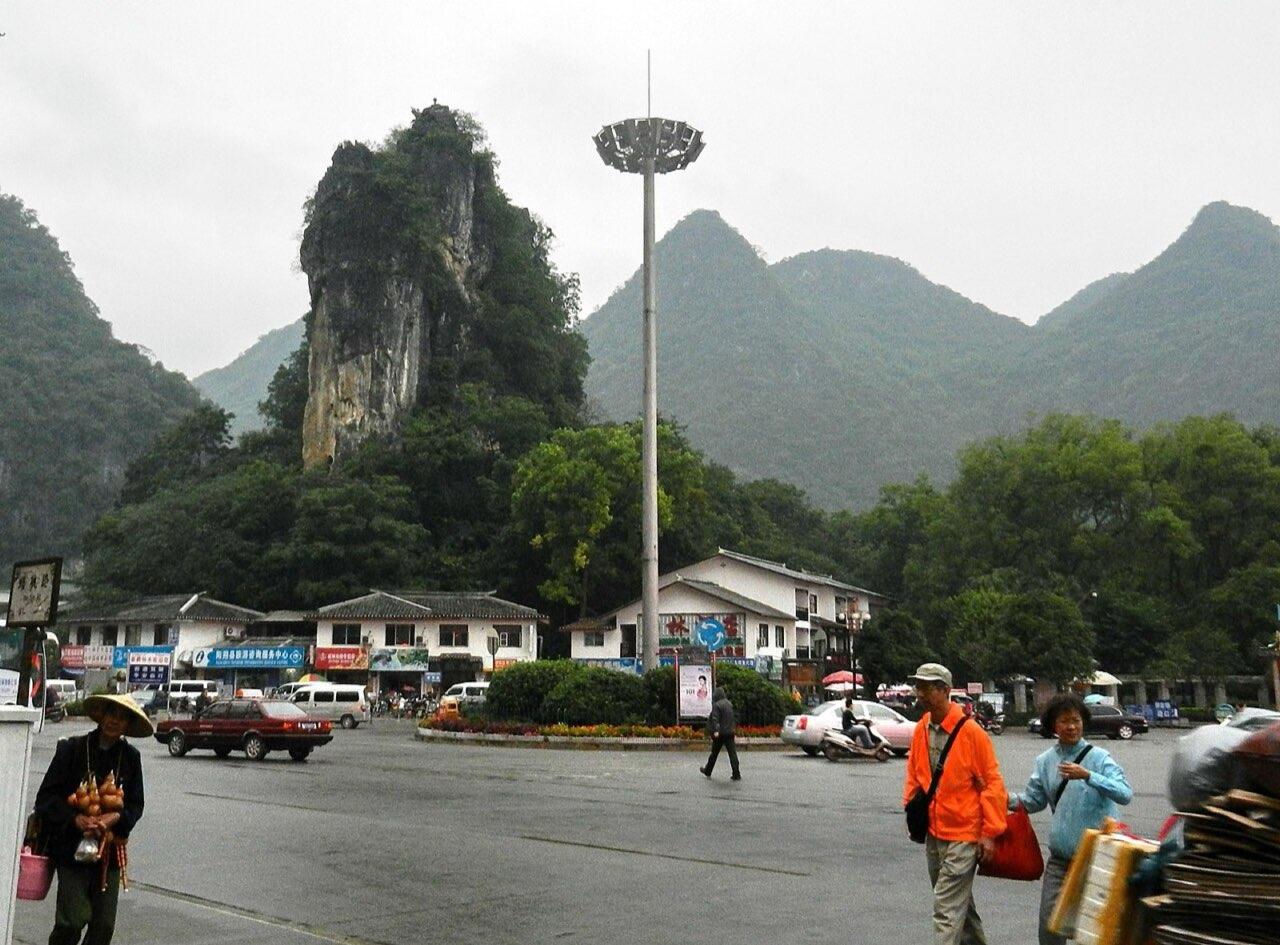
Guilin in/out; attractions concentrated within 100 km in northern Guangxi — transport arrangements define your travel experience.
Getting to Guangxi
Fly into Guilin Liangjiang International Airport (KWL) — this is the entry point for the vast majority of travelers.
From Singapore:
- Connecting flights: Singapore → Guangzhou/Shenzhen → Guilin, total 5–6 hours, lower cost
- Direct flights: Singapore → Guilin sometimes has charter or seasonal direct flights, ~4 hours
From Malaysia (Kuala Lumpur):
- Connecting flights: KL → Guangzhou/Shenzhen → Guilin, total 5–6 hours
- AirAsia has KL → Guangzhou budget flights, then connect to Guilin — best value
Tip: Guilin isn't a popular direct-flight city from Southeast Asia; most routes require transit via Guangzhou or Shenzhen. Book 1–2 months in advance; peak season (July–August, Chinese New Year) prices double. You can also fly into Nanning and take the HSR to Guilin (~1.5 hours) — Nanning has more flights.
Getting Around Guangxi
Guangxi travel's main axis is Guilin–Longji–Yangshuo, approximately 100 km total. Typical driving times between attractions:
- Guilin city → Longji Rice Terraces: ~1.5–2 hours via highway (winding mountain roads)
- Guilin city → Yangdi Pier (Li River raft start): ~1 hour
- Yangdi → Yangshuo (raft endpoint + car): ~1.5 hours
- Yangshuo → Yulong River: ~30 minutes
- Yangshuo → Silver Cave: ~40 minutes
Transport options:
- Private car / custom tour (recommended): 7-seat business vehicle + driver-guide, flexible stops, controlled itinerary — ideal for 4–6 person family trips. Key advantage: visit Longji first, then continue south to Yangshuo — no backtracking
- Bus + taxi: Guilin–Yangshuo has buses, suitable for budget independent travelers. But Longji Rice Terraces has no direct bus — requires charter or ride-share
- Self-drive: Good road conditions, but Longji mountain roads are winding — demanding on driver stamina
- Group tour bus: The cheapest option, but also the most exhausting — wake at 6 AM daily, 2 hours at shopping stops, 1 hour at attractions
Key takeaway: Guangxi attractions are much more compact than Yunnan's; transport isn't the biggest cost factor. But attractions are distributed north and south of Guilin — Longji to the north, Yangshuo to the south. Choosing the right transport and order (north first, then south) makes a world of difference in experience. The key is to avoid shopping tours and so-called "pure sightseeing" tours that aren't what they claim to be.
Travel Arrangements: Industry Practice vs Our Approach
How Much Does a Guangxi Trip Cost
Based on a 5-day 4-night Guilin–Longji–Yangshuo route. Prices are listed in USD, with RMB, MYR, and USD for reference.
The following costs are based on a 5-day, 4-night Guilin in/out itinerary covering Longji Rice Terraces–Li River Bamboo Raft–Yangshuo–Yulong River. Prices include all transport, accommodation, attraction tickets, and insurance; they exclude round-trip airfare and lunch/dinner. Actual prices fluctuate with group size, hotel class, and season.
Cost Breakdown
- Included: Full private vehicle (incl. fuel/tolls/parking), hotels (with breakfast), attraction tickets (incl. Li River bamboo raft, Yulong River bamboo raft, Silver Cave), RMB 500,000 travel accident insurance, Furong Bridge aerial photography, airport transfers
- Not included: Round-trip airfare to/from Guilin, lunch & dinner (we recommend leaving these flexible — driver-guide recommends local eateries), personal expenses, visa fees (Singapore, Malaysia and most other passports enjoy visa-free entry)
- Meal cost reference: Lunch & dinner avg. USD 5–15/person/day (approx. RMB 50–110) for very good food — beer fish, Guilin rice noodles, stuffed snails, Lipu taro with braised pork
- Airfare reference: Singapore/KL to Guilin round-trip (via Guangzhou/Shenzhen), book early USD 150–335 peak season USD 300–525
Actual prices vary with vehicle type and hotel class. Tell us your group size and travel dates; your travel consultant will provide a precise quote.
Four Must-Visit Attractions
Li River, Longji Rice Terraces, Yangshuo West Street, Yulong River — highlights and pitfall alerts for each.
The Li River winds south from Guilin city to Yangshuo over 83 km — the essence of Chinese karst scenery. The RMB 20 banknote background is taken from the Xingping section of the Li River. The premium section from Yangdi to Nine-Horse Fresco Hill covers ~20 km, with bamboo raft drifting for about 1.5 hours, passing Nine-Horse Fresco Hill, Yellow Cloth Reflection, and the RMB 20 backdrop among other classic landscapes.
Highlights:
- · Nine-Horse Fresco Hill — The Li River's most famous landmark; nine horse shapes on the cliff; legend says spotting all nine marks a genius
- · Yellow Cloth Reflection — Riverbed reflections of karst peaks; the exact scene on the RMB 20 banknote
- · Private Bamboo Raft — 2 people per raft, boatman-operated, life jacket provided, no strangers
- · Cormorant Fisherman Photo — Martial-arts-style portrait with the iconic cormorant birds on the raft
Best time: April–October with abundant water and beautiful scenery. September–October crisp autumn with clearest water. July–August rainy season with full water flow but somewhat yellowish water. The whole trip is ~1.5 hours, smooth and comfortable — suitable for elderly and children.
The Longji Rice Terraces are located in Longsheng County north of Guilin, carved since the Yuan Dynasty over 700 years ago. The terraces spiral from the foot to the summit, layer upon layer, with lines like chains and ribbons. The area mainly includes Jinkeng Dazhai (Red Yao) and Ping'an Village (Zhuang) viewing zones. Huangluo Yao Village is known as the "World's Longest Hair Village."
Key facts:
- · April–May irrigation period — Terraces flooded like mirrors, reflecting sky and clouds
- · July green rice waves — Mountains draped in lush green, full of vitality
- · September–October golden rice waves — Rice ripens, mountains turn gold
- · Huangluo Yao Village — Red Yao women average 1.7m hair length, Guinness World Record holders
Recommended approach: We schedule Day 2 for Longji — mountains first, then water, no backtracking. Longji is north of Guilin, Yangshuo is south. Arrive at Longji in the morning for terraces and Yao village, return to Guilin in the afternoon. Stone paths are slippery; wear non-slip shoes. Mountain roads are winding; bring motion sickness pills.
Yangshuo West Street is Guilin's hottest nightlife district, known as "Foreigners' Street" — a unique blend of Chinese and Western cultures. Bars, food, handicrafts, and street performers converge on this stone-paved street under 1 km long. During the day, take the Li River bamboo raft to Yangshuo; in the evening, wander West Street for drinks and folk music; the next morning, head to Yulong River at dawn — two completely different experiences, day and night.
Highlights:
- · Bar street — Folk bars, rock bars, quiet bars — diverse styles
- · Food — Beer fish, stuffed snails, Lipu taro with braised pork, Yangshuo rice noodles
- · Handicrafts — Ethnic clothing, hand-painted postcards, handmade silver jewelry
- · Street performers — Guitar singers, performance art, portrait sketching
Best time: Year-round. Most lively 8–11 PM. Peak season (July–August, Golden Weeks) is packed. Staying one night in Yangshuo is key — if you return to Guilin the same day, you miss both West Street nightlife and Yulong River morning scenery.
The Yulong River is a Li River tributary — quieter and more pristine than the Li River. Multi-person bamboo rafts (2–4 people/raft) drift for about 1.5 hours, passing Jiuxian Ancient Village, Xiangu Ferry, and Shui'edi among other spots. In the early morning mist, the Yulong River resembles an ink-wash painting — this is the place most worth waking early for in Yangshuo. Furong Bridge is an ancient stone bridge over the Yulong River; aerial photography reveals a crescent moon reflected on the water's surface.
Highlights:
- · Multi-person bamboo raft — 2–4 people per raft, boatman-operated, life jacket provided
- · Morning mist ink-wash — Mist is most beautiful at 7–9 AM, like an ink painting
- · Furong Bridge aerial photography — Ancient stone bridge + ethnic costume experience, aerial view
- · Ten-Mile Gallery — Drive-by karst peak forest scenery, like a scroll painting
Best time: April–October. Mist is most beautiful from 7–9 AM. September–October crisp autumn with clearest water. July–August rainy season with full flow but occasional showers. The Yulong River is quieter than the Li River with gentler currents — suitable for elderly and children.
What to Eat in Guangxi
Beer fish, Guilin rice noodles, stuffed snails, Lipu taro with braised pork — local eateries, not kickback restaurants.
Guangxi cuisine is half the value of this trip. The following recommendations are local daily eats, not tour-group kickback restaurants. Prices in RMB with USD reference.
Other Worth Trying
- Guilin Oil Tea — Gongcheng Yao specialty: tea leaves + ginger + garlic pounded and boiled into a soup, served with puffed rice and fried dough twists — savory and warming
- Water Chestnut Cake — Traditional Guilin snack, water chestnut flour steamed, QQ bouncy and refreshingly sweet
- Pine Flower Candy — Traditional Guilin tea snack, sesame-peanut candy, crispy and fragrant
- Osmanthus Cake — From the Osmanthus Commune, made with fresh osmanthus flowers for filling — intensely floral
- Monk Fruit (Luóhànguǒ) — Guangxi specialty, natural sweetener, steep in water for a soothing throat drink
Meal cost reference: Lunch & dinner avg. USD 5–15/person/day (approx. RMB 50–110) gets you very good food. Tour-group meals are ¥30–40/person but poor quality — bulk-cooked, pre-made dishes. Find local eateries yourself; the same money buys three times better food.
About Guangxi Travel
Start Planning Your Guangxi Trip
Tell us your group size and travel dates; your travel consultant will customize a Guangxi itinerary just for you.
Brand Direct · Fully Licensed · ¥500K Travel Accident Insurance · No Tipping
Key Takeaways
- Guangxi is in southern China, bordering Vietnam and facing the Gulf of Tonkin. Most travel focuses on northern Guangxi, especially Guilin, Yangshuo, and the Longji Rice Terraces.
- The main sights in this guide are the Li River, Yulong River, Yangshuo West Street, and Longji Rice Terraces, along with Zhuang, Yao, Miao, and Dong cultural areas. The Li River runs 83 km from Guilin to Yangshuo and is presented as the core karst scenery route.
- The best times to visit are April–May and September–October, when weather and scenery are at their best. July–August is rainy and more expensive, while December–February is drier with fewer people but barren terraces.
- Singapore passport holders can enter China visa-free for 30 days, and Malaysia passport holders also have 30-day visa-free entry under the article's stated 2026 policy. Foreign visitors do not need special permits for Guilin, Yangshuo, and Longji, but must carry passports for hotel check-in and some ticket purchases.
- Guangxi has a warm, humid subtropical climate year-round, with no altitude sickness risk in the main travel areas. The article recommends light outerwear, breathable clothes, long pants, non-slip walking shoes, and sun protection for terrace paths and bamboo rafting.
Official resources
- Ministry of Culture and Tourism of the People's Republic of China (mct.gov.cn) — the national regulator for licensed travel agencies
- National Immigration Administration (nia.gov.cn) — official entry, exit, and immigration information for mainland China
- Consular Services, Ministry of Foreign Affairs (cs.mfa.gov.cn) — official consular information and travel notices