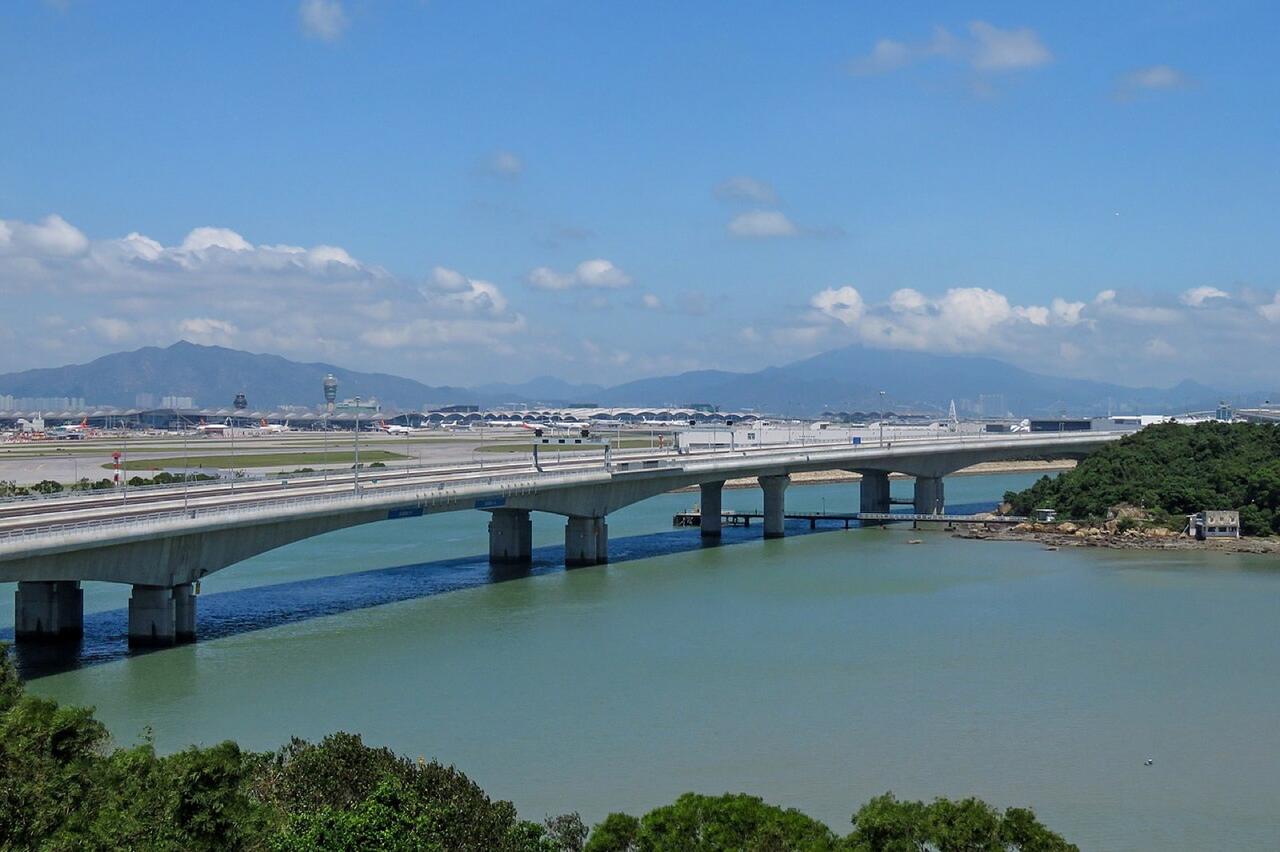
Guangdong Travel Guide (Zhuhai · Shenzhen Coast)
Where it is, when to go, how to get there, how much it costs, what to see, what to eat — a complete guide for global overseas Chinese travelers. Not marketing fluff; real, actionable travel reference. Three cities in the Pearl River Delta, three distinct personalities — Guangzhou's old-city depth, Zhuhai's coastal resort vibe, Shenzhen's modern urban energy.
Where Guangzhou, Zhuhai, and Shenzhen Are
A three-city PRD route — Guangzhou's old-city depth, Zhuhai's quiet seaside resort, Shenzhen's modern urban nature. The route offers a progression of distinct styles.
Geography
Guangzhou, Zhuhai, and Shenzhen are located in southern Guangdong Province, at the core of the Pearl River Delta. Guangzhou is the provincial capital and one of China's four first-tier cities. Zhuhai sits on the west bank of the Pearl River estuary, connected to Macau and facing Shenzhen/Hong Kong across the sea; it was one of China's first four Special Economic Zones, boasting the 26km Lovers' Road — China's longest seaside sightseeing road. Shenzhen lies on the east bank of the Pearl River estuary, separated from Hong Kong by a river, having transformed from a small fishing village 40 years ago into one of China's youngest first-tier cities and a global tech innovation hub.
The three cities form the PRD's golden triangle — Guangzhou → Zhuhai ~2 hours by car, Zhuhai → Shenzhen ~2.5 hours (via Shenzhen-Zhongshan Bridge or Humen Bridge), Shenzhen → Guangzhou ~1.5 hours. On a 6-day itinerary, you transfer between cities each morning and explore in the afternoon — no wasted daytime. For overseas Chinese travelers departing from Singapore or Malaysia, Guangzhou is the nearest first-tier Chinese city — just a 4-hour direct flight. Many overseas Chinese fly to Guangzhou then head straight to their ancestral hometowns — this route lets you truly explore the Greater Bay Area beyond family visits.
Why It's Worth Visiting
The PRD's three cities offer China's richest urban-coastal crossover experience:
- Guangzhou's old-city depth — Chen Clan Academy, the pinnacle of Lingnan architecture; Shamian Island's European-style building cluster; Sacred Heart Cathedral, one of the few all-granite Gothic cathedrals in the world
- Zhuhai's coastline — 26km Lovers' Road, Sun-Moon Shell, China's only grand theater on an island at sea, Heatwave Bay, City Balcony — all free
- Shenzhen's modern urban character — Shenzhen Bay Park's 15km coastal trail, Fairy Lake Botanical Garden, OH Bay Ferris Wheel
- A wide range of food — Guangzhou is the pinnacle of Cantonese cuisine; Shenzhen has authentic versions from all over China (Chaoshan beef hotpot, Hakka cuisine, Guangming roast squab)
- A progression of city styles — from old city to coastline to modernity, advancing day by day without feeling repetitive
- Entirely flat terrain — all three cities are coastal flatlands, no mountain climbing, suitable for elderly and children
For overseas Chinese travelers from Singapore and Malaysia, the unique value of Guangzhou–Zhuhai–Shenzhen is this: it showcases the Greater Bay Area's full spectrum — history and culture (Guangzhou), coastal resort (Zhuhai), and modern metropolis (Shenzhen) in one trip. Many overseas Chinese still picture these cities from over a decade ago — Shenzhen is far more modern and cleaner than imagined. Zhuhai's Sun-Moon Shell, set against the sea and the sunset glow, is the best photo spot in the entire PRD.
Best Travel Seasons
The PRD is a year-round destination, but seasonal experience varies significantly. Below is a month-by-month breakdown:
| Month | Temp Range | Landscape Highlights | Rating |
|---|---|---|---|
| Mar–Apr | 15–25°C | Spring blooms, comfortable coastline | ★★★★★ |
| May | 20–30°C | Pre-summer, great light for photos | ★★★★☆ |
| Jun–Aug | 26–35°C | Hot, higher typhoon probability | ★★★ |
| Sep–Nov | 18–28°C | Crisp autumn, bluest skies | ★★★★★ |
| Dec–Jan | 10–20°C | Coolest, seaside sunny days | ★★★★ |
| Feb | 12–22°C | Spring Festival travel peak, priciest flights | ★★ (Peak) |
Verdict: March–May and September–November are the golden windows for PRD travel — comfortable temperatures, clear skies and beautiful coastal scenery. June–August is hot with higher typhoon probability (Jul–Sep); your travel consultant checks weather before departure and adjusts itinerary if a typhoon warning is issued. December–January is coolest, with sunny seaside days and great light — photos actually turn out better than during summer's muggy heat. Avoid May Day and National Day Golden Weeks.
What to Prepare Before Departure
Visas, payment methods, clothing, gear — don't overlook any of the essentials.
Visa & Documents
Singapore passport holders: visa-free for 30 days in China — no advance application needed. Ensure passport validity exceeds 6 months.
Malaysian passport holders: visa-free for 30 days in China (subject to 2026 policy); 6-day itinerary is sufficient. Trips longer than 30 days require a visa in advance. Check latest policy before travel.
Guangdong: There are no additional restrictions for foreign visitors — same as visiting Beijing or Shanghai. Guangzhou, Zhuhai, and Shenzhen are open to all foreign visitors with valid documents; no special permits needed.
Carry ID at all times: Your passport is required for scenic spots and hotel check-in. Bring a photocopy as backup.
Payment Methods
China is highly cashless — prepare multiple mobile payment options:
- WeChat Pay / Alipay — Link an international credit card so you can pay by QR code, covering the vast majority of merchants
- UnionPay cards are widely accepted at convenience stores and malls; some merchants also accept Visa and Mastercard
- Cash — Carry a small amount of RMB; street stalls may be cash-only
- Tip — Activate the international version of WeChat Pay or Alipay before departure and link a credit card. This is far more convenient than exchanging cash.
Special note: Many shops near Zhuhai's Gongbei Port accept only RMB cash — carry some cash if you plan to explore the port area. Your travel consultant can pay on your behalf and settle later.
Clothing Checklist
The PRD has a warm, humid climate — dress light and comfortable:
- Mar–May / Sep–Nov: Short sleeves + light jacket; minimal day-night temperature variation but mall AC is cold
- Jun–Aug: Light summer clothing; quick-dry fabrics are best — muggy and sweaty, bring changes
- Dec–Feb: Long sleeves + light down jacket or windbreaker; 10–20°C isn't cold but humidity makes it feel chilly
- Rain gear: Compact umbrella — essential for Jun–Aug typhoon season and afternoon showers
- Shoes: A good pair of walking sneakers — Shenzhen Bay Park's 15km trail and Zhuhai's Lovers' Road require walking
- Sun protection: Sunglasses, hat — Zhuhai's coastline has strong sun; a full day outdoors will burn
Special note: July–September is typhoon season — your travel consultant checks weather before departure and adjusts itinerary if a typhoon warning is issued. Winter seaside wind is strong; bring a windbreaker jacket.
Gear Checklist
- Electronics: Power bank (photo-taking drains battery fast), car charger adapter
- Medication: Stomach medicine (dietary changes may cause discomfort), cold medicine, motion sickness pills (inter-city transfers involve driving), band-aids
- Other: Thermos, wet wipes, a few snacks
- Luggage: We recommend one large suitcase and one carry-on per person. Guangdong has many specialties — Cantonese cured meats, Shenzhen Guangming roast squab, Zhuhai dried seafood
Note: Zhuhai and Shenzhen coastlines have strong sun — even on cloudy days you can get sunburned. SPF50+ sunscreen is essential. Shenzhen Bay Park and Fairy Lake Botanical Garden are large; wear comfortable walking shoes.
How to Get to Guangzhou & Travel Between the Three Cities
Tight connections across the three PRD cities — choosing the right transport can make a big difference to how much you see and how comfortably you travel.
How to Get to Guangzhou
Fly into Guangzhou Baiyun International Airport (CAN) — this is the entry point for the vast majority of travelers.
From Singapore:
- Direct: Singapore–Guangzhou, ~4 hours (multiple airlines, high frequency)
- Connecting: Singapore–Hong Kong/Shenzhen–Guangzhou, total ~5–6 hours, lower price
From Malaysia (Kuala Lumpur):
- Direct: Kuala Lumpur–Guangzhou, ~4 hours (AirAsia has direct flights, very affordable)
- Connecting: Kuala Lumpur–Hong Kong/Shenzhen–Guangzhou, total ~5–6 hours
Tip: Guangzhou is one of the most convenient Chinese cities for direct overseas Chinese flights — frequent service and relatively low fares. You can also fly into Shenzhen Bao'an Airport then transfer to Guangzhou — ~1.5 hours by car. Book flights 1–2 months ahead; prices double during peak season (Spring Festival, Golden Weeks). AirAsia frequently runs promotions; Kuala Lumpur departures offer excellent value.
Inter-City Transport
Guangzhou, Zhuhai, and Shenzhen form the PRD's golden triangle, with moderate driving times between attractions:
- Guangzhou–Zhuhai: ~2 hours by expressway
- Zhuhai–Shenzhen: ~2.5 hours (via Shenzhen-Zhongshan Bridge or Humen Bridge)
- Shenzhen–Guangzhou: ~1.5 hours
- Within each city: Metro covers major attractions; taxis take 20–40 minutes
Transport options:
- Private vehicle / custom tour (recommended): 7-seat business van + driver-guide, the same vehicle stays with you throughout the trip, flexible stops, a well-managed itinerary — ideal for 4–6 person family trips. You transfer between cities each morning and explore in the afternoon.
- High-speed rail + taxi: Guangzhou–Zhuhai has intercity rail; Guangzhou–Shenzhen has high-speed rail, but you need taxis to reach scenic spots — cumbersome
- Self-drive: PRD road conditions are good but Shenzhen parking is difficult, tolls are high — not driver-friendly
- Group tour bus: This is the cheapest option, but also the most exhausting. — 6 AM wake-ups daily, 2-hour shopping stops, 1 hour at attractions
Core conclusion: The PRD's three-city connections are tight; transport isn't the biggest cost item. But choosing the right transport shapes how efficiently you travel and which places you can realistically visit. The key is avoiding shopping tours and fake no-shopping tours. Your driver-guide knows which roads avoid traffic and adjusts in real time — if the Shenzhen-Zhongshan Bridge route is open, Zhuhai to Shenzhen takes just 1 hour.
Travel Planning: Industry Norms vs Our Approach
How Much Does a Guangzhou Zhuhai Shenzhen Trip Cost
Based on 6 days 5 nights, Guangzhou entry/exit. USD primary, with RMB/MYR/USD reference.
The following costs are based on a 6-day, 5-night trip, Guangzhou entry/exit, Guangzhou–Zhuhai–Shenzhen three-city route. Prices include full transport, accommodation, tickets, and insurance, excluding round-trip flights and lunch/dinner. Actual prices fluctuate with group size, hotel tier, and season.
Cost Notes
- Included: Full private vehicle (fuel/tolls/expressway fees), hotels (with breakfast), attraction tickets (Chen Clan Academy / Sacred Heart Cathedral / New Yuanming Palace / Fairy Lake Botanical Garden), ¥500K travel accident insurance, airport transfers
- Not included: Round-trip flights to Guangzhou, lunch/dinner (recommended, not mandatory — driver-guide recommends local eateries), OH Bay Ferris Wheel (exterior viewing is free, ride is optional), personal expenses, visa fees (Singapore, Malaysia and most other passports enjoy visa-free entry)
- Meal cost reference: Lunch + dinner ~USD 5–20 per person per day (approx. RMB 50–135) eats very well — Cantonese morning tea, Chaoshan beef hotpot, Zhuhai seafood
- Flight cost reference: Singapore/Kuala Lumpur round-trip to Guangzhou, advance booking USD 150–300 peak season USD 300–525
Actual prices fluctuate with vehicle type and hotel tier. Tell us your group size and travel dates, and a travel consultant will provide an exact quote.
Four Must-Visit Places
Chen Clan Academy, Sun-Moon Shell, Shenzhen Bay Park, Fairy Lake Botanical Garden — highlights and pitfalls for each.
Built in the 14th year of Guangxu (1888), the Chen Clan Academy was funded by the Chen clan across 72 Guangdong counties. Now home to the Guangdong Folk Arts Museum, it is the best-preserved and most exquisitely decorated ancestral hall in the Lingnan region — integrating stone carving, brick carving, wood carving, ceramic sculpture, lime sculpture, copper-iron casting, and painted decoration — the "Seven Wonders." Guangzhou's old-city core isn't the new central axis's modern towers, but the historically rich old architectural clusters.
Highlights:
- · Chen Clan Academy — the pinnacle of Lingnan architecture, stone/brick/wood carving mastery
- · Shamian Island — 19th-century British-French concession architecture, ancient tree canopies
- · Sacred Heart Cathedral — One of only four all-stone Gothic cathedrals worldwide
- · Yuexiu Park — Five Rams Statue, Guangzhou's city symbol
Best time: Year-round. Early morning is quietest and most pleasant. Note Sacred Heart Cathedral opening hours — usually closed Mondays. Today covers Guangzhou's four most historically significant spots — not the modern towers of the new central axis.
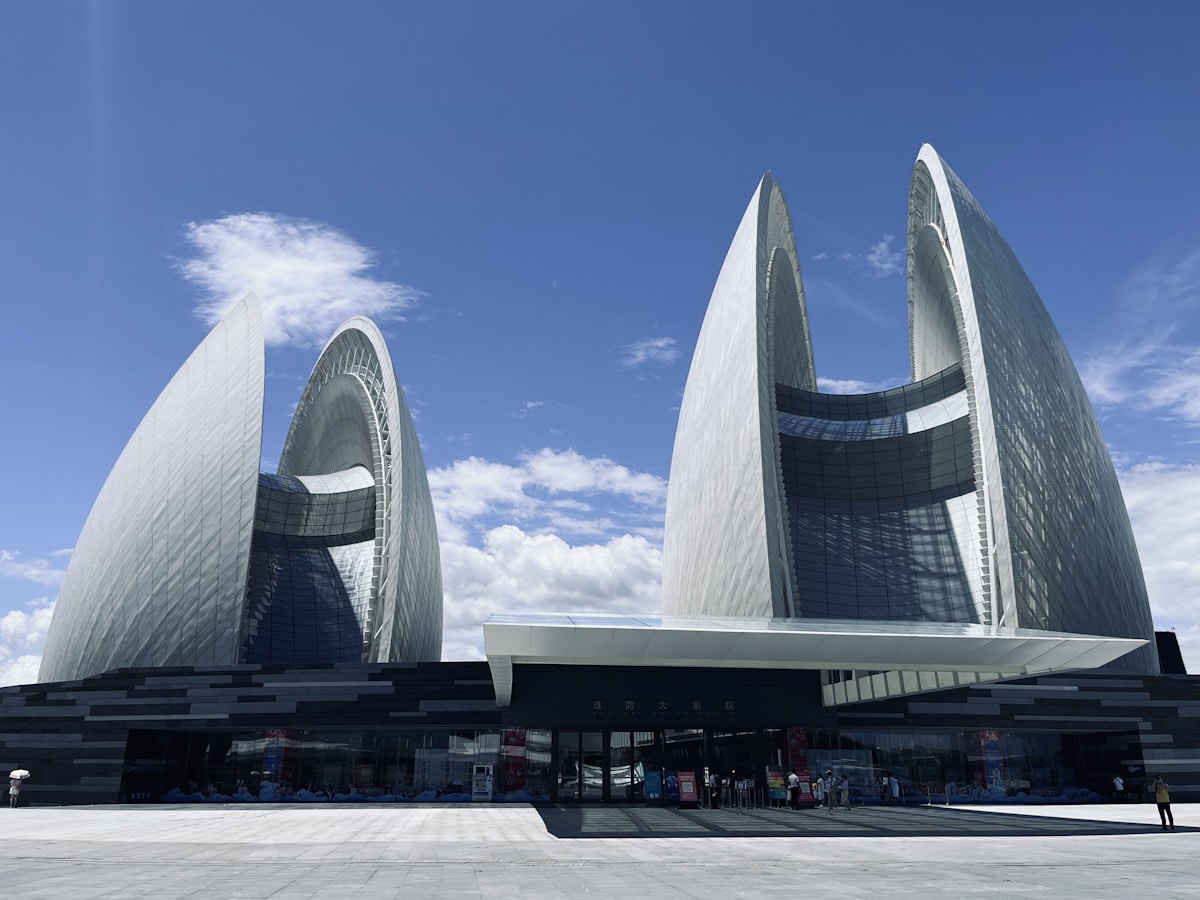
The Zhuhai Grand Theater, nicknamed "Sun-Moon Shell" for its twin-shell shape, is built on Yeli Island — China's only grand theater on a sea island. Zhuhai's real value lies in the 26km Lovers' Road — China's longest seaside sightseeing road, with Heatwave Bay, Love Post Office, City Balcony, and Sun-Moon Shell all free. We skip Chimelong — it's a theme park; Singapore has Universal Studios, no need to fly thousands of kilometers.
Highlights:
- · Sun-Moon Shell — China's only sea-island grand theater, best photo at dusk
- · Lovers' Road — 26km seaside sightseeing road, China's longest
- · Heatwave Bay + City Balcony — Free sea views, far better value than theme parks
- · Beishan Courtyard — Zhuhai's version of Yongqing Fang, old ancestral halls turned creative district
Recommended route: Follow Lovers' Road southward; every stop is a sea view. Visit the Sun-Moon Shell at dusk — Sun-Moon Shell + sea + sunset glow is Zhuhai's best photo spot. No ticket needed — the exterior is more impressive than the interior.
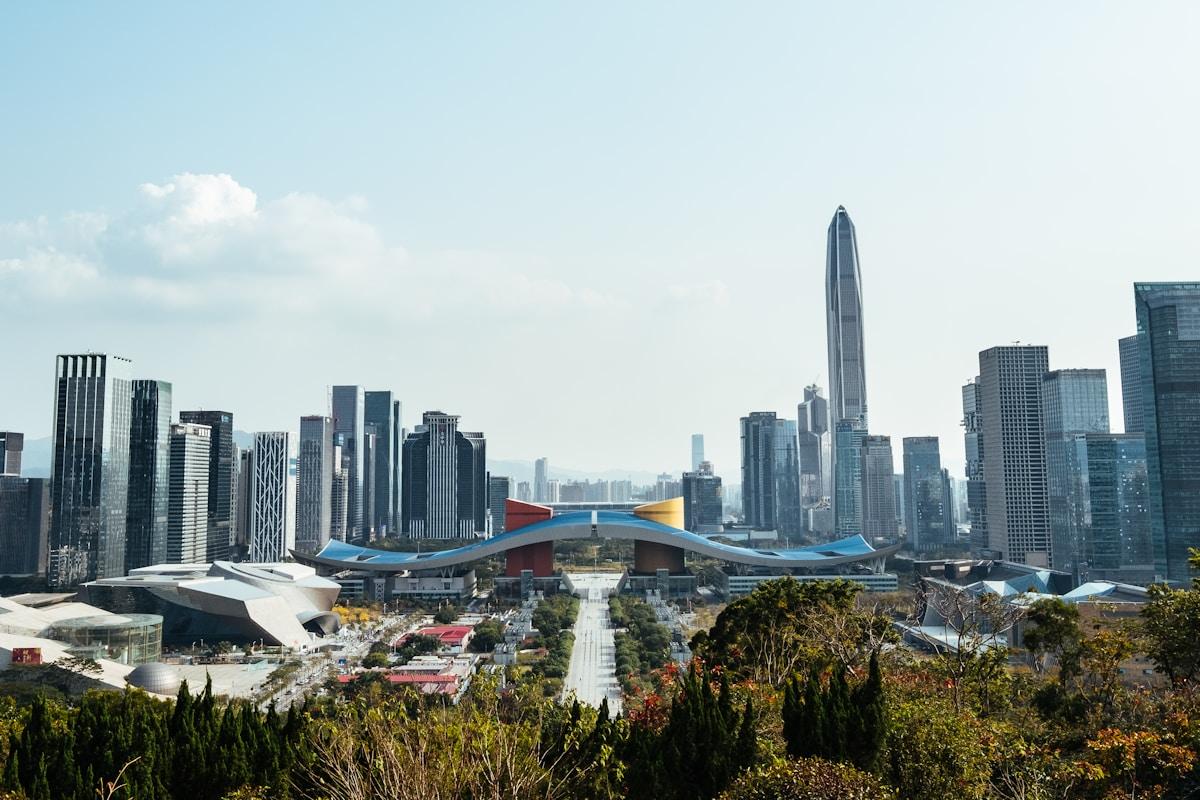
Shenzhen Bay Park is a 15km coastal trail, with Hong Kong's Yuen Long right across the water. Shenzhen isn't a tourist city — it has no Forbidden City or Great Wall, but it's far more modern and cleaner than many imagine. Many overseas Chinese still picture it from over a decade ago. We skip Window of the World — miniature fake buildings with a ¥220 ticket, completely not worth it. Shenzhen's essence is modern urbanity + nature.
Highlights:
- · Shenzhen Bay Park — 15km coastal trail, Hong Kong's Yuen Long right across
- · OH Bay — Ferris wheel + seaside promenade, great for photos
- · City skyline — Viewed en route; Shenzhen is more modern than expected
- · Free — Shenzhen Bay Park and OH Bay exterior viewing are both free
Best time: Year-round. Dusk at Shenzhen Bay Park, watch the sunset with Hong Kong's Yuen Long across. Winter seaside sunny days have great light — photos actually turn out better than during summer's muggy heat.
Fairy Lake Botanical Garden is located in northeastern Shenzhen, covering 590 hectares and rated a 5A national scenic area. The garden houses Hongfa Temple (Shenzhen's largest Buddhist temple), a petrified forest (well-preserved silicified wood cluster), a cactus greenhouse, and a shade plant zone. It's Shenzhen's best fusion of nature and culture — real nature, not artificial attractions.
Highlights:
- · Hongfa Temple — Shenzhen's largest Buddhist temple, free incense
- · Petrified Forest — Well-preserved silicified wood cluster, rare
- · Cactus Greenhouse — Large-scale cactus exhibition, photogenic
- · Shade Plant Zone — Dense greenery, cool and pleasant for summer
Recommended route: Morning: Hongfa Temple + Petrified Forest; afternoon: Cactus Greenhouse. Fairy Lake Botanical Garden is large — if seniors tire, they can rest with tea near Hongfa Temple; no need to walk the entire garden. Shuttle buses are available inside the garden.
What to Eat in Guangzhou Zhuhai Shenzhen
Cantonese morning tea, Chaoshan beef hotpot, Zhuhai seafood — local-frequented eateries, not viral-influencer spots.
The three PRD cities span a vast food spectrum — Guangzhou is the pinnacle of Cantonese cuisine, Shenzhen has authentic versions from all over China (Chaoshan beef hotpot, Hakka cuisine, Guangming roast squab), and Zhuhai is all about seafood. Below are not the top-ranked viral shops on Xiaohongshu, but places locals actually eat at daily. Prices in RMB with USD reference.
Other Worth Trying
- White Cut Chicken (Bai Qie Ji) — Cantonese cuisine fundamental; skin smooth, meat tender, dipped in ginger-scallion sauce
- Siu Mei (Roasted Meats) — Char siu, roast goose, soy sauce chicken; a platter from Guangzhou's roast meat stalls
- Cheong Fun (Rice Noodle Rolls) — Guangzhou breakfast staple; cloth-steamed rolls are thinnest and smoothest
- Double-Skin Milk — A Shunde specialty; good versions also exist in Guangzhou
- Hakka Cuisine — Shenzhen Hakka stuffed tofu, salt-baked chicken; Shenzhen is a Hakka settlement area
Meal cost reference: Lunch + dinner ~USD 5–20 per person per day (approx. RMB 50–135) eats very well. Tour group meals are ¥30–40 per person but low quality — mass-produced, pre-made dishes. Find local eateries yourself; same money gets you three times better food. Guangdong route's unified logic: no viral-influencer restaurants.
About Guangzhou Zhuhai Shenzhen Travel
Start Planning Your PRD Coastal Journey
Tell us your group size and travel dates, and a travel consultant will customize your Guangzhou Zhuhai Shenzhen itinerary.
Brand Direct · Fully Licensed · ¥500K Travel Accident Insurance · No Tipping
Key Takeaways
- Guangzhou, Zhuhai, and Shenzhen form a three-city Pearl River Delta route that combines old-city heritage, seaside scenery, and modern urban landscapes. The article presents it as a 6-day, 5-night itinerary with morning transfers and afternoon sightseeing.
- The guide says the best travel windows are March to May and September to November, when temperatures are more comfortable and skies are clearer. It also notes that June to August is hotter with higher typhoon probability, and advises avoiding the May Day and National Day holiday peaks.
- Key attractions highlighted include Guangzhou’s Chen Clan Academy, Shamian Island, and Sacred Heart Cathedral; Zhuhai’s Lovers’ Road and Sun-Moon Shell; and Shenzhen Bay Park, Fairy Lake Botanical Garden, and the OH Bay Ferris Wheel. The terrain across all three cities is described as flat and suitable for elderly travelers and children.
- For entry, the article states that Singapore passport holders are visa-free for 30 days in China, and Malaysian passport holders are visa-free for 30 days subject to 2026 policy. It says no special permits are needed for Guangdong beyond valid travel documents, and travelers should carry their passport for hotel check-in and scenic spots.
- The article says China is highly cashless and recommends preparing mobile payments such as WeChat Pay or Alipay linked to an international credit card. It also notes that UnionPay is widely accepted, with some merchants accepting Visa and Mastercard.
Official resources
- Ministry of Culture and Tourism of the People's Republic of China (mct.gov.cn) — the national regulator for licensed travel agencies
- National Immigration Administration (nia.gov.cn) — official entry, exit, and immigration information for mainland China
- Consular Services, Ministry of Foreign Affairs (cs.mfa.gov.cn) — official consular information and travel notices