Henan Travel Guide
Where Henan is, when to go, how to get there, how much it costs, what to see, what to eat — a complete guide for global overseas Chinese travelers. No marketing fluff—just practical, actionable travel advice.
Where Is Henan
Henan lies at the heart of China’s Central Plains, through which the Yellow River flows — the birthplace of Chinese civilization. One province, five thousand years.
Geography
Henan Province is located in east-central China, in the middle and lower reaches of the Yellow River. Most of the province lies south of the Yellow River, hence the name "Henan" (River South). Historically called "Zhongzhou" or "Zhongyuan" (Central Plains). It sits at China's transportation crossroads — the Beijing-Guangzhou and Longhai railway lines intersect here, making Zhengzhou a national railway hub. Henan has a warm-temperate to subtropical monsoon climate, with four distinct seasons: cold winters, hot summers.
The main axis of Henan travel centers on the Zhengzhou–Kaifeng–Luoyang triangle. The three cities form a triangle, each about 1–1.5 hours apart by car. Zhengzhou is the transportation hub and home to the Henan Museum; Kaifeng is a seven-dynasty ancient capital where Millennium City Park recreates the bustling prosperity of Bianjing during the Northern Song Dynasty; Luoyang is a nine-dynasty ancient capital with Longmen Grottoes and White Horse Temple. Shaolin Temple is in Dengfeng, between Zhengzhou and Luoyang. First-time visitors should arrive in and depart from Zhengzhou, covering Zhengzhou–Kaifeng–Luoyang plus Shaolin Temple in 5 days — this is the area this guide focuses on.
Why Visit
Henan is one of the heartlands of Chinese civilization, with the densest concentration of historical and cultural heritage:
- Shaolin Temple — birthplace of Chan (Zen) Buddhism and Shaolin kung fu, with official monk performances in the main courtyard, a millennium-old temple at the foot of Mount Song
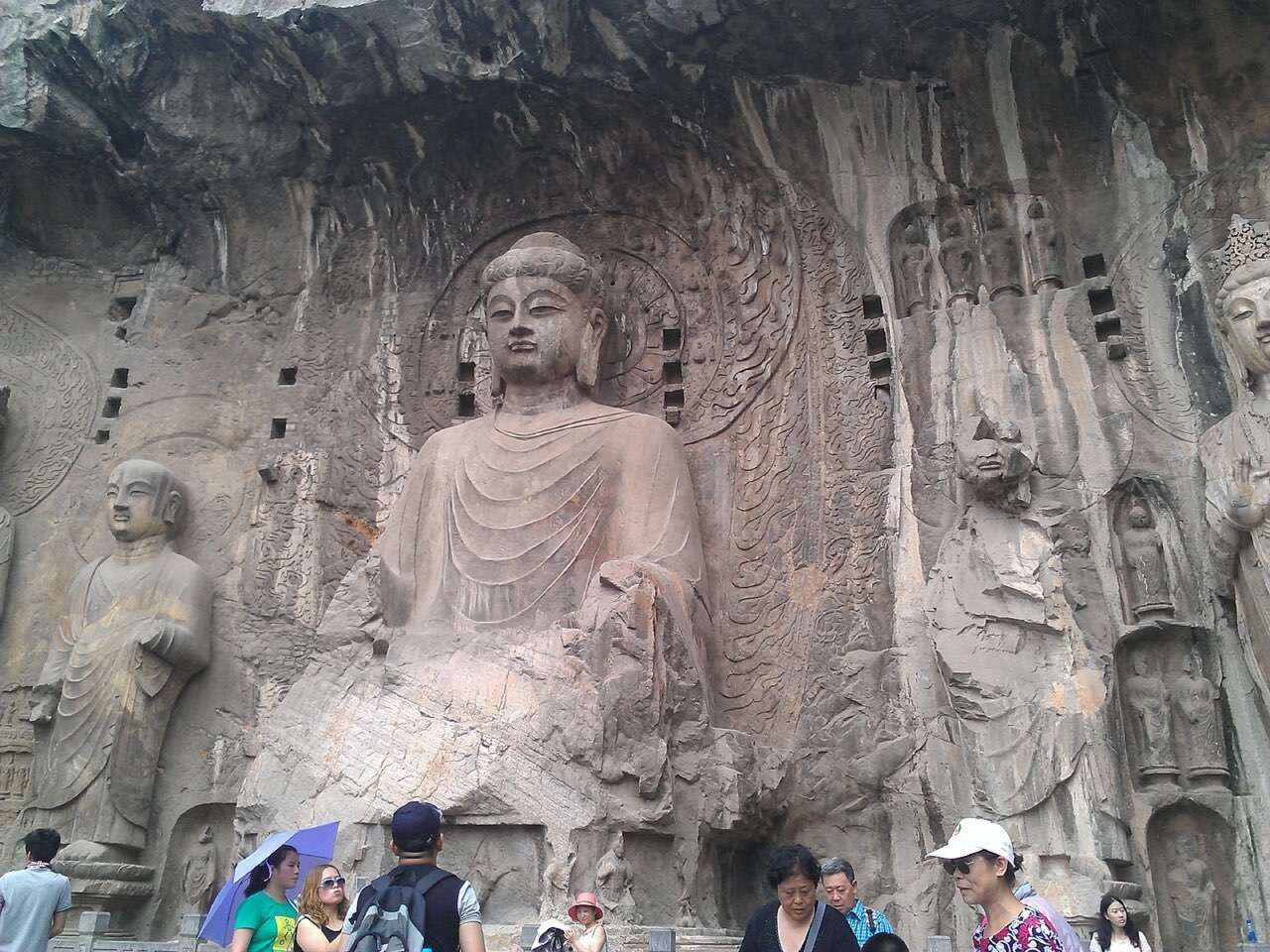
- Longmen Grottoes — UNESCO World Heritage Site, carved over 400+ years from Northern Wei to Tang Dynasty; the 17.14 m Vairocana Buddha is the pinnacle of Chinese stone carving art
- Henan Museum — one of China's top eight museums, housing 170,000 artifacts; the Jiahu Bone Flute (8,000 years old) is the world's oldest playable musical instrument
- Millennium City Park — a large-scale Song Dynasty theme park based on the famous painting "Along the River During the Qingming Festival," offering an immersive Northern Song Bianjing experience
- White Horse Temple — China's first government-built Buddhist temple, the first officially built Buddhist temple in China
- Central Plains Culture — four of China's eight ancient capitals are in Henan (Luoyang, Kaifeng, Anyang, Zhengzhou), from Yangshao Culture to Northern Song, five millennia of unbroken civilization
For overseas Chinese travelers from Singapore and Malaysia, Henan's unique value lies in this: it is one of the most direct ways to explore the roots of Chinese civilization. While most overseas Chinese ancestors came from southern China, the source of civilization is in the Central Plains — the Yellow River, Shaolin, Longmen, Bianjing. These aren't just textbook concepts; they're real places you can experience on foot in 5 days. Flying from Singapore to Zhengzhou (via Guangzhou/Shenzhen) takes about 5–6 hours. Henan is more affordable than coastal China — great travel value.
Best Season to Visit
Henan has four distinct seasons with significant differences in experience. Below is a month-by-month breakdown:
| Month | |Temperature | |Highlights | |Rating |
|---|---|---|---|
| Mar–Apr | 8–20°C | Spring blooms, Luoyang Peony Festival | ★★★★★ |
| May–Jun | 15–28°C | Early summer, comfortable, great light | ★★★★☆ |
| Jul–Aug | 25–35°C | Hot, peak summer holiday crowds | ★★★ |
| Sep–Oct | 12–25°C | Crisp autumn, Chrysanthemum Exhibition | ★★★★★ |
| Nov | 5–18°C | Cool, comfortable weather, fewer crowds, lower prices | ★★★★ |
| Dec–Feb | -5–8°C | Dry, cold, windy — poor outdoor experience | ★★ (off-season) |
Conclusion: April to June and September to November are the best times to visit Henan — sunny, comfortable temperatures, flower seasons (peonies in April, chrysanthemums in October). July–August is hot and is the summer peak with highest prices. December–February is dry, cold, and windy with poor outdoor experience, but fewer crowds and lower prices. Avoid the Labor Day (May 1) and National Day (Oct 1) Golden Weeks — overwhelmingly crowded.
What to Prepare Before Departure
Visa, clothing, gear — don't miss a thing.
Visa & Documents
Singapore Passport: 30-day visa-free entry to China, no advance visa application needed. Ensure passport validity exceeds 6 months.
Malaysian passport holders: 30-day visa-free entry to China (subject to 2026 policy). If your trip exceeds 30 days, apply for a visa in advance. Check the latest policy before travel.
Henan: There are no additional restrictions for foreign visitors — same as going to Beijing or Shanghai. Zhengzhou, Kaifeng, Luoyang, and Dengfeng are open to all foreign visitors with valid documents; no special permits required.
Carry ID at all times: Passport required for attractions and hotel check-in. Henan Museum is free but requires reservation — we book it for you in advance; enter with your passport.
Climate & Clothing
Henan has a warm-temperate to subtropical monsoon climate with four distinct seasons — cold winters, hot summers, most comfortable in spring and autumn. Elevation is low — Zhengzhou city center ~100m, Luoyang ~150m, Shaolin Temple (Dengfeng) ~350 m, no altitude sickness risk. Prepare as follows:
- Spring/Autumn (Mar–May / Sep–Nov): Light jacket + long-sleeve T-shirt, ~10°C temperature swing between morning and evening. The Luoyang Peony Festival in April draws crowds — bring walking shoes; large garden areas require lots of walking
- Summer (Jun–Aug): Light, breathable clothing; June–August can exceed 35°C. Sun protection essential — Longmen Grottoes and Shaolin Temple are fully outdoor with strong sun exposure
- Winter (Dec–Feb): Heavy coat or down jacket — December–February can drop to -5°C, dry, cold, windy. Not recommended for winter travel
- Shoes: A good pair of walking shoes — Henan Museum, Millennium City Park, and Longmen Grottoes all require extensive walking
- Accessories: Sunglasses, hat — outdoor attractions get strong sun in spring and autumn
Special Note: Dust storms occasionally occur in Henan spring; sensitive individuals may want a mask. Summer thunderstorms come suddenly — bring a folding umbrella. Longmen Grottoes West Hill has many steps — wear non-slip shoes.
Packing Checklist
- Sun protection: SPF50+ sunscreen, sunglasses (UV400), hat — Longmen Grottoes and Shaolin Temple are fully outdoor with strong sun
- Medications: Motion sickness pills (few mountain roads but long drives), stomach medicine (wheat-based diet may cause discomfort), cold medicine, band-aids
- Electronics: Bring a power bank if you'll be out all day, ID documents (required for museum entry)
- Other: Thermos (hot water while traveling), wet wipes, a few snacks
- Luggage: One large suitcase + one carry-on per person recommended. Henan is known for many local specialties — Spicy Pepper Soup seasoning packets, Daokou Braised Chicken, Xinzheng Red Dates, Xinyang Maojian tea
Note: Henan Museum is free but requires advance reservation; enter with passport — we book it for you. Millennium City Park and Longmen Grottoes tickets are included in your itinerary; no additional charges on-site.
How to Get to Henan & Get Around
Enter and exit via Zhengzhou, the Zhengzhou–Kaifeng–Luoyang triangle is compact — your transport arrangement makes or breaks the experience.
Getting to Henan
Fly to Zhengzhou Xinzheng International Airport (CGO) — This is the main gateway for most travelers.
From Singapore:
- Direct: Singapore–Zhengzhou, ~5 hours (some airlines operate direct flights, but limited frequency)
- Transit: Singapore–Guangzhou/Shenzhen–Zhengzhou, total 6–7 hours, lower cost
From Malaysia (Kuala Lumpur):
- Transit: Kuala Lumpur–Guangzhou/Shenzhen–Zhengzhou, total 6–7 hours
- AirAsia offers cheap flights from Kuala Lumpur to Guangzhou, from where you can transfer to Zhengzhou — great value
Tip: Zhengzhou is one of the hub cities for overseas Chinese travelers to fly directly into central China. Book flights 1–2 months in advance; peak season (Jul–Aug, Spring Festival) prices double. You can also fly to Wuhan or Xi'an and take high-speed rail to Zhengzhou (~2 hours) for more flight options.
Getting Around Henan
The main travel axis is Zhengzhou–Kaifeng–Dengfeng–Luoyang, covering about 200 km in total. Distances between attractions:
- Zhengzhou–Kaifeng: ~1 hour by highway
- Zhengzhou–Shaolin Temple (Dengfeng): ~1.5 hours by highway
- Shaolin Temple–Luoyang: ~1.5 hours by highway
- Luoyang–Longmen Grottoes: ~30 minutes
- Zhengzhou–Luoyang: ~2 hours by highway (or ~40 minutes by high-speed rail)
Transport Options:
- Private car / custom tour (Recommended): 7-seat business van + driver-guide, flexible stops, controlled itinerary, ideal for 4–6 person family trips. Key advantage: first three days based in Zhengzhou without changing hotels, only move to Luoyang on Day 4
- High-speed rail + taxi: Zhengzhou–Luoyang high-speed rail (~40 minutes), Kaifeng accessible by intercity train. Suitable for budget independent travel
- Self-drive: Central Plains roads are good, but parking at attractions is difficult
- Group bus tour: Cheapest but most exhausting — wake up at 6am daily, 2-hour shopping stops, only 1 hour at attractions
Core Conclusion: The Henan Zhengzhou–Kaifeng–Luoyang triangle is compact — the main cities and attractions are generally within 1 to 1.5 hours of one another, unlike Xinjiang or Yunnan where distances are hundreds of kilometers. Choosing the right transport and accommodation strategy (first three days in Zhengzhou without changing hotels) makes all the difference. The key is avoiding shopping tours and fake "pure sightseeing" tours.
Travel Arrangements: Industry Norm vs. Our Approach
How Much a Henan Trip Costs
Based on a 5-day 4-night Zhengzhou–Kaifeng–Dengfeng–Luoyang route. Quoted primarily in USD, with RMB/MYR/USD reference.
The following costs are based on a 5-day 4-night route: arrival in and departure from Zhengzhou, covering Henan Museum – Kaifeng Millennium City Park – Shaolin Temple – Longmen Grottoes. Prices include all transport, accommodation, tickets, and insurance. Excludes round-trip flights and lunch/dinner. Actual prices vary with group size, hotel tier, and season.
Cost Notes
- Included: Full private vehicle (fuel/tolls/parking), hotels (with breakfast), attraction tickets (Shaolin Temple, Longmen Grottoes, Millennium City Park), ¥500,000 travel accident insurance, Henan Museum reservation, airport transfers
- Not Included: Round-trip flights to Zhengzhou, lunch/dinner (recommended flexible — driver-guide recommends local eateries), personal expenses, visa fees (Singapore, Malaysia and most other passports enjoy visa-free entry to China)
- Meal Budget Reference: Lunch and dinner average USD 5–10/person/day (approx. RMB 50–80) for excellent food — Spicy Pepper Soup, Braised Noodles, Soup Dumplings, Lamb Soup
- Flight Budget Reference: Singapore/KL round-trip to Zhengzhou (via Guangzhou/Shenzhen), if booked early, around USD 185–375; in peak season, around USD 375–600
Actual prices vary with vehicle type and hotel tier. Tell us your group size and travel dates, and a travel consultant can provide an exact quote.
Four Must-Visit Places
Shaolin Temple, Longmen Grottoes, Henan Museum, Millennium City Park — highlights and pitfalls for each.
Shaolin Temple is located at the foot of Wuru Peak on Mount Song in Dengfeng City, southwest of Zhengzhou. Founded in 495 AD, during the Taihe era of the Northern Wei Dynasty, it has over 1,500 years of history. It is the ancestral home of Chinese Chan (Zen) Buddhism and the birthplace of Shaolin martial arts. The main courtyard, Pagoda Forest, and First Patriarch's Hermitage are part of the "Center of Heaven and Earth" UNESCO World Heritage historic building complex. Official monk performances are held in the main courtyard.
Highlights:
- · Main Courtyard — core temple complex: Hall of Heavenly Kings, Mahavira Hall, Thousand Buddha Hall in sequence
- · Monk Performance — official monk troupe demonstrating Shaolin kung fu: hard qigong demonstrations, fist forms, weapons, ~30 min each show
- · Pagoda Forest — tomb pagodas of Shaolin abbots through the ages, 248 ancient pagodas, China's largest pagoda forest
- · Bodhidharma Cave — where Chan's first patriarch Bodhidharma faced a wall in meditation for nine years; requires ~30 min hike
Recommended Route: Morning arrival at Shaolin Temple, start with the main courtyard and monk performance, afternoon at Pagoda Forest. Total ~3–4 hours. The Mount Song scenic area is large, so it’s best to start in the main core area and explore on foot. Bodhidharma Cave optional depending on energy.
Longmen Grottoes are located on both banks of the Yi River in southern Luoyang. Carving began when Emperor Xiaowen of Northern Wei moved the capital to Luoyang (493 AD) and continued through Eastern Wei, Western Wei, Northern Qi, Sui, Tang, and Northern Song dynasties — over 400 years of intermittent carving. The site contains 2,345 surviving niches and more than 110,000 statues. It is a UNESCO World Heritage Site. The Vairocana Buddha, 17.14m tall, is the pinnacle of Tang Dynasty stone carving art.
Key Facts:
- · West Hill Grottoes — core area: Vairocana Buddha, Fengxian Temple, Ten Thousand Buddha Cave — the highlights are concentrated here
- · Vairocana Buddha — 17.14m tall, reportedly modeled on Empress Wu Zetian's features; the pinnacle of Chinese stone carving art
- · East Hill Grottoes — Kanjing Temple, Leigu Platform Three Caves, etc.; smaller scale than West Hill
- · Xiangshan Temple — temple restored with funds donated by Bai Juyi; panoramic view over Yi River and grottoes
Recommended Route: Visit in the afternoon — light comes from the west, best for photos and detailed viewing of the Vairocana Buddha. Focus on West Hill Grottoes (2 hours); East Hill Grottoes and Xiangshan Temple optional depending on energy. Total ~2–3 hours recommended.
Henan Museum is located on Nongye Road in Zhengzhou and is one of China's top eight museums. The main building was modeled on the Dengfeng Observatory Tower, symbolizing "Central Plains culture with ancient origins." The museum houses 170,000 artifacts, including 534 first-class national relics and 8 national treasures. The Jiahu Bone Flute (~8,000 years old) is the world's oldest playable musical instrument; the Fu Hao Owl Zun is a masterpiece of Shang Dynasty bronzes; the Lotus and Crane Square Pot is hailed as "the swan song of the Bronze Age."
Highlights:
- · Jiahu Bone Flute — ~8,000 years old, made from crane wing bone; world's oldest playable musical instrument
- · Fu Hao Owl Zun — from the tomb of Fu Hao, Shang Dynasty bronze masterpiece
- · Lotus and Crane Square Pot — Spring and Autumn period bronze, hailed as "the swan song of the Bronze Age"
- · Wu Zhao Gold Tablet — the only surviving physical relic of Empress Wu Zetian
Best Time: Year-round (indoor venue). Allow 2–3 hours. Free but requires advance reservation — we book it for you; enter with passport. It's best visited in the morning, with the afternoon reserved for Erqi Square.
Millennium City Park is located on the west bank of Longting Lake in Kaifeng. It is a large-scale Song Dynasty cultural theme park based on Zhang Zeduan's Northern Song painting "Along the River During the Qingming Festival." Covering over 600 mu (~40 hectares), it recreates the Rainbow Bridge, streets, restaurants, and teahouses from the painting. Staff wear Song Dynasty costumes, and there are intangible cultural heritage performances such as Bian embroidery and movable-type printing. It is the best place for an immersive Northern Song Bianjing experience.
Highlights:
- · Rainbow Bridge — iconic landmark in the park, recreating the Rainbow Bridge scene from the painting
- · Bian River Water Transport — canal transport performances on the Bian River, recreating Northern Song waterway prosperity
- · Intangible Heritage Performances — Bian embroidery, movable-type printing, acrobatics, drum performances, and other Song Dynasty folk arts
- · Little Song City — gathering place for Kaifeng snacks: Soup Dumplings, Fried Bean Jelly, Almond Tea
Best Time: Year-round. Spring and autumn most comfortable. Evening features the "Great Song · Dream of Dongjing" live performance (separate ticket). It's best to arrive in the afternoon, explore for 3–4 hours, then head to Little Song City in the evening for Kaifeng snacks.
What to Eat in Henan
Spicy Pepper Soup, Braised Noodles, Soup Dumplings, Lamb Soup — local eateries, not kickback restaurants.
Henan cuisine is the foundation of Central Plains food culture, with wheat-based staples, rich soups, generous portions, and bold flavors. The following are not tourist-trap kickback restaurants but places locals eat daily. Prices in RMB with USD reference.
More Worth Trying
- Daokou Braised Chicken — specialty of Daokou Town, Huaxian County, Henan; one of China's Four Famous Chickens; crispy and fall-off-the-bone tender
- Braised Flatbread (Men Bing) — Henan homestyle staple; flatbread strips braised with bean sprouts and cabbage; simple and delicious
- Fried Bean Jelly (Chao Liang Fen) — Kaifeng snack; jelly cubes pan-fried, crispy outside tender inside, with garlic sauce
- Almond Tea (Xing Ren Cha) — Kaifeng traditional drink; a sweet, fragrant drink made by simmering almond powder; sweet, fragrant, and warming
- Xinyang Maojian Tea — specialty green tea from Xinyang, Henan; one of China's Top Ten Famous Teas
Meal budget: USD 5–10/person/day (approx. RMB 50–80) for excellent meals. Henan is cheaper than coastal China — your money goes much further here than in coastal China. Group tour meals cost ¥30–40/person but are poor quality — mass-produced, pre-made. Find local eateries yourself; a bowl of Spicy Pepper Soup costs ¥5 and fills you up.
About Henan Travel
Start Planning Your Henan Trip
Tell us your group size and travel dates, and a travel consultant will customize your Henan itinerary.
Brand Direct · Fully Licensed · ¥500K Travel Accident Insurance · No Tipping
Key Takeaways
- Henan is in east-central China along the Yellow River and the guide focuses on a first-time route through Zhengzhou, Kaifeng, Luoyang, and Shaolin Temple. These places are about 1–1.5 hours apart by car, with Zhengzhou as the main transport hub.
- The province is presented as a core area of Chinese civilization, with key sites including Shaolin Temple, Longmen Grottoes, Henan Museum, Millennium City Park, and White Horse Temple. Luoyang, Kaifeng, Anyang, and Zhengzhou are noted as four of China’s eight ancient capitals.
- The best times to visit are April to June and September to November, when temperatures are more comfortable and seasonal flowers are in bloom. July and August are hot and crowded, while December to February is cold, dry, and windy with a poorer outdoor experience.
- Singapore and Malaysian passport holders are described as eligible for 30-day visa-free entry to China, with Malaysians advised to check the latest policy because it is stated as subject to 2026 policy. Travelers should carry their passport for attractions and hotel check-in, and no special permits are required for Zhengzhou, Kaifeng, Luoyang, or Dengfeng.
- Henan is described as more affordable than coastal China, and the article says flying from Singapore to Zhengzhou via Guangzhou or Shenzhen takes about 5–6 hours. The guide also warns against traveling during the May 1 and October 1 Golden Week holidays because of very heavy crowds.
Official resources
- Ministry of Culture and Tourism of the People's Republic of China (mct.gov.cn) — the national regulator for licensed travel agencies
- National Immigration Administration (nia.gov.cn) — official entry, exit, and immigration information for mainland China
- Consular Services, Ministry of Foreign Affairs (cs.mfa.gov.cn) — official consular information and travel notices