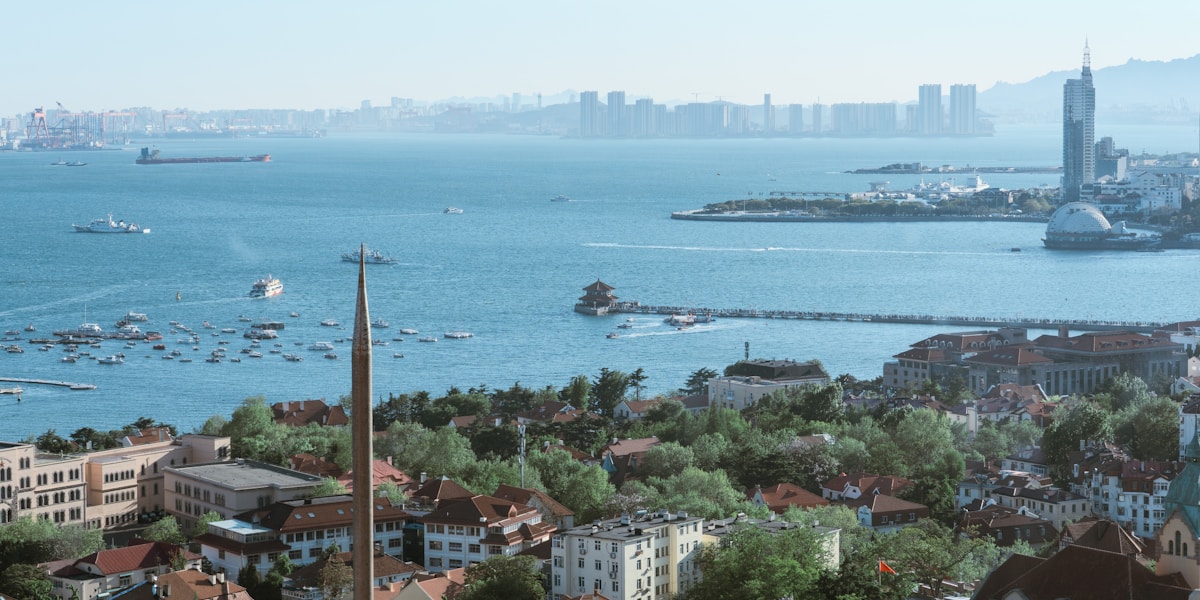
Shandong Travel Guide
One mountain, one river, one sage. Tsingtao beer, Weihai coastline, Mount Tai sunrise, Qufu's Three Confucian Sites, Jinan's artesian springs — where Shandong is, when to go, how to get there, how much it costs, what to see, what to eat. A complete guide for global overseas Chinese travelers.
Where Is Shandong?
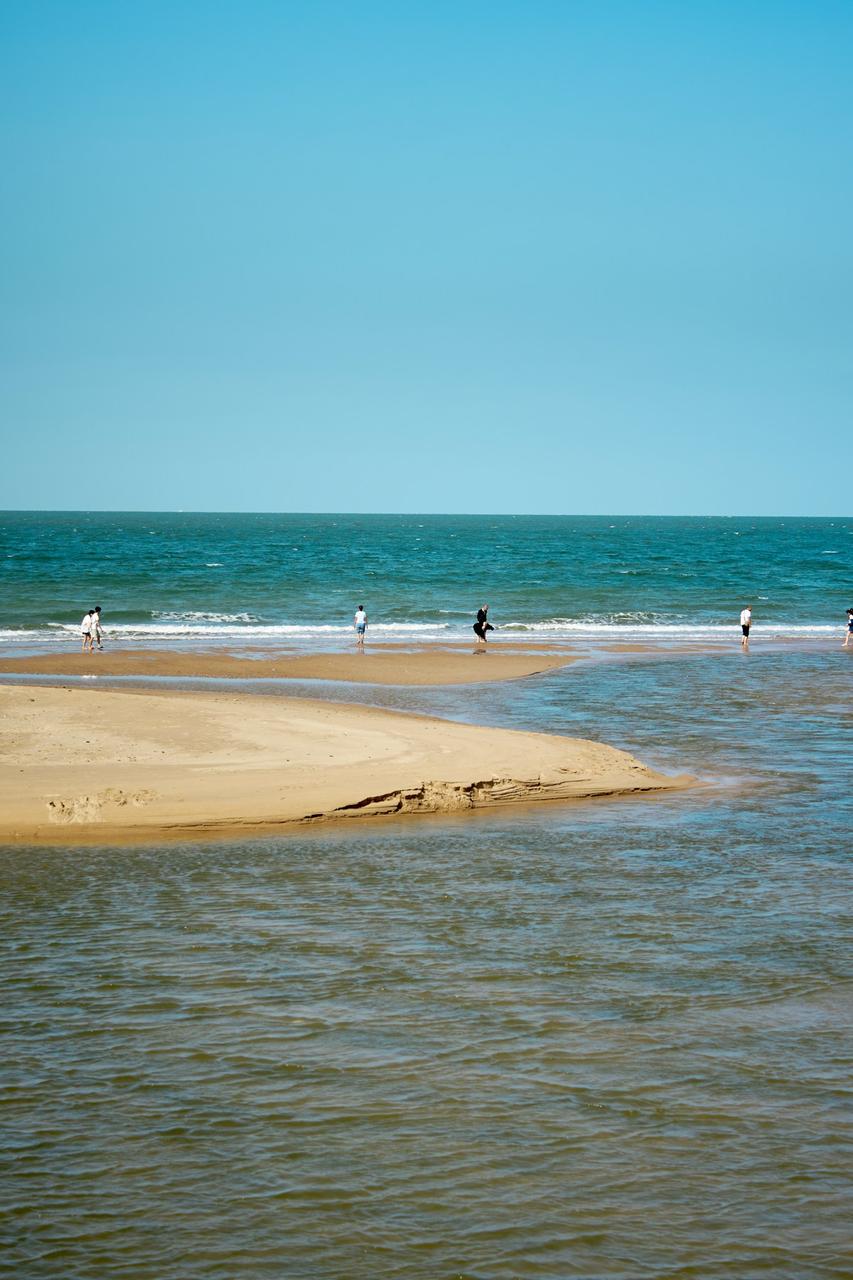
On China's eastern coast, at the mouth of the Yellow River. — home to Mount Tai, the foremost of the Five Great Mountains, and Qufu, birthplace of Confucius.
Location & Geography
Shandong Province lies on China's eastern seaboard, at the lower reaches of the Yellow River. It faces the Yellow Sea to the east and borders the Bohai Sea to the north. With a land area of 158,000 km² and a coastline stretching 3,345 km, it is one of the Chinese provinces with the longest coastlines. The capital is Jinan. The Shandong Peninsula juts into the sea, facing the Korean Peninsula across the water — making it a key gateway to Northeast Asia.
Shandong's terrain is dominated by plains and hills — Mount Tai rises in the center (1,545m elevation), the Jiaodong hills and plains run along the coast, and the North China Plain spreads across the west and north. This varied landscape makes travel in Shandong remarkably diverse: you can go from a beach to a mountain summit, from a Confucian holy site to a historic spring city, all within a single day. Shandong has one of China's most advanced expressway networks; inter-city drives take just 1.5–3 hours — travel is relaxed and easy.
Why Shandong Is Worth Visiting
Shandong offers China's most complete "mountain-sea-sage" combination:
- Qingdao — German colonial architecture and beer culture. "Red roofs, green trees, blue sea, blue sky" — a coastal city unlike any other in China.
- Weihai — an immaculately clean coastal city. Naxianghai Beach rivals Southeast Asia
- Mount Tai — foremost of the Five Great Mountains. "When I stand atop the peak, all other mountains seem small." It is where 72 emperors performed sacred rites throughout Chinese history.
- Qufu's Three Confucian Sites — the Confucius Temple, Confucius Mansion, and Confucius Forest. Birthplace of Confucian culture, a UNESCO World Heritage Site
- Jinan — the "City of Springs." Baotu Spring, the most famous of Jinan's 72 springs, has flowed for centuries.
- Seafood & Beer — Tsingtao unfiltered draft beer has a 24-hour shelf life; you can't taste it anywhere else. Jiaodong Peninsula seafood is fresh and affordable
For overseas Chinese travelers departing from Singapore or Malaysia, Shandong's unique value lies in its fusion of deep Chinese cultural roots (Confucius, Mount Tai) with modern seaside relaxation (Qingdao, Weihai) — depth and leisure in one trip. A 7-day itinerary from the coast to the interior feels perfectly paced: relax by the sea first, then tackle Mount Tai, and finish with a cultural finale.
Best Travel Seasons
Shandong has four distinct seasons, each delivering a markedly different experience. Here's a month-by-month breakdown:
| Month | Temperature | What to Expect | Rating |
|---|---|---|---|
| Mar–Apr | 8–20°C | Spring blooms, Mount Tai peach blossoms, low crowds | ★★★☆ |
| May–Jun | 15–28°C | Comfortable coast, seafood season, low crowds, great value | ★★★★★ |
| Jul–Aug | 25–32°C | Peak season, warmest seawater, Beer Festival (August) | ★★★★☆ |
| Sep–Oct | 15–25°C | Crisp autumn air, fattest seafood, Mount Tai autumn colors | ★★★★★ |
| Nov–Feb | -5–10°C | Mount Tai snow scenery, off-season, some cable cars closed | ★★☆ |
Bottom line: May–June and September–October are the best times to visit Shandong. Summer on the coast is not stuffy thanks to sea breezes, but prices and crowds peak. Winter offers Mount Tai snow but with limited access. August's Qingdao International Beer Festival is the busiest and priciest time — embrace peak season pricing if you want the festival experience, or avoid August entirely for a quieter trip.
What to Prepare Before Departure
Visas, clothing, gear — Shandong requires no special preparation, but there are a few things you should know.
Visas & Documents
Singapore passport holders: 30-day visa-free entry to China. No advance visa application needed. Ensure your passport has at least six months' validity.
Malaysian passport holders: 30-day visa-free entry to China (policy valid through 2026). If your trip exceeds 30 days, apply for a visa in advance. Check the latest policy before traveling.
Shandong: No additional restrictions for foreign visitors — same as Beijing or Shanghai. Coastal cities like Qingdao and Weihai have plenty of hotels that accept foreign guests. If you book with a reliable travel provider, hotel eligibility for foreign guests is handled in advance — you don't need to worry about it.
Carry ID at all times: Mount Tai, Qufu, and other attractions require ID checks. Carry your passport with you.
Packing List — Clothing
Shandong has four distinct seasons — pack by season. Here are suggestions for summer (the most common travel period):
- Outer layer: Light jacket or sun-protective clothing — sea breezes on the coast in mornings/evenings; Mount Tai summit is 10°C cooler than the base
- Mid layer: Long-sleeve and short-sleeve T-shirts — daytime summer temperatures are 25–32°C
- Bottoms: Long pants + shorts — long pants for Mount Tai, shorts for the beach
- Shoes: Comfortable walking shoes — Mount Tai's Eighteen Bends have many steps. Don't wear new shoes or sandals
- Swimwear — Naxianghai Beach in Weihai is suitable for swimming (July–August seawater temperature is comfortable)
- Accessories: Sunglasses, hat — strong UV on the coast
Important note: Even in July, Mount Tai's summit can be 10–15°C cooler than the base. If you plan to see the sunrise, bring a windbreaker or light down jacket. The cable car station rents army-style coats, but hygiene is questionable — better to bring your own.
Packing List — Gear
- Sun protection: SPF50+ sunscreen, sunglasses (UV400), wide-brim hat — extremely strong UV on the coast
- Medication: stomach medicine (in case too much seafood upsets your stomach), band-aids (Mount Tai walks can cause blisters), motion sickness pills (mountain roads have many curves)
- Electronics: Power bank — a full day of sightseeing and photography will drain your phone quickly
- Other: Insulated bottle (hot water on the road), wet wipes, some snacks
- Luggage: One large suitcase + one carry-on per person recommended. Shandong has great shopping — Tsingtao beer, Dezhou braised chicken, and Dong'e donkey-hide gelatin are all excellent souvenirs
Special Reminders
Qingdao Beer Festival: Opens the second weekend of August each year, lasts about two weeks. Hotel prices in Qingdao double or triple during the festival, and crowds are enormous. If you want to experience the beer festival, book hotels 1–2 months in advance. If you want to avoid crowds, stay away from mid-to-late August.
Mount Tai sunrise: If you plan an overnight climb or pre-dawn sunrise viewing, you'll need a flashlight/headlamp (some sections have no streetlights) and warm clothing. However, our itinerary includes cable cars both ways plus daytime hiking — no overnight climbing. Seniors and children don't need to deal with that.
How to Get to Shandong & Get Around
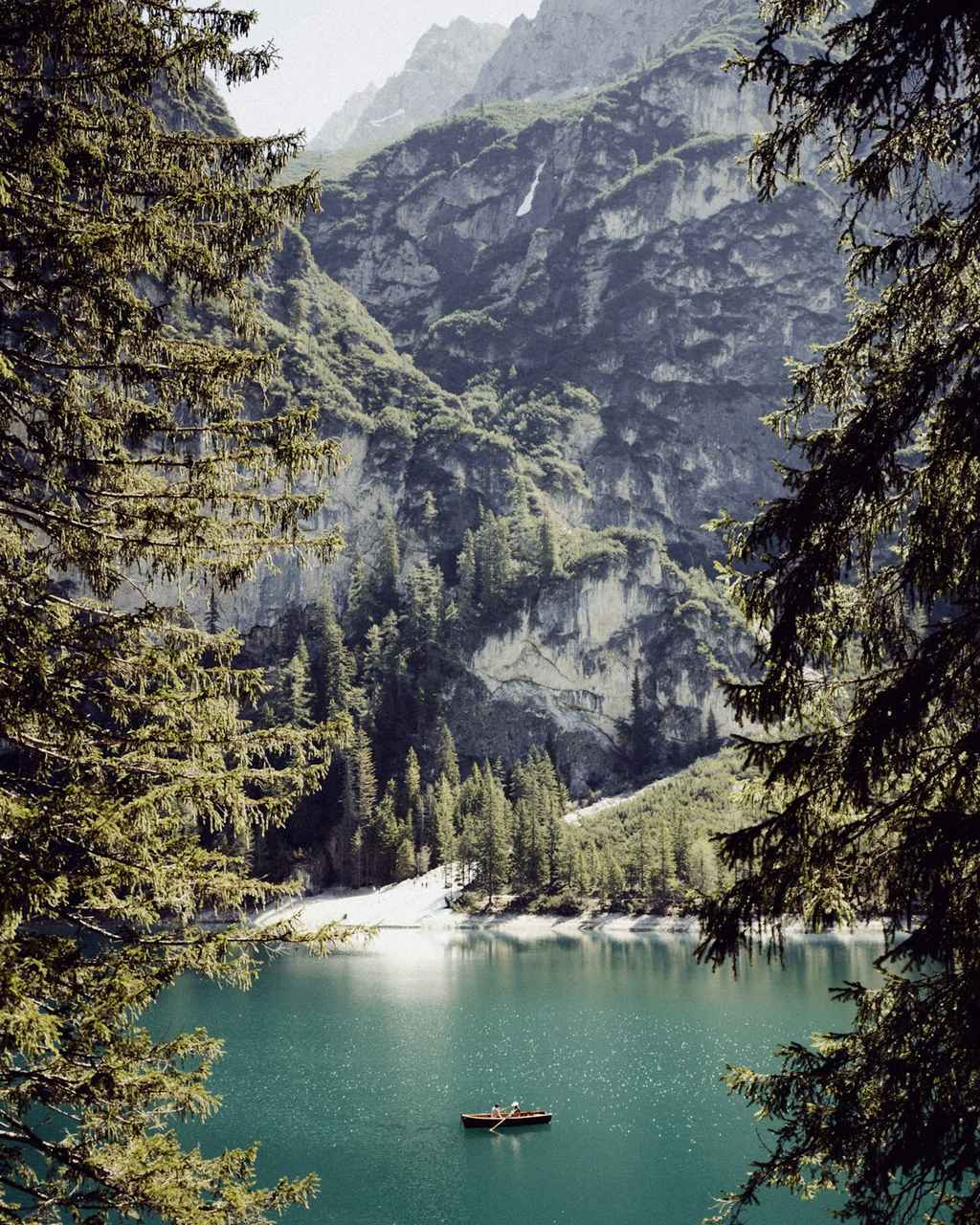
Shandong has China's best expressway network — getting around is easy, but choosing the right mode of transport still matters.
Getting to Shandong
Fly into Qingdao Jiaodong International Airport (TAO), the main arrival point for most travelers. Our itinerary enters through Qingdao and exits through Jinan — no backtracking.
From Singapore:
- Connecting flights: Singapore – Guangzhou/Shanghai/Xiamen – Qingdao, total 7–9 hours
- No direct flights; you'll need to transit through a city in mainland China
From Malaysia (Kuala Lumpur):
- Connecting flights: Kuala Lumpur – Guangzhou/Shanghai/Xiamen – Qingdao, total 8–10 hours
Return: Fly out of Jinan Yaoqiang International Airport (TNA), which also requires a connecting flight. The one-way Qingdao-in/Jinan-out routing saves 4–5 hours of backtracking compared to a round-trip from Qingdao.
Recommendation: Book flights 1–2 months in advance; prices can double during peak season (July–August). Guangzhou, Shanghai, and Xiamen are the three most convenient transit hubs.
Getting Around Shandong
Shandong covers 158,000 km² but has one of the highest expressway densities in China — inter-city drives typically take just 1.5–3 hours, making travel relatively easy and relaxed. Transport options within the province:
- Private car / custom tour (recommended): 7-seater minivan + driver-guide, flexible stops, a manageable pace. Perfect for family groups of 4–6. Shandong's highways are in excellent condition, and local drivers are very experienced
- High-speed rail: Qingdao–Jinan ~1.5h, Qingdao–Weihai ~2h. Good for point-to-point movement, but less convenient than a private car when traveling with elderly, children, and luggage
- Self-drive: Good roads, dense highway network, but rental procedures are complicated for foreign visitors and the Mount Tai mountain road requires experience
- Group tour bus: Cheapest but most exhausting — rushing between attractions with only 20–40 minutes per stop
Bottom line: Shandong is one of the best provinces in China for a private custom tour — moderate distances, top-notch road conditions, scattered but not far-flung attractions. Choose the right transport and a 7-day itinerary is relaxed, not rushed.
Transport Arrangements: Industry Common Practice vs Our Approach
How Much Does a Shandong Trip Cost
Based on a 7-day 6-night Qingdao-in/Jinan-out itinerary. Prices are listed in USD, with RMB, MYR, and USD shown for reference.
The following costs are based on a 7-day 6-night itinerary covering Qingdao + Weihai + Mount Tai + Qufu + Jinan. Prices include all transport, accommodation, tickets, and insurance. They exclude round-trip flights and lunch/dinner. Actual prices vary by group size, hotel tier, and season.
Cost Breakdown
- Included: Full private vehicle (fuel/tolls/parking), hotels (with breakfast), attraction tickets, Mount Tai cable car round trip, Tsingtao Beer Museum entry + tasting, ¥500K travel accident insurance, airport transfers
- Not included: flights into Qingdao and out of Jinan, lunch and dinner (not prearranged; your driver-guide will recommend local restaurants), personal expenses, visa fees (Singapore, Malaysia and most other passports enjoy visa-free entry)
- Meal cost reference: USD 5–15 per person per meal (approx. RMB 50–110) for excellent food — Qingdao seafood, Shandong cuisine, Dezhou braised chicken
- Flight cost reference: Singapore/Kuala Lumpur round-trip to Qingdao (return from Jinan), USD 300–525 booked in advance, USD 525–675 RMB 1,200 in peak season
Actual prices vary by vehicle type and hotel tier. Tell us your group size and travel dates, and a travel consultant will provide a precise quote.
Five Must-Visit Places
Qingdao, Weihai, Mount Tai, Qufu's Three Confucian Sites, and Jinan—what to see and what to skip in each destination.each.
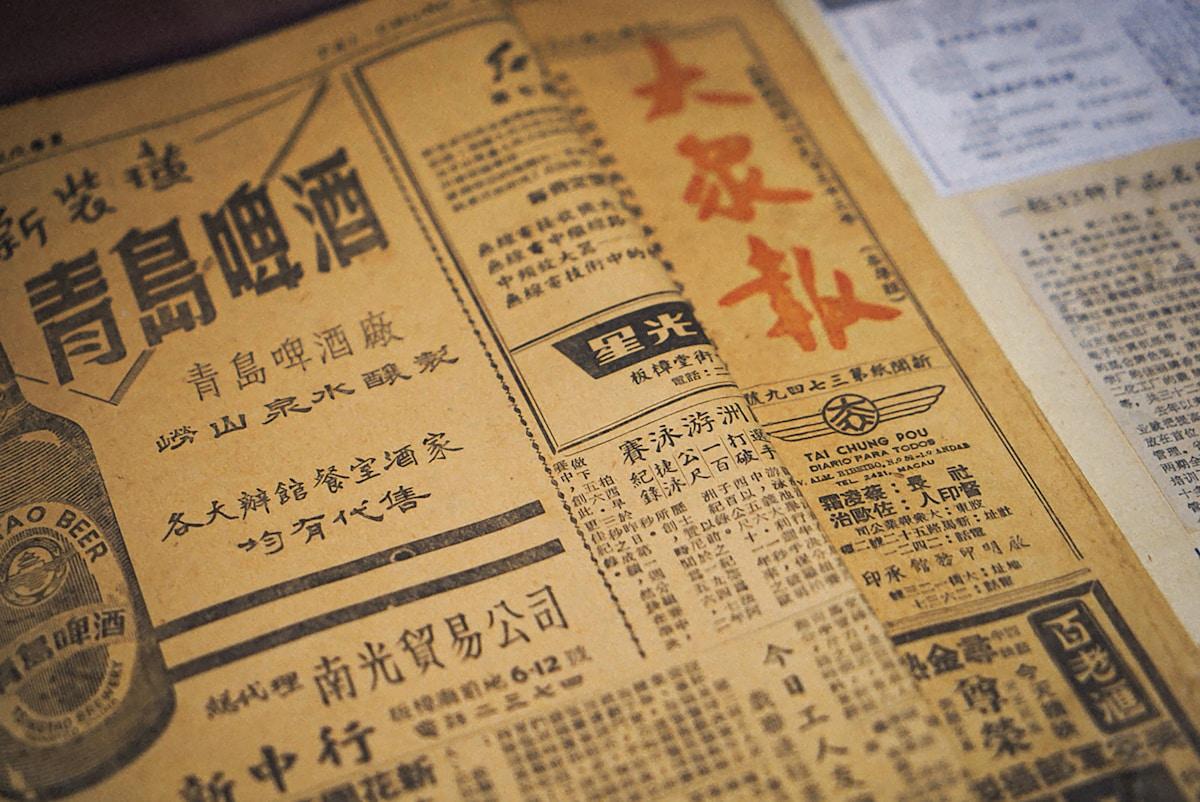
Qingdao is China's most exotic-feeling coastal city. Leased by Germany for 17 years in the late 19th/early 20th century, it preserves a wealth of German architecture — red-tiled roofs, green tree canopies, blue sea, blue sky. These features are Qingdao's signature.
Highlights:
- · Zhanqiao Pier — Qingdao landmark. Seagulls fill the sky in season. Free entry
- · May Fourth Square — "Wind of May" red sculpture, the city's modern symbol
- · Tsingtao Beer Museum — built inside the century-old brewery. Ticket includes two beers (unfiltered draft + draught)
- · Signal Hill — the best vantage point for panoramic views of the old town's red roofs and green trees
- · Dabaodao — century-old courtyard neighborhood transformed into an arts district, a local haunt
Best time: May–October. July–August has the warmest water but the most crowds. May–June and September–October offer comfort and fewer people. August Beer Festival is the liveliest but priciest.
Weihai is one of China's cleanest cities. Surrounded by sea on three sides, it faces South Korea across the water. The city has a slow pace, spotless streets, and a long coastline — if Qingdao is a lively seaside city, Weihai is a quiet seaside town.
Highlights:
- · Naxianghai — Diamond Beach, crystal-clear water and fine sand that rivals Southeast Asia. Swimmable July–August
- · Torch 8th Street — Weihai's "Kamakura High School" moment, a downhill road leading to the sea. Most photogenic spot
- · Huaxia City — a cultural attraction between mountains and sea
- · Happiness Gate — "Walk through Happiness Gate, step on the character for fortune"
Best time: May–October. July–August seawater is warm enough for swimming. September–October has fewer people and bluer sea.
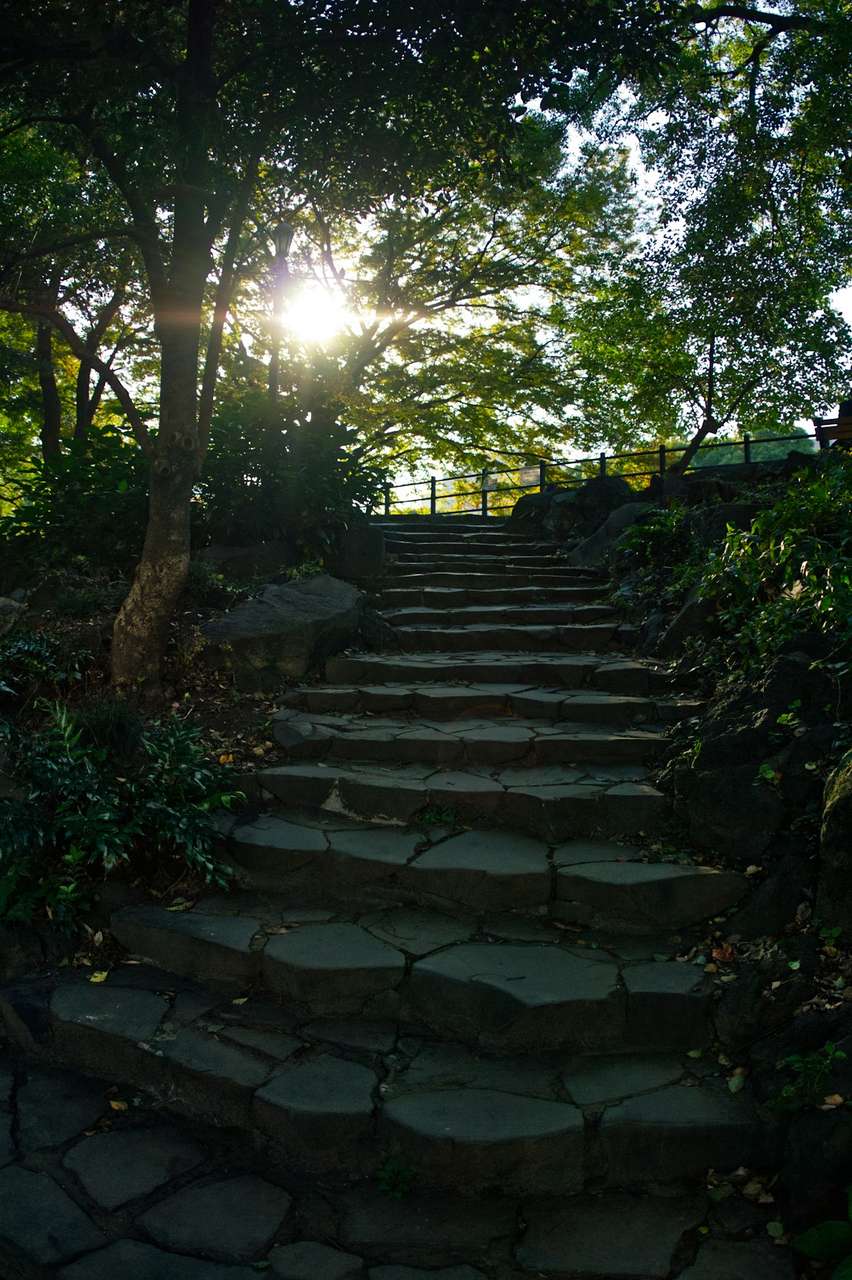
Mount Tai is the foremost of China's Five Great Mountains, at 1,545m elevation, located in Tai'an. Emperors throughout Chinese history performed sacred rites here — from Qin Shi Huang to Qing's Qianlong, 72 emperors climbed to the summit to offer sacrifices to heaven. "When I stand atop the peak, all other mountains seem small" — that's Du Fu writing about Mount Tai.
Highlights:
- · Zhongtian Gate → Nantian Gate — 15-minute cable car ride, bypassing the most grueling Eighteen Bends
- · Heavenly Street (Tianjie) — a commercial street at 1,400m altitude, wrapped in mist like a fairy realm
- · Jade Emperor Peak — Mount Tai's highest point, densely packed with imperial stone inscriptions
- · Dai Temple — a thousand-year-old temple at the mountain's base, the starting point of every imperial pilgrimage
Recommended route: Zhongtian Gate cable car up (15 min to Nantian Gate) → Heavenly Street → Jade Emperor Peak (40-min gentle walk) → cable car down. No climbing the Eighteen Bends at all. Elderly travelers can take the cable car round trip and skip Jade Emperor Peak — a cup of tea on Heavenly Street watching the sea of clouds also counts as summiting Mount Tai.
Qufu is the birthplace of Confucius. The Confucius Temple, Confucius Mansion, and Confucius Forest — collectively the "Three Confucian Sites" — are a UNESCO World Heritage Site. The Confucius Temple is where generations worshipped Confucius; the dragon pillars of Dacheng Hall are unique in all of China — even the Forbidden City doesn't have them. The Confucius Mansion was the residence of Confucius's direct descendants for 880 years. The Confucius Forest is the family cemetery of Confucius and his descendants, spanning 2 km².
Highlights:
- · Confucius Temple — Dacheng Hall — exquisitely carved dragon pillars, more ornate than the Forbidden City's Hall of Supreme Harmony
- · Confucius Mansion — the "Number One Family Under Heaven," glimpse the daily life of the Duke Yansheng
- · Confucius Forest — the world's longest continuously maintained family cemetery
Who it's for: Travelers interested in Chinese culture. If you're traveling with kids who just want to play, or have zero interest in history and culture — you can skip Qufu entirely; our travel consultant will adjust the itinerary.
Jinan is the capital of Shandong, nicknamed the "City of Springs." The city has 72 famous springs; Baotu Spring is the "Number One Spring Under Heaven" — water gushes up in three simultaneous streams, a sight found nowhere else in the world. Daming Lake is Jinan's city-center lake — "Remember Xia Yuhe by Daming Lake?" — that line from a classic drama is set right here.
Highlights:
- · Baotu Spring — Number One Spring Under Heaven, three streams gushing simultaneously
- · Daming Lake — Jinan's city-center lake, free entry, stunning in lotus season
- · Black Tiger Spring — where old Jinan locals fill water buckets from the spring. Free entry
Best time: Year-round. Springs are at their strongest after the rainy season (July–August). In winter, the springs don't freeze — instead they produce a beautiful misty effect.
What to Eat in Shandong
Tsingtao unfiltered draft beer, Jiaodong seafood, Lu cuisine, Dezhou braised chicken — restaurants locals actually eat at, not kickback traps.
Shandong is the birthplace of Lu cuisine, the foremost of China's Eight Great Cuisines. The following are not tourist-group kickback restaurants — they're where locals eat daily. Prices in RMB with USD reference.
More Worth Trying
- Bazi Pork — Jinan breakfast staple. Large cuts of pork belly braised, rich but not greasy, paired with rice
- Tianmo — Jinan specialty breakfast. Don't be fooled by the name — it's savory, not sweet. Made from millet flour + crushed peanuts + vermicelli, slow-cooked
- Youxuan — Jinan traditional snack. Scallion pastry, crispy outside, soft inside
- Yantai Apples / Laiyang Pears — September–October fruit season. Shandong fruit sweetness is among the highest in China
- Dong'e Donkey-Hide Gelatin — Liaocheng Dong'e County specialty, a traditional health tonic and great souvenir
Meal cost reference: USD 5–15 per person per day (approx. RMB 50–110) for excellent dining. Tour group meals cost ¥30–40 per person but are poor quality — bulk-cooked, pre-made. Find local restaurants yourself and eat three times better for the same money.
About Shandong Travel
Start Planning Your Shandong Trip
Tell us your group size and travel dates, and a travel consultant will customize your Shandong itinerary.
Brand-Operated · Fully Licensed · ¥500K Travel Insurance · No Tipping
Key Takeaways
- Shandong is on China’s eastern coast at the lower reaches of the Yellow River, with its capital in Jinan. The province is known for a mix of coastal scenery, Mount Tai, Qufu as the birthplace of Confucius, and Jinan’s springs.
- The guide highlights Qingdao, Weihai, Mount Tai, Qufu’s Three Confucian Sites, and Jinan as key places to visit. It also notes Shandong’s seafood and Tsingtao beer culture as part of the travel experience.
- May–June and September–October are identified as the best times to visit. Summer brings warm beach weather and the Qingdao International Beer Festival in August, while winter offers Mount Tai snow scenery but with some access limitations.
- For Singapore passport holders, the article states there is 30-day visa-free entry to China, and for Malaysian passport holders, 30-day visa-free entry is available with the policy valid through 2026. Travelers are advised to carry their passport because attractions such as Mount Tai and Qufu require ID checks.
- The article says Shandong has an extensive expressway network, with many inter-city drives taking 1.5–3 hours. For packing, it recommends light layers, comfortable walking shoes, and sun protection, noting that Mount Tai’s summit can be much cooler than the base.
Official resources
- Ministry of Culture and Tourism of the People's Republic of China (mct.gov.cn) — the national regulator for licensed travel agencies
- National Immigration Administration (nia.gov.cn) — official entry, exit, and immigration information for mainland China
- Consular Services, Ministry of Foreign Affairs (cs.mfa.gov.cn) — official consular information and travel notices