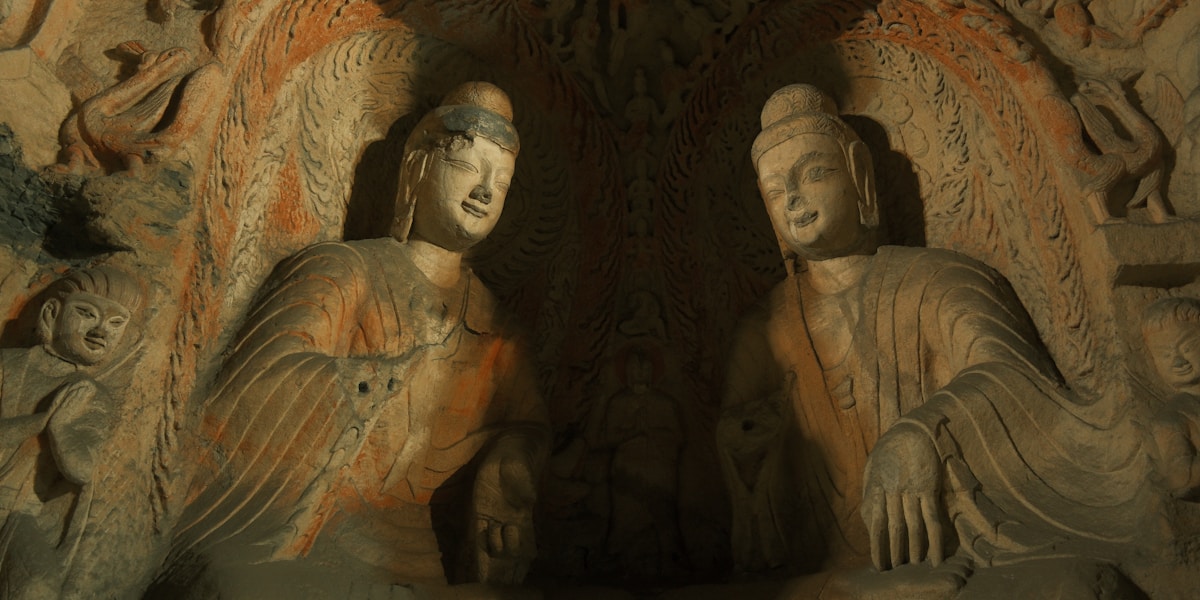
Shanxi Travel Guide
Where Shanxi is, when to go, how to get there, how much it costs, what to see, what to eat — a complete guide for global overseas Chinese travelers. Not marketing fluff; real, actionable travel advice.
Where Is Shanxi
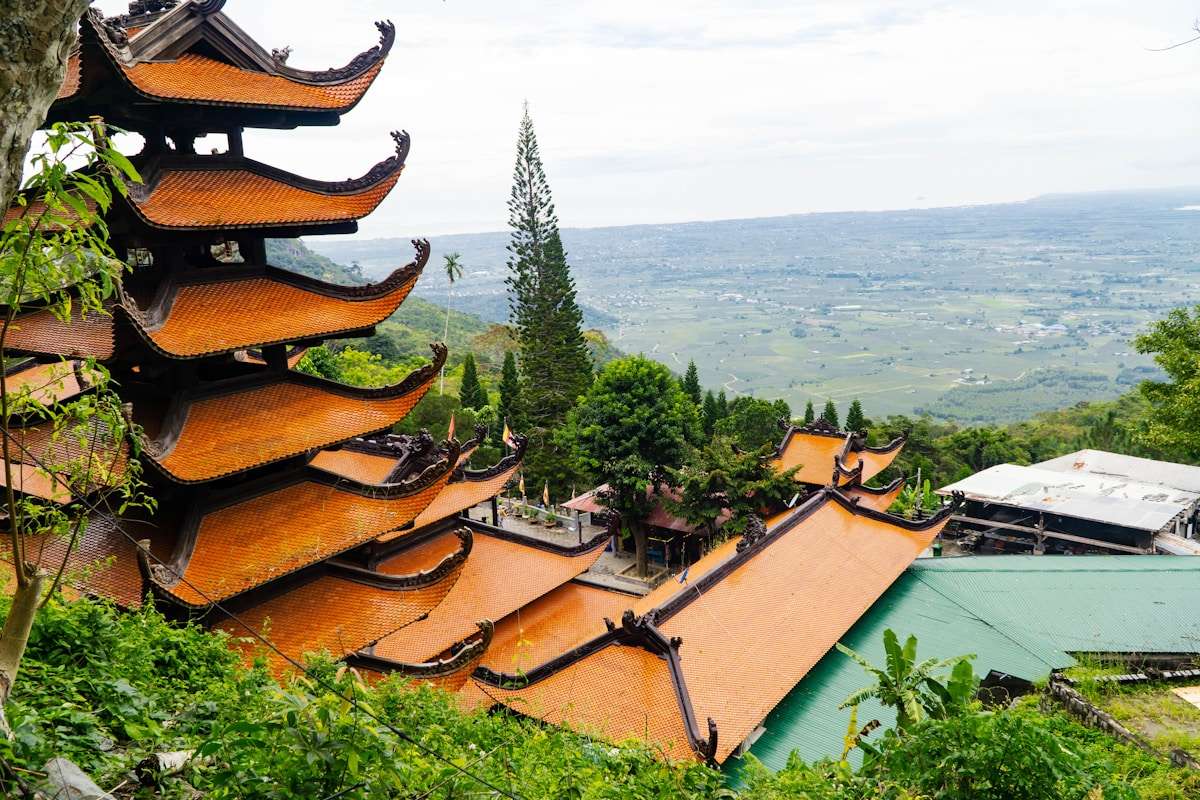
In the heart of North China, on the eastern Loess Plateau — one of the cradles of Chinese civilization, with the highest concentration of surviving above-ground ancient architecture in China.
Location & Geography
Shanxi Province lies in North China, on the eastern Loess Plateau, named for its location west of the Taihang Mountains. It borders Hebei to the east, Shaanxi to the west, Henan to the south, and Inner Mongolia to the north. The province covers 156,000 km², with Taiyuan as its capital. The terrain features mountainous and hilly areas to the east and west, with a series of basin valleys running north to south — the Fen River flows through the center. Most of the province sits at 800–1,500m elevation; Mount Wutai's North Peak at 3,061m is the highest point in North China.
Travel in Shanxi generally follows a north-south route: Datong–Taiyuan–Jinzhong (Pingyao)–Xinzhou (Mount Wutai), spanning about 400 km. Datong in the north (Yungang Grottoes, Hanging Temple, Yingxian Wooden Pagoda), Taiyuan in the center (Jinci Temple, Shanxi Museum), Jinzhong in the south (Pingyao Ancient City, Qiao Family Compound, Wang Family Compound), and Mount Wutai to the northeast (within Xinzhou). First-time visitors typically follow the Datong–Taiyuan–Pingyao–Mount Wutai loop — this is the primary focus of this guide.
Why Shanxi Is Worth Visiting
Shanxi boasts China's densest concentration of above-ground ancient architecture and some of the richest layers of Chinese civilization:
- Yungang Grottoes — a UNESCO World Heritage Site and a 5th-century imperial cave complex from the Northern Wei dynasty: 45 main caves, 51,000 statues, one of China's Four Great Grottoes
- Hanging Temple — built in the Northern Wei dynasty, suspended from a cliff face, combining Buddhism, Taoism, and Confucianism in a single temple; named by Time magazine as one of the world's top ten most precarious buildings
- Pingyao Ancient City — a UNESCO World Heritage Site and China's best-preserved ancient county seat, birthplace of Jin merchant culture; Rishengchang Piaohao was China's first draft bank
- Mount Wutai — the foremost of China's Four Sacred Buddhist Mountains, UNESCO World Heritage, elevation 3,061m, with 48 Sino-Tibetan temples
- Yingxian Wooden Pagoda — built in the Liao dynasty (1056), the world's oldest and tallest surviving wooden structure; 67.3 meters tall and built entirely of wood, without a single nail
- Jin Merchant Culture — Qiao Family Compound, Wang Family Compound, Chang Family Manor — a tangible legacy of the Jin merchants, who dominated Chinese commerce for 500 years
For overseas Chinese travelers from Singapore and Malaysia, Shanxi's unique appeal lies in having the highest concentration of above-ground cultural relics in China — 70% of China's pre-Yuan Dynasty wooden structures are in Shanxi. Here you can see genuine thousand-year-old architecture and sculpture that you simply cannot see in Singapore or Malaysia. From a cultural identity perspective, the Jin merchants' remittance-bank tradition of connecting people and commerce across regions is a significant chapter in Chinese financial history. Flying from Singapore/KL to Taiyuan (via Guangzhou or Beijing) takes about 7–8 hours — not as close as Yunnan, but the concentration of cultural sites is extraordinary: nearly every attraction is of exceptional historical importance.
Best Travel Seasons
Shanxi has four distinct seasons with a temperate continental monsoon climate. Experiences vary significantly by season. Here's a month-by-month breakdown:
| Month | Temperature Range | Landscape Features | Rating |
|---|---|---|---|
| Apr–May | 8–22°C | Spring blooms, comfortable for outdoor walking | ★★★★★ |
| Jun | 14–28°C | Early summer, not yet hot; Mount Wutai azalea season | ★★★★☆ |
| Jul–Aug | 18–30°C | Mid-summer but less humid than the south; Mount Wutai is a cool escape | ★★★☆ |
| Sep–Oct | 10–24°C | Crisp autumn air; ancient city autumn colors are at their best | ★★★★★ |
| Nov | 2–14°C | Late autumn/early winter; tranquil with few visitors | ★★★ |
| Dec–Mar | -8–6°C | Cold but ancient charm in snow; fewest tourists | ★★ (Winter) |
Bottom line: April–May and September–October are the best time to visit Shanxi — comfortable temperatures, clear skies, ideal for outdoor walking among ancient architectural complexes. July–August is mid-summer but Shanxi is cooler than the south; Mount Wutai especially is a cool retreat. Winter (December–February) is cold but has extremely few tourists; the snow scenery at Yungang Grottoes and Pingyao Ancient City has a distinct charm — suitable for travelers who don't mind the cold. Avoid the May Day and National Day Golden Weeks — extremely crowded.
What to Prepare Before Departure
Visas, clothing, gear, anti-scam knowledge — things you must know before going to Shanxi.
Visa & Documents
Singapore passport holders: Visa-free entry to China for 30 days, no advance application needed. Make sure your passport is valid for at least six months.
Malaysian passport holders: Visa-free entry to China for 30 days (2026 policy). If your trip exceeds 30 days, apply for a visa in advance. Check the latest policy before traveling.
Within Shanxi: No additional restrictions for foreign visitors — same as Beijing or Shanghai. Datong, Taiyuan, Pingyao, and Mount Wutai are open to all foreign visitors with valid documents; no special permits required. Parts of Mount Wutai are near military zones; carry your passport for inspection.
Carry your passport with you at all times: You'll need your passport for hotel check-in and at some scenic areas. It's advisable to carry a photocopy as backup.
Clothing Checklist
Shanxi has four distinct seasons with significant day-night temperature swings. Even in May, Mount Wutai mornings and evenings can drop to 5°C. Prepare by season:
- Spring/Autumn (Apr–May/Sep–Oct): Jacket + long sleeves; Mount Wutai mornings and evenings require a thin down jacket or windbreaker
- Summer (Jun–Aug): Mostly short-sleeved clothing; Mount Wutai needs a light jacket (high elevation means 8–10°C cooler than the plains)
- Winter (Nov–Mar): Long down coat + thermal underwear + gloves + wool hat; Mount Wutai can drop below -15°C
- Shoes: A comfortable pair of walking shoes — the ancient city cobblestone streets, grotto scenic areas, and Mount Wutai temple complexes all require extensive walking
- Accessories: Sunglasses and a hat — Shanxi has strong sunlight, especially at Mount Wutai's high altitude
Special note: At 3,061 m, Mount Wutai is high enough for temperatures to feel much cooler than in the lowlands — even in summer you need a jacket. In winter, prepare for temperatures below -15°C; inadequate clothing will seriously affect your experience.
Gear Checklist
- Sun protection: SPF50+ sunscreen, UV400 sunglasses, wide-brim hat — the Loess Plateau has intense sunlight
- Medication: Motion sickness pills (mountain roads can be winding, especially on routes to Mount Wutai and the Hanging Temple), stomach medicine (the diet leans toward wheat-based and rich foods), cold medicine, band-aids
- Electronics: Power bank (long drives can drain your phone battery quickly), car charger adapter
- Other: Thermos (hot water in the vehicle), wet wipes, some snacks
- Luggage: We recommend one large suitcase and one carry-on per person. Shanxi is known for many local specialties — Pingyao beef, aged vinegar, Fenjiu liquor, lacquerware
Note: Mount Wutai temple complexes provide free incense — no need to buy outside. Wuye Temple does not allow incense burning — don't be misled by vendors at the gate.
Mount Wutai Anti-Scam Guide
Mount Wutai is the most concentrated area of tourist scams in Shanxi travel. Here are the most common scams to watch out for:
- "¥20 guide to show you three temples" — They approach you, expertly teach worship rituals and share historical explanations to build trust, then take you to the "Black-Face Fifth Lord" (claiming this is the true Fifth Lord deity) saying "worshipping here is more meaningful," then lead you into a private gift shop — dragon robe ¥2,000 + lamp lighting ¥1,800 + incense ¥400 = ¥4,200. Only after paying do you realize it's a private business, not part of the temple
- Roadside "masters" who approach you — They use fortune-telling or face reading as a way to start the conversation, gradually guiding you to spending scenarios
- Incense vendors at the gate — Wuye Temple does not allow incense burning; other temples provide free incense — no need to buy
Our approach: Our driver-guides do not push any extra purchases — no "guides," no craft shops, no fortune-telling or face-reading. We arrange two full days for in-depth touring at Mount Wutai (not a one-day rush), so you can calmly appreciate the temples without being trapped.
How to Get to Shanxi & Getting Around

Shanxi's attractions are scattered along a 400 km north-south axis — how you get around will shape your trip.
Getting to Shanxi
Fly into Taiyuan Wusu International Airport (TYN) — This is the main gateway for most travelers.
From Singapore:
- Transit: Singapore–Guangzhou/Beijing/Shanghai–Taiyuan, total 7–8 hours, moderate price
- No direct flights; transit is required via a domestic city
From Malaysia (Kuala Lumpur):
- Transit: KL–Guangzhou/Beijing/Chengdu–Taiyuan, total 7–9 hours
- No direct flights; transit is required via a domestic city
Alternative plan: Fly into Beijing Capital/Daxing Airport, then take high-speed rail to Taiyuan (about 2.5 hours) or Datong (about 1.5 hours). Beijing has more frequent flights with potentially lower prices, and the high-speed rail experience is excellent.
Recommendation: Book flights 1–2 months in advance; fares can double during peak travel periods (July–August, Chinese New Year, National Day). If flight options are limited, flying to Beijing and transferring to high-speed rail is a very cost-effective option.
Getting Around the Province
Shanxi's main travel axis is Datong–Taiyuan–Pingyao–Mount Wutai, totaling about 400 km. Drive times between attractions:
- Datong–Hanging Temple (Hengshan): About 1.5 hours by expressway
- Datong–Yingxian Wooden Pagoda: About 1 hour by expressway
- Datong–Taiyuan: About 2 hours by high-speed rail or 3.5 hours by expressway
- Taiyuan–Pingyao Ancient City: About 40 minutes by high-speed rail or 1.5 hours by expressway
- Taiyuan–Mount Wutai: About 2.5 hours by expressway
- Pingyao–Mount Wutai: About 3.5 hours by expressway
Transport options:
- Private car / Custom tour (recommended): 7-seat MPV with a driver-guide; flexible stops, controllable itinerary, ideal for families of 4–6. Public transport between Hanging Temple, Mount Wutai, and other scenic areas is poor — private car is the optimal solution
- High-speed rail + taxi: Datong–Taiyuan–Pingyao are connected by high-speed rail; suitable for budget-conscious independent travelers. However, Mount Wutai and Hanging Temple require chartered round-trips
- Self-drive: Roads are good but mountain sections are winding (the Hanging Temple and Mount Wutai routes); demands driver stamina
- Group tour bus: Cheapest but the most tiring option — 6 AM wake-ups daily; visits to ancient architecture sites are limited to one hour; taken to shopping stops
Key takeaway: Shanxi's attractions aren't as dense as Yunnan's, but each one deserves in-depth touring — Yungang Grottoes needs 2–3 hours with a guided tour; the Hanging Temple queue can be 2–3 hours during peak season; Pingyao Ancient City needs at least a full day. Choose the right transport to avoid the "checklist-style" group tour. The key is to avoid rushed one-hour visits to major heritage sites and Mount Wutai tourist scams.
Travel Arrangements: Industry Common Practice vs Our Approach
How Much Does Shanxi Travel Cost
Based on a 7-day 6-night Datong–Taiyuan–Pingyao–Mount Wutai loop. Priced in USD with RMB/MYR/USD reference.
The following costs are based on a 7-day 6-night trip entering and exiting Taiyuan, covering the Datong–Taiyuan–Pingyao–Mount Wutai loop. Prices include all transport, accommodation, tickets, and insurance, but exclude round-trip flights and lunch and dinner. Actual prices vary with group size, hotel tier, and season.
Cost Notes
- Included: Full private vehicle (fuel/tolls/parking included), hotel (breakfast included), attraction tickets (with Yungang Grottoes guided tour, Hanging Temple climbing ticket, Mount Wutai entry fee, Pingyao Ancient City through-ticket), ¥500K travel accident insurance, travel photoshoot, airport transfers
- Not included: Round-trip flights to/from Taiyuan, lunch & dinner (not pre-arranged; the driver-guide recommends local eateries), personal expenses, visa fees (visa-free for Singapore/Malaysia passport holders)
- Meal cost reference: Lunch + dinner approx. USD 5–15 per person/day (approx. RMB 50–100) — you'll eat very well: knife-cut noodles, Pingyao beef, youmian kaolaolao
- Flight cost reference: Singapore/KL round-trip to Taiyuan (via transit), book early: USD 260–525; peak season: USD 525–900
Actual prices vary with vehicle type and hotel tier. Tell us your group size and travel dates and our travel consultant will provide an accurate quote.
Four Must-Visit Places
Yungang Grottoes, Hanging Temple, Pingyao Ancient City, Mount Wutai — highlights and pitfall warnings for each.

The Yungang Grottoes are located 16 km west of Datong city, carved during the first year of the Northern Wei Heping reign (460), completed over 60 years. With 45 main caves and 51,000 surviving statues, it is one of China's largest ancient cave complexes, inscribed as a UNESCO World Heritage site in 2001.
Highlights:
- · Cave 20 Giant Buddha — The icon of Yungang; 13.7m tall, an open-air Buddha, the pinnacle of Northern Wei sculptural art
- · Tanyao Five Caves (16–20) — The earliest five large caves; each cave's giant Buddha represents one of the five Northern Wei emperors
- · Caves 5 & 6 — Twin caves, exquisitely detailed; murals and reliefs tell the life story of Buddha; the finest of Yungang art
- · Guided tour essential — Without a guide you see only rocks; with a guide, every Buddha reveals the codes of the Northern Wei imperial dynasty
Recommended route: Walk east to west, about 2–3 hours. The core area is about 1 km on foot from the entrance — no shuttle bus needed. Morning light is best for photography.
The Hanging Temple is located on the cliff face of Cuiping Peak in the Jinlong Gorge of Mount Heng, Hunyuan County, Datong. Built in the late Northern Wei Dynasty (491), it has stood for over 1,500 years. The temple is suspended from the cliff face, about 50 meters above ground. It is the only surviving temple in China that combines Buddhism, Taoism, and Confucianism under one roof and was named by Time magazine as one of the world's top ten most precarious buildings.
Key facts:
- · The temple has 40 halls supported by 27 wooden pillars suspended from the cliff
- · Peak season queuing for 2–3 hours to climb is the norm — afternoons are worse
- · Those with acrophobia should exercise caution — you can feel the wooden walkway sway as you walk; legs will shake
- · The Three Religions Hall houses statues of Shakyamuni, Laozi, and Confucius together — unique in China
Recommended route: Arrive early morning to avoid peak queues. The climb takes about 1 hour. Navigate to "Hanging Temple Entrance," NOT "Hanging Temple" — the latter goes to the visitor center where you pay ¥20 for a shuttle bus and queue another half hour.
Pingyao Ancient City is located in Pingyao County, Jinzhong City. First built during the reign of King Xuan of the Western Zhou (827 BC), it was expanded to its current layout in the 3rd year of the Hongwu reign of the Ming Dynasty (1370). The city wall measures 6.4 km in circumference and stands 10 meters high — China's best-preserved ancient county seat. It was inscribed as a UNESCO World Heritage site in 1997. This is the birthplace of China's first draft bank, "Rishengchang" — the origin of Jin merchant "remittances connecting the world."
Highlights:
- · City Wall — Walking the full circuit takes about 1.5 hours; overlook the sea of ancient rooftops — Pingyao's best vantage point
- · Rishengchang Piaohao Bank — China's first draft bank, the starting point of "remittances connecting the world," a microcosm of the Jin merchant financial empire
- · County Yamen — China's best-preserved ancient county government office; daily court session reenactments
- · City God Temple, Confucian Temple — Ancient city supporting architectural complex; the Confucian Temple houses China's oldest surviving imperial examination venue
Recommended route: Reserve at least a full day. Morning: climb the city wall for a panoramic view. Afternoon: explore the County Yamen, Rishengchang Piaohao Bank, and City God Temple. Entry to the city is free; specific attractions require the ¥125 through-ticket (covers 22 sites). Zhenguo Temple and Shuanglin Temple are outside the city walls and not included in the through-ticket — separate tickets required. Shuanglin Temple's painted sculptures are exceptionally worth seeing.
Mount Wutai is located in Wutai County, Xinzhou City. It is the foremost of China's Four Sacred Buddhist Mountains and a UNESCO World Heritage site, inscribed in 2009. The mountain comprises five terraced peaks — East, West, South, North, and Center — with the North Peak being the highest at 3,061m, the tallest point in North China. The mountain hosts 48 Sino-Tibetan temples, with Xiantong Temple, Tayuan Temple, Pusa Ding, Shuxiang Temple, and Luohou Temple known as the "Five Great Meditation Sites."
Highlights:
- · Xiantong Temple — Mount Wutai's largest and oldest temple, founded in the Eastern Han Dynasty; features a bronze hall and bronze pagodas
- · Tayuan Temple Great White Pagoda — Mount Wutai's iconic landmark, 56.4m tall, a Tibetan-style stupa
- · Pusa Ding — The Manchu imperial travel palace; Mount Wutai's largest Tibetan Buddhist monastery
- · Wuye Temple — The most popular temple for worship, but incense burning is not permitted — no need to buy incense outside
Recommended route: Two days of in-depth touring — Day 1: Taihuai Town temple complex (Xiantong Temple, Tayuan Temple, Pusa Ding, Shuxiang Temple). Day 2: Wuye Temple + surroundings. Don't do it all in one day — seeing 48 temples in a single day is impossible, and that's the pace most likely to fall into traps.
What to Eat in Shanxi
Knife-cut noodles, Pingyao beef, youmian kaolaolao, guoyourou — restaurants locals eat at, not kickback traps.
Shanxi is the home of wheat-based cuisine — "China's noodles are in Shanxi, and Shanxi's noodles are in Taiyuan." The recommendations below are not tour-group kickback restaurants — they're where locals eat daily. Prices are in RMB with USD reference.
Other Worth Trying
- Ti Jian — Another Shanxi noodle, flicked into the pot with chopsticks; pointed at both ends, round in the middle, chewy texture
- Tounao (Brain Soup) — A unique Taiyuan breakfast: lamb + yellow wine + yam + lotus root + fermented rice soup. Nourishes qi and blood; a distinctive flavor
- Taigu Cake — Traditional pastry from Taigu, Jinzhong; crisp-soft and sweet; one of Shanxi's most popular souvenirs
- Aged Vinegar — Shanxi is the origin; foremost of "China's Four Famous Vinegars." You can visit a vinegar workshop for an educational tour (legitimate factory, not a shopping trap)
- Fenjiu Liquor — Representative of China's light-aroma baijiu, produced in Xinghuacun. "Where can a tavern be found? The shepherd boy points to Xinghuacun Village." (From a famous Tang Dynasty poem)
Meal cost reference: Lunch + dinner approx. USD 5–15 per person/day (approx. RMB 50–100) can get you excellent food. Tour group meals cost ¥30–40 per person but are poor quality — mass-produced, pre-made dishes. Find local restaurants yourself — the same money gets you three times better food.
About Shanxi Travel
Start Planning Your Shanxi Trip
Tell us your group size and travel dates — our travel consultant will customize your Shanxi itinerary.
Brand-Operated · Fully Licensed · ¥500K Travel Insurance · No Tipping
Key Takeaways
- Shanxi is in North China on the eastern Loess Plateau, with Taiyuan as its capital. First-time trips commonly follow a Datong–Taiyuan–Pingyao–Mount Wutai route that links the province’s main historical sites.
- The province is known for a high concentration of surviving above-ground ancient architecture, including Yungang Grottoes, the Hanging Temple, Pingyao Ancient City, Mount Wutai, and the Yingxian Wooden Pagoda. The guide also highlights Jin merchant culture through sites such as the Qiao Family Compound and Wang Family Compound.
- The best times to visit are April–May and September–October for comfortable temperatures and good conditions for walking around outdoor heritage sites. July–August is cooler than southern China, especially at Mount Wutai, while winter is cold but has very few tourists.
- Singapore passport holders can enter China visa-free for 30 days, and Malaysian passport holders can also enter visa-free for 30 days under the policy stated in the article. Travelers should carry a passport with at least six months’ validity and keep it with them in Shanxi, especially around parts of Mount Wutai where inspections may occur.
Official resources
- Ministry of Culture and Tourism of the People's Republic of China (mct.gov.cn) — the national regulator for licensed travel agencies
- National Immigration Administration (nia.gov.cn) — official entry, exit, and immigration information for mainland China
- Consular Services, Ministry of Foreign Affairs (cs.mfa.gov.cn) — official consular information and travel notices