Yunnan Travel Guide
Where Yunnan is, when to go, how to get there, how much it costs, what to see, what to eat — a complete guide for global overseas Chinese travelers. No marketing fluff; just a real, actionable travel reference.
Where Is Yunnan
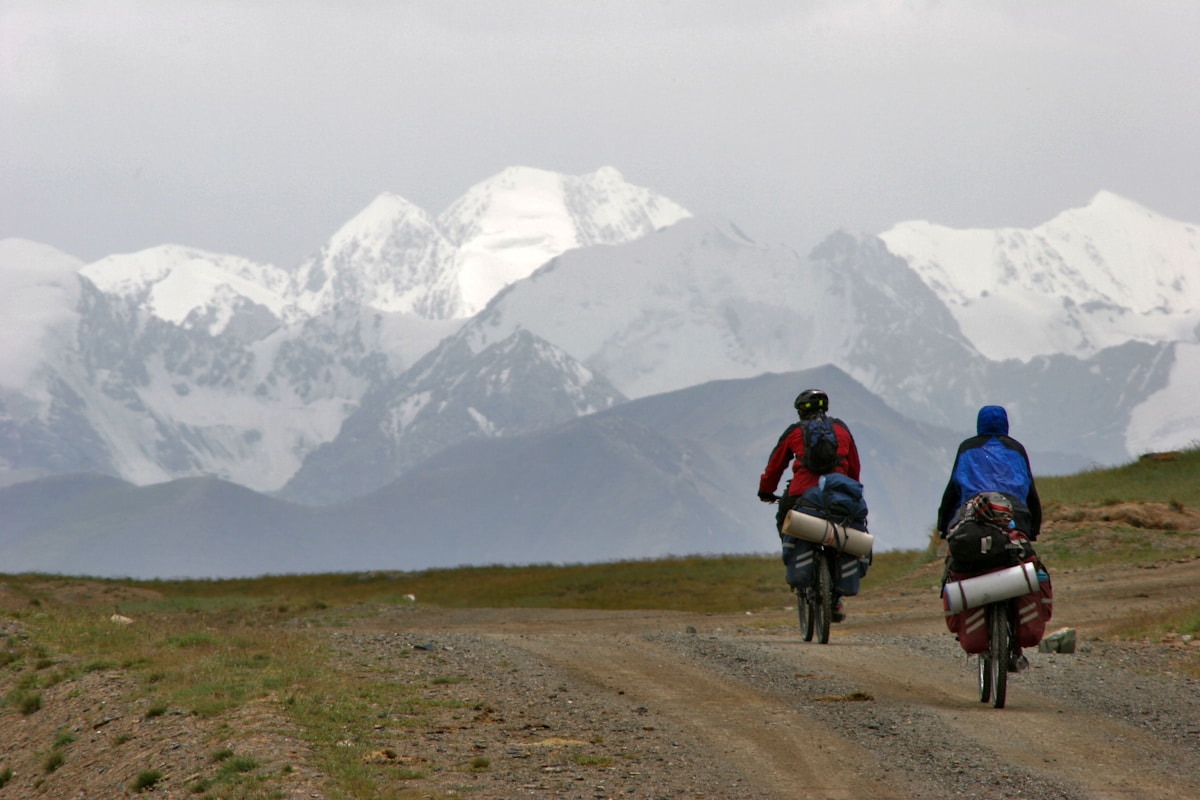
Yunnan is on China's southwestern frontier, with the Tropic of Cancer crossing its southern region — one of China's most ethnically and climatically diverse provinces.
Location & Geography
Yunnan Province lies in China's southwestern frontier, bordering Myanmar, Laos, and Vietnam with 4,060 km of land borders. The Tropic of Cancer crosses its southern region, giving parts of the province a subtropical to tropical highland monsoon climate. Topography slopes from northwest to southeast: from Meili Snow Mountain at 6,740m in the northwest down to Hekou at just 76m in the south — an enormous elevation range that creates a full spectrum of climates, from snow-covered mountains to tropical rainforest.
Yunnan travel follows three main axes: the Western Yunnan Route (Kunming–Dali–Lijiang–Shangri-La), the Southern Yunnan Route (Kunming–Xishuangbanna), and the Southeastern Yunnan Route (Kunming–Yuanyang–Jianshui). The vast majority of first-time visitors choose the Western Yunnan Route — Dali's Erhai Lake, Lijiang Old Town, Jade Dragon Snow Mountain, Shangri-La and Pudacuo National Park — which is the primary focus of this guide.
Why Yunnan Is Worth Visiting
Yunnan offers one of China's richest blends of cultural and natural experiences:
- Erhai Lake — A highland lake at 1,972 m, with very different scenery on its east and west shores. The full circuit is about 130 km, offering pastoral views, ancient towns, and cliffside lake vistas.
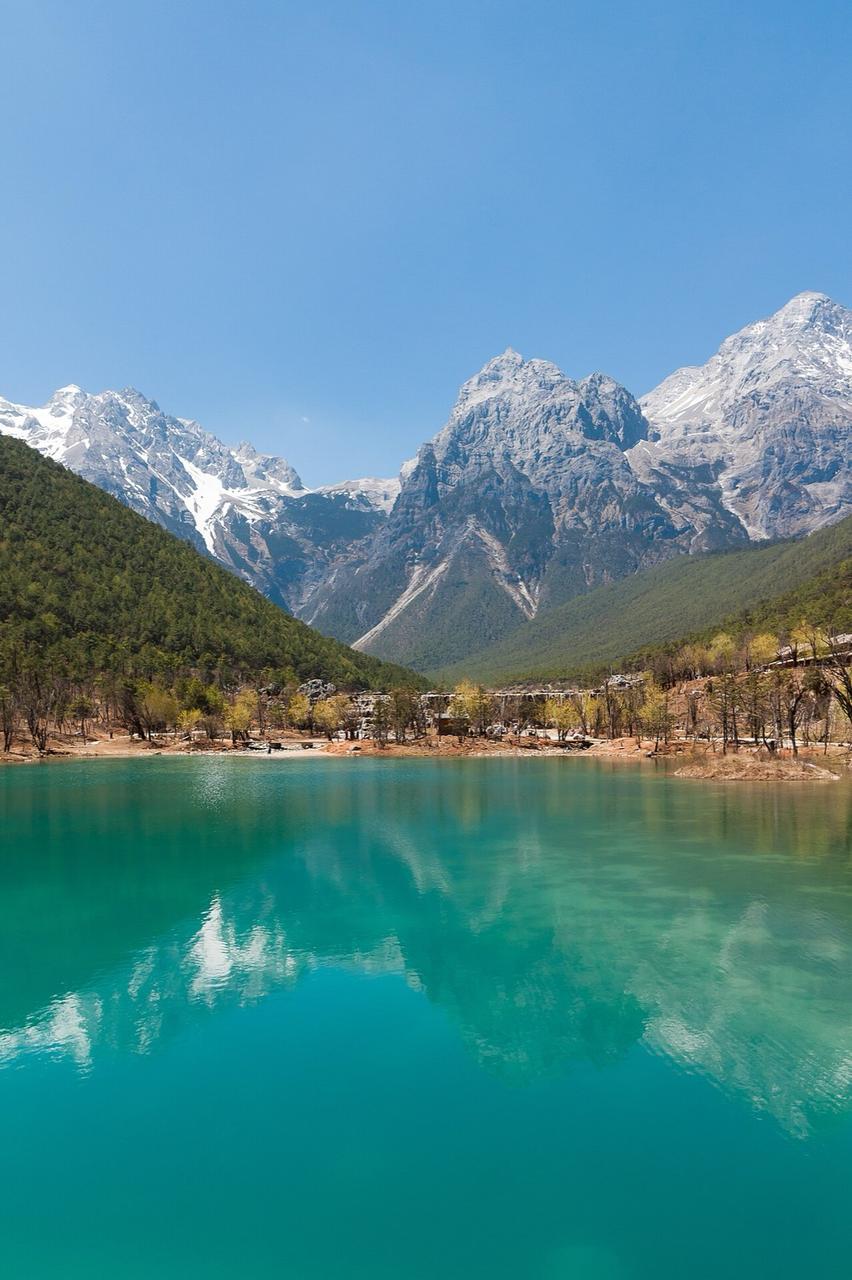
- Jade Dragon Snow Mountain — The southernmost snow mountain in the Northern Hemisphere. The Glacier cable car rises to 4,506 m; the Blue Moon Valley below gleams turquoise.
- Shangri-La — Tibetan region at 3,300m, home to Pudacuo National Park's alpine lakes and the golden roofs of Songzanlin Monastery.
- Lijiang Old Town — A UNESCO World Heritage Site and a center of Naxi Dongba culture, with the quieter Shuhe Ancient Town nearby.
- Multi-ethnic Culture — Yunnan is home to 26 ethnic groups: Bai Third Month Fair, Naxi Dongba, Tibetan Guozhuang dance, Dai Water-Splashing Festival.
- Vertical Climate — From tropical river valleys to snow-capped glaciers in a single day — "four seasons in one day, different weather every ten miles."
For overseas Chinese travelers from Singapore and Malaysia, Yunnan's unique value lies in offering highland cool-climate escapes and snow mountain experiences (which Southeast Asia has none of), while retaining a deeply familiar Chinese and ethnic minority culinary culture — crossing-the-bridge noodles, steam pot chicken, wild mushroom hotpot, flower cakes, Pu'er tea — both familiar and fresh. Direct flights from Singapore/KL to Kunming take only 3.5-4 hours, making it the closest Chinese highland destination.
Best Travel Seasons
Yunnan is a year-round destination, but the experience varies significantly by season. Here's a month-by-month breakdown:
| Month | Temperature Range | Landscape Features | Rating |
|---|---|---|---|
| Mar–Apr | 8–22°C | Spring blooms; Dali cherry blossoms & rapeseed flowers | ★★★★★ |
| May | 12–25°C | End of dry season; bluest skies; azalea season | ★★★★☆ |
| Jun–Aug | 15–26°C | Rainy season; great for escaping heat; occasional showers | ★★★☆ |
| Sep–Oct | 10–22°C | Crisp autumn air; blue skies; best value | ★★★★★ |
| Nov | 6–18°C | Autumn colors deepening; golden ginkgo villages | ★★★★ |
| Dec–Feb | 2–16°C | Best snow scenery on Jade Dragon Snow Mountain; fewer crowds | ★★★ (Winter route) |
Bottom line: March–May and September–October are the golden windows for Yunnan travel — sunny skies, flowers in bloom, comfortable temperatures. July-August is peak summer escape season but also the rainy season with frequent afternoon showers and the highest prices. December-February is great for Jade Dragon Snow Mountain snow scenery with fewer crowds and lower prices. Avoid the May Day and National Day Golden Weeks — overwhelmed with crowds.
What to Prepare Before Departure
Visa, altitude, clothing, and gear — don't overlook any of it.
Visa & Documents
Singapore passport holders: 30-day visa-free entry to China. No advance visa application needed. Ensure your passport is valid for at least six months.
Malaysian passport holders: 30-day visa-free entry to China (subject to 2026 policy). If your itinerary exceeds 30 days, apply for a visa in advance. Check the latest policy before traveling.
Yunnan: There are no additional restrictions for foreign visitors — same as visiting Beijing or Shanghai. Lijiang, Dali, and Shangri-La are open to all foreign visitors with valid documents; no special permits required. Foreign visitors in China should carry their passport at all times for hotel check-in and ticket purchases.
Carry ID at all times: Scenic areas and hotels may require you to present your passport. Bring photocopies as a backup.
Altitude Sickness
Yunnan travel routes ascend gradually in elevation. A well-paced itinerary gives your body time to acclimatize naturally:
- Kunming: approximately 1,900m — usually causes little to no discomfort
- Dali: approximately 2,000m — most travelers adjust well
- Lijiang: approximately 2,400m — a few people may feel mild dizziness
- Jade Dragon Snow Mountain Glacier Park: 4,506m — altitude sickness risk
- Shangri-La city: approximately 3,300m — a genuinely high altitude
- Pudacuo National Park: 3,500-4,000m — exercise caution
Recommendation: Stay two nights in Lijiang as a transition (natural acclimatization from 2,400m to 3,300m) before heading up to Shangri-La. The top station of the Jade Dragon Snow Mountain Glacier cable car is at 4,506 m with a stay of about 1-2 hours — prepare oxygen canisters in advance. Those with serious cardiovascular or respiratory conditions should consult a doctor before departure; they can opt to skip the large cable car and enjoy the equally beautiful Blue Moon Valley at the mountain base.
Clothing Checklist
Yunnan has dramatic day-night temperature swings — "four seasons in a single day." Even in May, Shangri-La mornings and evenings can drop to 5°C. We recommend the "multi-layer system":
- Outer layer: Windbreaker or light down jacket — essential for Jade Dragon Snow Mountain and Shangri-La mornings/evenings
- Mid layer: Long-sleeve T-shirts, thin fleece — for daytime wear in Dali and Lijiang
- Inner layer: Short-sleeve shirts — Dali and Lijiang daytime can reach 25°C from May to October
- Bottoms: Mainly long pants — practical for ancient town cobblestone streets and scenic area walking
- Shoes: One good pair of walking shoes/sneakers — ancient towns and mountain areas require walking; don't wear brand-new shoes
- Accessories: Sunglasses, hat (wide-brim), UV face gaiter
Special note: High-altitude UV radiation is extremely intense — you can get sunburned even on cloudy days. SPF50+ sunscreen is essential. June-August rainy season requires a foldable umbrella or raincoat; afternoon showers are common.
Gear Checklist
- Sun protection: SPF50+ sunscreen, UV400 sunglasses, wide-brim hat
- Medications: Motion sickness pills (mountain roads are winding), stomach medicine (dietary changes may cause discomfort), cold medicine, Rhodiola (optional, sometimes used to help with altitude adjustment), band-aids
- Electronics: Power bank (long drives drain your phone), car charger adapter
- Other: Insulated bottle (hot water on the road), wet wipes, a few snacks
- Luggage: One large suitcase + one carry-on per person recommended. Yunnan has many local specialties — Pu'er tea, flower cakes, silver jewelry.
Note: Jade Dragon Snow Mountain oxygen canisters can be purchased at convenience stores at the mountain base (about ¥10-20). Do not buy the "Three Treasures" package from travel agencies for ¥200.
How to Get to Yunnan and Travel Around

Yunnan's attractions are scattered along a 300 km corridor — your transport choices determine your travel experience.
Getting to Yunnan
Fly into Kunming Changshui International Airport (KMG) — this is the entry point for the vast majority of travelers.
From Singapore:
- Direct: Singapore–Kunming, approximately 4 hours (multiple airlines, good frequency)
- Connecting: Singapore–Guangzhou/Chengdu–Kunming, total 5-6 hours — lower prices
From Malaysia (Kuala Lumpur):
- Direct: Kuala Lumpur–Kunming, approximately 3.5 hours (AirAsia offers direct flights at very affordable prices)
- Connecting: Kuala Lumpur–Guangzhou/Chengdu–Kunming, total 5-6 hours
Tip: Kunming is one of the most convenient Chinese cities for direct flights from Southeast Asia — high frequency, relatively low prices. Book flights 1-2 months ahead. Peak season (July-August, Chinese New Year) prices double. AirAsia often has promotions; departing Kuala Lumpur offers excellent value.
Getting Around Yunnan
Yunnan's main travel corridor runs from Kunming to Dali, Lijiang, and Shangri-La, covering about 600 km in total. Driving times between attractions:
- Kunming–Dali: approx. 2 hours by high-speed train (recommended) or 4.5 hours by highway
- Dali–Lijiang: approx. 2 hours by highway
- Lijiang–Shangri-La: approx. 3.5 hours by highway (significantly shortened since 2024 highway opened)
- Lijiang–Jade Dragon Snow Mountain: approx. 40 minutes
Transport mode options:
- Private vehicle / custom tour (Recommended): 7-seat MPV with driver-guide, flexible stops, a flexible itinerary. Ideal for 4-6 person family trips.
- High-speed train + taxi: Kunming–Dali and Dali–Lijiang are connected by high-speed rail. Suitable for budget-conscious independent travelers.
- Self-drive: Roads are good but mountain roads are winding; can be tiring for drivers.
- Group tour bus: Cheapest but most exhausting — 6 AM wake-ups, 2 hours at shopping stops, 1 hour at attractions.
Core conclusion: Yunnan is much smaller than Xinjiang; transport is not the biggest cost factor. But attractions are concentrated along the Western Yunnan corridor — choosing the right transport method makes the difference. The key is to avoid shopping tours and falsely advertised 'pure sightseeing' tours.
Tour Arrangements: Industry Standard vs Our Approach
How Much Does a Yunnan Trip Cost
Based on an 8-day, 7-night Western Yunnan itinerary. Prices are shown primarily in USD, with RMB, MYR, and USD for reference.
The following costs are based on an 8-day 7-night itinerary, Kunming entry/exit, Dali–Lijiang–Shangri-La Western Yunnan route. Prices include full transport, accommodation, attraction tickets, and insurance; exclude round-trip flights and lunch/dinner. Actual prices fluctuate with group size, hotel tier, and season.
Cost Notes
- Included: Full private vehicle (fuel/tolls/parking), hotels (with breakfast), attraction tickets (including Jade Dragon Snow Mountain large cable car), ¥500,000 travel accident insurance, travel photoshoot, airport transfers
- Not included: Round-trip flights from origin to Kunming, lunch & dinner (recommend not pre-booking; driver-guide recommends local restaurants), personal expenses, visa fees (Singaporean, Malaysian, and most other passport holders enjoy visa-free entry)
- Meal cost reference: Lunch and dinner cost approximately USD 5–15 per person per day (approx. RMB 50-110) for excellent food — crossing-the-bridge noodles, steam pot chicken, wild mushroom hotpot
- Flight cost reference: Singapore/Kuala Lumpur round-trip to Kunming, booked early USD 185–375 peak season USD 375–675
Actual prices vary with vehicle type and hotel tier. Tell us your group size and travel dates, and a travel consultant will provide an exact quote.
Four Must-See Attractions
Erhai Lake, Jade Dragon Snow Mountain, Lijiang Old Town, Shangri-La — highlights and pitfalls for each.
Erhai Lake is Yunnan's second-largest freshwater lake, located in Dali City. At an elevation of 1,972 m and covering 252 km², it is shaped like a human ear — hence the name. The east and west shores offer dramatically different scenery — the west shore is known for pastoral scenery and ancient towns, while the east shore offers cliffside lake views.
Highlights:
- · West Route — Xizhou Ancient Town (Bai ethnic architecture), Haishe Park (peninsula jutting into the lake), Longkan Pier (sunrise viewing).
- · East Route — Shuanglang Ancient Town (cliffside lake views), Little Putuo Island (island in the lake), Haidongfang (best sunset spot).
- · Travel Photoshoot — Outfits provided, a staff photographer accompanies you — no selfie-stick struggles.
- · Lakeside Road — 130 km; every angle offers a different view.
Best time: March–May for clear skies and blue water. September–October for crisp autumn air. July–August rainy season makes the water appear greyish. It can be visited year-round, but sunny vs overcast days make a huge difference.
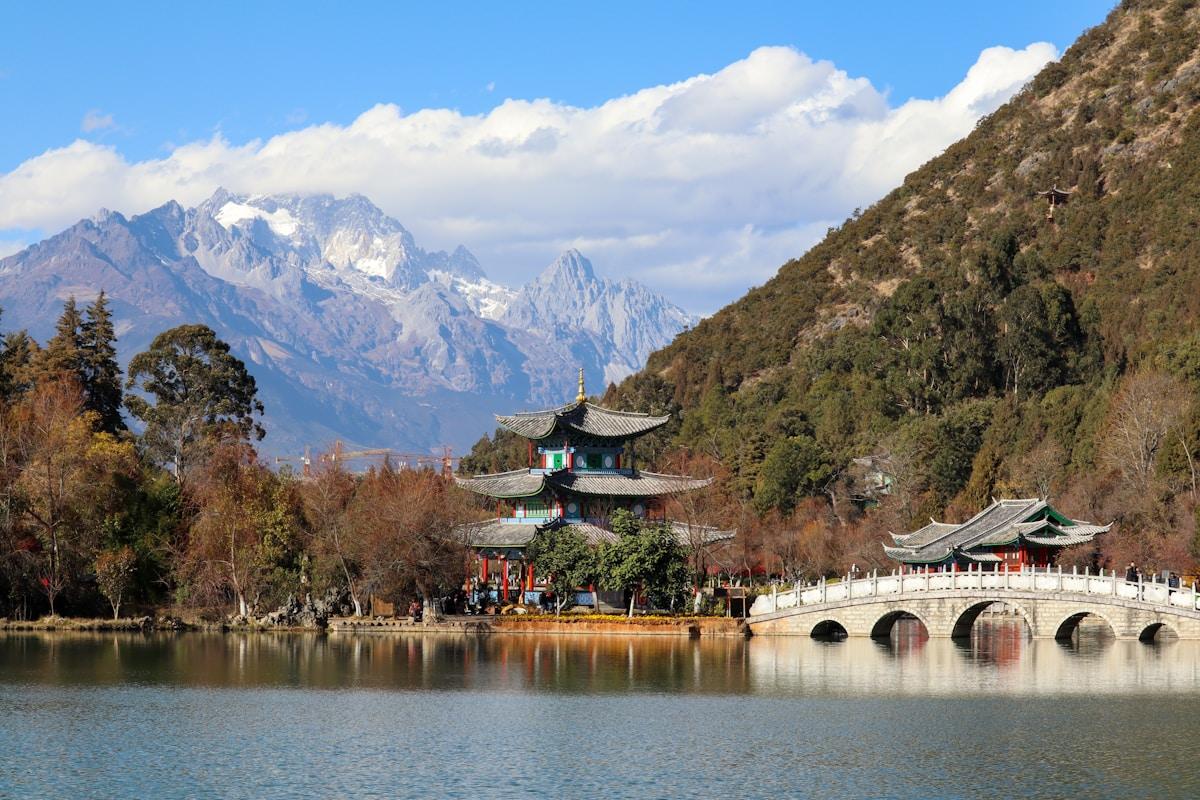
Jade Dragon Snow Mountain is located 15 km north of Lijiang City and is the southernmost snow mountain in the Northern Hemisphere. The main peak, Shanzidou, reaches 5,596m. The Glacier Large Cable Car ascends from 3,356 m to Glacier Park at 4,506 m — China's highest tourist cable car. The Blue Moon Valley at the mountain base has turquoise water.
Key Facts:
- · Three Cable Cars — Large (Glacier Park 4,506m), Middle (Yak Meadow 3,700m), Small (Spruce Meadow 3,240m).
- · Large cable car tickets must be booked 7 days in advance; nearly impossible to get during peak season.
- · Time at the summit is about 1-2 hours; high altitude requires oxygen.
- · Blue Moon Valley is at the base, no cable car is needed, and the area is easy to explore on foot.
Recommended plan: Morning: large cable car (smaller crowds); afternoon: Blue Moon Valley. Don't go up the cable car on rainy or foggy days — visibility will be poor and temperatures can be bitterly cold. Oxygen canisters cost ¥10-20 at mountain base convenience stores; don't fall for the travel agency's ¥200 "Three Treasures" package.

Lijiang Old Town was established in the late Song / early Yuan dynasty and was inscribed as a UNESCO World Heritage site in 1997. It is one of China's best-preserved ancient towns of the Naxi people. Shuhe Ancient Town, 4 km north of the main old town, is quieter and less commercialized.
Highlights:
- · Sifang Street — The old town center, where Naxi market traditions continue to this day.
- · Mu Mansion — The palace of the Naxi chieftains, often described as "the Forbidden City in the north, Mu Mansion in the south."
- · Shuhe Ancient Town — Quieter than Dayan Old Town; spring water runs through it.
- · Dongba Culture — Naxi pictographic script, the world's only living pictographic writing system.
Best time: Year-round. Early mornings are quietest and most pleasant; evenings are beautifully lit but crowded. During peak season (July–August and the Golden Weeks), the old town is packed shoulder to shoulder.
Shangri-La City (formerly Zhongdian) is in Diqing Tibetan Autonomous Prefecture at 3,300m elevation — Yunnan's only Tibetan region. Pudacuo National Park is China's first national park, at 3,500–4,000 m, featuring alpine lakes, primeval forests, and meadow pastures.
Highlights:
- · Shudu Lake — The park's centerpiece lake; boardwalk circuit takes about 1 hour.
- · Songzanlin Monastery — Yunnan's largest Tibetan Buddhist monastery, "the Little Potala Palace."
- · Dukezong Ancient Town — One of China's best-preserved Tibetan-style ancient towns.
- · Sightseeing Bus — Included in the park; no need for extensive walking.
Best time: May–October. May–June: azaleas in full bloom. July–August: greenest meadows. September–October: most beautiful autumn colors. Winter (November–March): some areas closed.
What to Eat in Yunnan

Crossing-the-bridge noodles, steam pot chicken, wild mushroom hotpot, flower cakes — restaurants locals actually eat at, not kickback traps.
Yunnan cuisine is one of the highlights of this trip. The following are not the kickback restaurants tour groups go to — they're where locals eat daily. Prices in RMB with USD reference.
Other Worth Trying
- Erkuai (Rice Cake) — Yunnan's breakfast staple: steamed rice pressed into cakes, grilled or stir-fried, served with sauce.
- Rushan (Milk Fan) — Dali Bai ethnic specialty: milk fermented and dried into fan shapes, fried or grilled.
- Naxi Grilled Fish — Lijiang specialty: whole fish grilled with spices, crispy outside, tender inside.
- Butter Tea — Shangri-La Tibetan region: yak butter + brick tea + salt; high-calorie, helps with altitude.
- Pu'er Tea — Yunnan's native tea: raw (sheng) is astringent, ripe (shou) is mellow. You can visit tea mountains and try picking tea leaves yourself.
Meal cost reference: USD 5–15 per person per day (approx. RMB 50-110) for excellent food. Group tour meals cost ¥30-40 per person but are poor quality — mass-cooked, pre-made. Find local restaurants yourself and eat three times better for the same money.
About Yunnan Travel
Start Planning Your Yunnan Trip
Tell us your group size and travel dates, and a travel consultant will customize your Yunnan itinerary.
Brand-Operated · Fully Licensed · ¥500K Travel Insurance · No Tipping
Key Takeaways
- Yunnan is in southwestern China, bordering Myanmar, Laos, and Vietnam, and its large elevation range creates very different climates, from snowy mountains to tropical rainforest.
- Most first-time visitors take the Western Yunnan route: Kunming, Dali, Lijiang, and Shangri-La, covering sites such as Erhai Lake, Lijiang Old Town, Jade Dragon Snow Mountain, and Pudacuo National Park.
- The guide says the best times to visit are March to May and September to October for comfortable weather, clear skies, and seasonal scenery. July and August are rainy and more expensive, while December to February is better for snow views with fewer crowds.
- Singapore passport holders can enter China visa-free for 30 days, and Malaysian passport holders can also enter visa-free for 30 days under the policy noted in the article. Foreign visitors do not need special permits for Yunnan, but should carry their passport for hotel check-in and ticket purchases.
Official resources
- Ministry of Culture and Tourism of the People's Republic of China (mct.gov.cn) — the national regulator for licensed travel agencies
- National Immigration Administration (nia.gov.cn) — official entry, exit, and immigration information for mainland China
- Consular Services, Ministry of Foreign Affairs (cs.mfa.gov.cn) — official consular information and travel notices