China Travel Preparation Checklist
Before departing from Singapore or Malaysia, get these things sorted — documents, clothing, medicine, electronics, payment, connectivity, insurance. Nothing complicated — just go down the list.
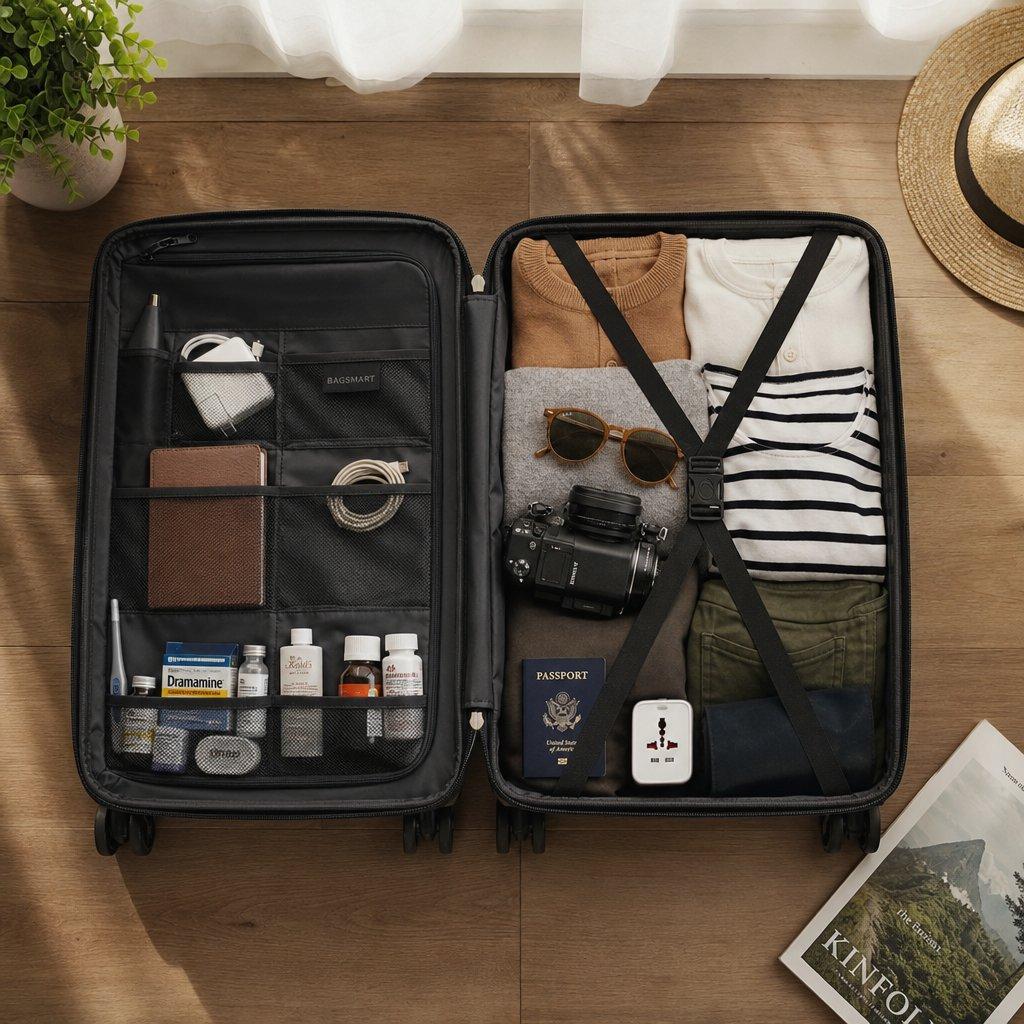
3 Document Checks Before Departure
Documents are the first checkpoint — miss one and you're stuck at the airport.
Passport
Your passport must be valid for more than 6 months (counting from your entry date into China). This is a hard requirement — if your passport has less than 6 months of validity, the airline may deny you boarding.
Tip: Take out your passport right now and check the expiry date. If it's expiring soon, Singapore passport renewal takes about 1–2 weeks, and Malaysian passport renewal is about 1–3 days (apply online). Don't wait until the week before departure to discover this.
Visa-Free Confirmation
Singapore passport holders get 30 days visa-free entry to China. Malaysian passport holders get 30 days visa-free. No need to apply for a visa in advance — just book your flight and go.
Note: The 30-day period includes the day of entry. For example, if you enter on the 1st, you must exit by 23:59 on the 30th at the latest. Visa-free durations vary by nationality — see our Multi-Country Visa-Free Guide to China for details.
No National ID Needed
Many overseas Chinese ask: do I need to bring my Chinese national ID card? No Chinese national ID card is needed for entry into China. You enter China with your passport, and that's all you need — hotel check-in, attraction tickets, train tickets all use your passport. If you are a foreign national of Chinese descent without a Chinese ID, your travel won't be affected at all.
Tip: Take a photo of your passport information page and save it on your phone. If your passport gets lost, having a photo will make replacement much easier.
What to Pack Depends on Your Destination
China is vast — in the same month of July, a mountain pass in Xinjiang could be 10°C while southern cities hit 35°C. Pack based on your destination and season.
Northern Xinjiang / Highland Areas (Xinjiang, Qinghai, Yunnan, Western Sichuan)
These regions have extreme day-night temperature swings. Take the Duku Highway in Xinjiang as an example: daytime temperatures in July reach 25°C, but crossing the Hashilegen Pass (approx. 3,400m altitude) can drop to 10°C or even lower.
Layered clothing is key:
- Outer layer: A windbreaker or light down jacket — essential for early mornings, evenings, and mountain passes; windproof and waterproof
- Mid layer: Long-sleeve T-shirts, light fleece — what you'll wear most of the day
- Base layer: Short sleeves — city temperatures can reach 30°C in July–August
- Bottoms: Long trousers preferred — convenient for walking through grasslands and canyons, and they provide UV protection
Core principle: You can always take layers off, but you can't put on what you didn't bring. Better to bring an extra light down jacket than to shiver at a mountain pass.
Southern Cities (Shanghai, Hangzhou, Guangzhou, Chengdu, etc.)
Summer (June–September) is hot and humid — 30–38°C is normal and it feels even hotter. Short sleeves and shorts are your staples, but indoor air-conditioning can be freezing (subway, shopping malls, restaurants). Keep a light jacket or sun-protective layer with you.
Winter (December–February) in the south is cold and damp — no central heating, so indoors feels as cold as outdoors. Bring a light down jacket, sweaters, and thermal underwear. Don't underestimate southern winters.
Footwear
A good pair of walking shoes is essential. You'll walk a lot when traveling in China — easily 10,000+ steps a day at scenic spots. Don't bring new shoes (blisters), and don't wear sandals (the terrain at scenic spots isn't suitable for them). If you're heading to grasslands, canyons, or mountain trails, bring non-slip walking shoes.
What Medications to Bring
We're not suggesting you carry an entire pharmacy — just a few key items that can save the day when it matters.
Everyday Medications
- Cold medicine — Big climate swings and the constant in-and-out of air-conditioned rooms make catching a cold easy. Bring the brand you're used to.
- Digestive medicine — Dietary changes can cause stomach upsets. Bring anti-diarrheal medicine (e.g., charcoal tablets, loperamide) and digestive enzymes.
- Band-aids — Essential for small scrapes; also useful for heels rubbed raw from all the walking.
- Allergy medicine — If you have a history of allergies, bring antihistamines. A change of environment and diet can trigger reactions.
Altitude Sickness Medication
If you're heading to Yunnan (Lijiang, Shangri-La), Qinghai (Qinghai Lake), or high-altitude areas in Xinjiang (Duku Highway passes at around 3,400m), consider preparing:
- Acetazolamide (Diamox) — For preventing and relieving altitude sickness. Start taking it 1–2 days before departure. Requires a doctor's prescription at pharmacies in Singapore and Malaysia.
- Ibuprofen — For relieving altitude-related headaches.
Most people won't feel significant effects below 2,500m. Most of northern Xinjiang sits between 1,000–2,500m, so the average person needn't worry. However, if you have cardiovascular or respiratory conditions, be sure to consult your doctor before heading to high altitudes.
Motion Sickness Medicine
Many scenic routes in China involve winding mountain roads — the Duku Highway, Jiuzhaigou, and Zhangjiajie are all full of switchbacks. If you're prone to motion sickness, bring medication (e.g., dimenhydrinate). Take it 30 minutes before getting in the vehicle — don't wait until you're already nauseous.
Phone, Charging, and Plugs
In modern travel, a dead phone is basically a lost person — don't forget these items.
Phone + Power Bank
Your phone goes without saying. A power bank is essential for traveling in China — you'll be out for 10+ hours a day, using your phone for navigation, photos, and payments.
Airline regulations: Power banks must be carried in your hand luggage — do not check them in. Power banks rated at 100Wh or below (roughly 27,000mAh) require no declaration; 100–160Wh needs airline approval. Over 160Wh is prohibited. Maximum 2 per person.
Pro tip: Bring two charging cables — one for the power bank, one for the hotel. This avoids the morning realization that both cables are back in the hotel room.
Plugs — Good News: No Adapter Needed
China uses Type A (two flat pins) and Type C (two round pins) sockets, 220V/50Hz. Singapore and Malaysian plugs (British-style three-prong square-pin BS 1363) won't fit into some Chinese sockets.
But here's the reality: hotel rooms generally have multi-standard sockets that accept British three-prong plugs. In most cases, you won't need an adapter. If you're staying somewhere other than a hotel (guesthouse, hostel), bring a universal adapter just in case.
Two-pin chargers for phones and cameras (USB chargers) work directly in China without any issues.
WiFi and Internet Access
Hotels and most restaurants have free WiFi. But when you're out and about, what you really need is mobile data — navigation, ride-hailing, and checking guides all happen on the go. See Section 6 below for connectivity solutions.
How to Pay — WeChat & Alipay Are King
China is a mobile payment society. Cash is barely used anywhere. Get your phone payments set up before departure and you'll breeze through when you arrive.
WeChat Pay / Alipay — Foreign Card Binding Guide
Both WeChat Pay and Alipay now support binding international bank cards (Visa, Mastercard). Link your card before departure and you can scan-to-pay the moment you land in China.
WeChat Pay binding steps:
- Open WeChat → Me → Services → Wallet → Bank Cards → Add Bank Card
- Enter your international Visa/Mastercard card number
- Fill in cardholder information and billing address
- Once verified, you're ready to scan and pay throughout China
Alipay binding steps are similar: Alipay → My → Bank Cards → Add Bank Card. Supports Visa and Mastercard issued by major banks in Singapore and Malaysia.
Note: WeChat/Alipay with foreign cards is primarily for consumer payments — some person-to-person transfer features may be restricted. For travelers, it's more than enough: scan-to-pay, ride-hailing, food delivery all work.
Cash — Just Bring a Small Amount
Carry some RMB cash as backup — the equivalent of USD 75–150 is plenty. Exchange before departure at a local money changer; rates are usually better than at the airport. Once in China, most transactions are electronic: street stalls take QR codes, ride-hailing takes QR codes, even buying a bottle of water is a scan.
Exchange tip: Get some 100 RMB and 50 RMB small-denomination notes. Large notes (100 RMB) may be difficult to break at small stalls.
Tipping Culture — China Has No Tipping
China doesn't have a tipping culture. Restaurants, hotels, taxis, and guides don't require tips. No need to budget extra for gratuities. If someone proactively asks for a tip, it's usually targeting foreign tourists — politely decline.
How to Get Online With Your Phone
There are 4 ways to stay connected in China, ranked by recommendation.
Option 1: Singapore / Malaysia Roaming (Most Convenient)
Activate an international roaming data plan on your existing mobile number before departure. Singapore's Singtel, StarHub, and M1 all have China data roaming packs, as do Malaysia's Maxis, Celcom, and Digi.
Pros: Works the moment you arrive, no SIM swap needed. WhatsApp, Google, and Instagram work as usual (roaming data routes through Singapore/Malaysia, bypassing China's network restrictions).
Cons: More expensive than a local SIM. Usually USD 5–10/day or USD 15–30/week.
Option 2: Local SIM Card (Cheapest)
Buy a prepaid China Mobile or China Unicom SIM at the airport after you arrive. Just show your passport to register.
Pros: Cheap — usually RMB 50–100 gets you dozens of GB. Having a Chinese phone number is handy for registering on apps and ordering food delivery.
Cons: Overseas services like WhatsApp, Google, and Instagram will be blocked (require a VPN). Also, once you swap SIMs, your original number won't receive SMS — worth noting if you need banking verification codes.
Option 3: eSIM (Recommended for Dual-SIM Phones)
If your phone supports eSIM, this is a balanced option. Purchase a China data eSIM before departure (via platforms like Airalo, Nomad, Holafly) and it auto-activates when you arrive in China.
Pros: No physical SIM swap — your original number keeps receiving SMS and calls. eSIM data routes through international gateways, so WhatsApp and Google keep working.
Cons: Data only — no Chinese phone number. eSIM pricing falls between roaming and local SIM.
Option 4: WiFi Rental
Rent a pocket WiFi device and use it once you're in China. Book online before departure and pick up/return at the airport.
Pros: Multiple people can share one device; no SIM swap needed.
Cons: One more device to carry and charge daily. Costs about USD 5–5/day. The experience isn't as seamless as using mobile data directly.
Travel Insurance — Don't Skimp on This
Insurance is the fundamental safety net for travel. Good news: if you choose a reputable travel service provider, insurance is usually already included.
LiMao Travel Includes Insurance
All LiMao Travel itineraries include RMB 500,000 travel accident insurance (approx. USD 68800 / MYR 317,000). This covers accidental injury, medical evacuation, lost belongings, and more. No additional purchase needed.
This is standard for quality bespoke tours — reputable travel service providers are required to purchase travel accident insurance for their guests. If a travel agency doesn't proactively mention insurance, or tells you to "buy your own," be wary.
What to Look for If Buying Your Own
If you're traveling independently or using another service provider, pay attention to these when buying travel insurance:
- Medical coverage — At least USD 37400 in medical coverage
- Emergency medical evacuation — If heading to high-altitude or remote areas, ensure helicopter rescue is covered
- Trip cancellation / delay — Losses from flight cancellations, weather disruptions, etc.
- Lost belongings — Compensation for lost phones, cameras, luggage
- Exclusions — Read carefully what's not covered (e.g., high-altitude mountaineering, extreme sports)
Common travel insurers in Singapore: AIG, AXA, FWD, NTUC Income. In Malaysia: Allianz, AIG, Tune Protect. Buy 1–2 days before departure — that's sufficient.
A Few Final Things
Comfortable Walking Shoes
A pair of already broken-in walking shoes. You'll walk 10,000+ steps daily — new shoes will almost certainly give you blisters. If heading to grasslands or canyons, grip is more important than style.
Sun Protection Trio: Sunscreen + Sunglasses + Hat
UV radiation is extremely strong in most of China's tourist regions — especially high-altitude areas (Xinjiang, Yunnan, Qinghai, Tibet) and coastal destinations (Sanya, Xiamen). Even on cloudy days, UV rays penetrate cloud cover.
- Sunscreen: SPF 50+, reapply every 2–3 hours. Don't just apply to your face — neck, ears, and the backs of your hands burn easily too.
- Sunglasses: UV400 protection; glare from snow at high altitudes is harsh.
- Hat: A wide-brim hat is ideal, a baseball cap works too — at minimum, protect your face and neck.
Rain Gear
A folding umbrella or lightweight rain jacket. China summers bring frequent showers — especially in the south (Shanghai, Hangzhou, Guangzhou) and mountainous areas (Zhangjiajie, Huangshan). It won't rain every day, but when it does, you'll appreciate having that umbrella.
Luggage Tips
One large suitcase plus one carry-on per person. Checked luggage within 23kg (economy class standard), carry-on within 7kg.
If you plan to shop in China — tea, silk, cultural souvenirs, snacks and local specialties — pack light on the way there to leave room for the return trip. Or bring a foldable duffel bag: pack it flat in your suitcase on the way there, then fill it on the way back.
Checked luggage liquids: each bottle must not exceed 100ml, all placed in a single transparent sealed bag. Be aware of altitude pressure differences — toothpaste, facial cleanser, and other sealed containers may "spit" their contents at high altitudes; pack them in sealed bags.
Frequently Asked Questions About Pre-Travel Preparation
Ready? Start Planning Your Trip
Tell us your group size and travel dates, and a travel consultant will customize your exclusive China journey.
Direct Brand · Fully Licensed · RMB 500K Travel Insurance · No Tipping
Frequently Asked Questions
Q: What should I prepare before departure? (A real client question)
The travel consultant will send a detailed pre-trip checklist: documents (passport, arrival card), clothing (based on destination season), medications, electronic devices, and more. Key reminders will be sent again before departure. Just follow the checklist — no need to worry about the rest.
Q: Do I need a visa to visit China? (A real client question)
Many passport holders can enter China visa-free for 30 days. Before departure, our travel consultant provides online guidance on filling out the arrival card to ensure smooth entry. If there are special circumstances, the travel consultant will inform you of required documents in advance.
Q: What are the Ten Commitments? What happens if there's a breach? (A real client question)
Ten Commitments: 1. All-inclusive pricing (no extra payments after arrival) 2. Pure sightseeing, no shopping stops 3. Hotel confirmed upon booking (the hotel name provided is the final accommodation; otherwise upgraded to a better one) 4. The main contract matches all appendices 5. Driver-guide does not solicit tips 6. The vehicle will not be changed during the trip 7. No skipped attractions 8. 500,000 RMB travel accident insurance 9. No subcontracting, no dropping guests mid-tour 10. One booking, one vehicle, no group merging. Breach consequences: Double compensation applies to any breached item (written into the contract; paid upon breach). Problem resolution and compensation are handled independently. For hotel situations, we first attempt to upgrade to a higher standard; if upgrade is impossible, compensation follows the breach terms.
Q: Why is our customer satisfaction so high? (A real client question)
Satisfaction comes from three dimensions: First, no deception — Ten Commitments written into the contract, double compensation for any single breach; Second, more value for the same price — structural enhancements (high-speed rail to Jiuzhaigou saving 6 hours on mountain roads, full Duku Highway route, complete Erhai Lake loop, Jade Dragon Snow Mountain Glacier Cableway, first entry at every scenic spot); Third, someone has your back when things go wrong — a travel consultant follows through pre-trip, during, and post-trip; direct management of driver-guides; independent quality inspections; at least one company leader in the group chat.
Q: How does the team operate? (A real client question)
Travel Consultant (the person communicating with you — follows through pre-trip, during, and post-trip) + Driver-Guide (is familiar with the preferences of overseas Chinese travelers, on fixed salary, no shopping involvement) + Quality Supervisor (independent audits, not under the sales department) + At least one company leader in the group chat (to make decisions on escalated issues). We don't just hand groups over to driver-guides and step back — the entire chain is in the brand's hands.
---
Key Takeaways
- Check your passport first: it must be valid for more than 6 months from your entry date into China, or the airline may deny boarding. The article also says Singapore and Malaysian passport holders can enter China visa-free for 30 days, counting from the day of entry.
- You do not need a Chinese national ID card for entry or travel arrangements in China if you are entering on a passport. The article suggests saving a photo of your passport information page on your phone in case the passport is lost.
- Pack for your destination and season because temperatures vary widely across China. Highland and northern areas may need layered clothing, while southern cities can be very hot in summer and cold and damp in winter.
- Bring comfortable walking shoes and avoid new shoes or sandals, since travel in China often involves a lot of walking and uneven terrain at scenic spots. Non-slip walking shoes are recommended for grasslands, canyons, and mountain trails.
- The medication list focuses on practical basics such as cold medicine, digestive medicine, band-aids, allergy medicine, and motion sickness medicine if needed. For higher-altitude destinations like parts of Yunnan, Qinghai, and Xinjiang, the article says travelers may consider altitude sickness medication and should consult a doctor if they have cardiovascular or respiratory conditions.
Official resources
- Ministry of Culture and Tourism of the People's Republic of China (mct.gov.cn) — the national regulator for licensed travel agencies
- National Immigration Administration (nia.gov.cn) — official entry, exit, and immigration information for mainland China
- Consular Services, Ministry of Foreign Affairs (cs.mfa.gov.cn) — official consular information and travel notices