China Visa-Free Travel Guide (2026 Latest)
30 days visa-free for Singapore and Malaysia. Which passports qualify, how long you can stay, how to enter, what to watch for at customs, and what to do if you overstay — a clear, comprehensive guide.
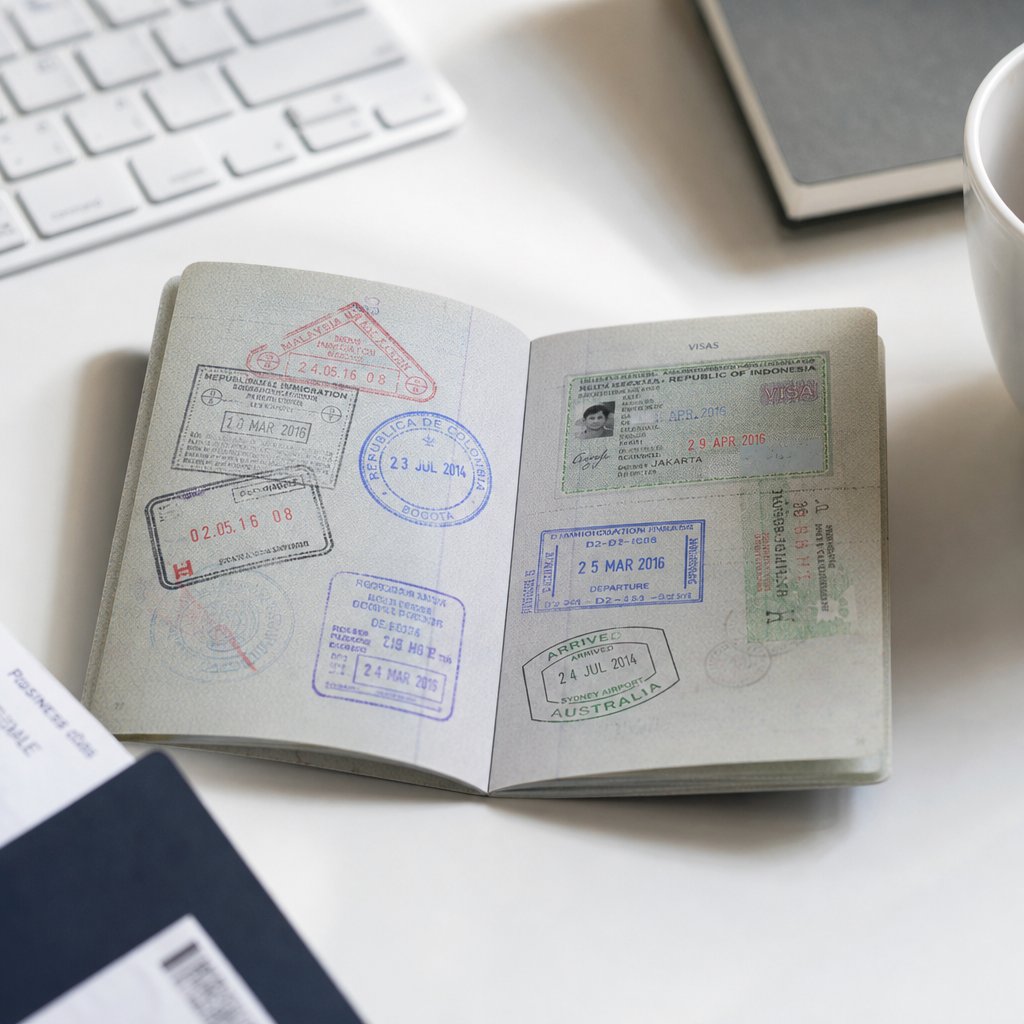
2026: China's Visa-Free Access for Multiple Countries
The main source countries for overseas Chinese travelers are all on the visa-free list — but the number of days differs. Don't mix them up.
Policy Background
Since late 2023, China has been steadily expanding its visa-free "circle of friends." By 2026, dozens of countries' passport holders can enter mainland China visa-free. For overseas Chinese travelers, the two most important countries — Singapore and Malaysia — are both included in the visa-free scope.
Visa-free entry refers to entering mainland China without applying for a visa in advance through a Chinese embassy or visa center. Buy a flight ticket, bring your passport, and you're good to go. However, visa-free does not mean unlimited — there are maximum stay limits, port restrictions, and entry inspections. Exceeding the allowed days or violating regulations carries serious consequences.
Visa-Free Eligibility (General)
- A valid passport with at least 6 months of validity
- Round-trip ticket or onward ticket to a third country (proof you will leave)
- Hotel booking or invitation letter (proof of accommodation)
- Sufficient travel funds (cash or bank card) — border officers may spot-check
- No record on China's entry/exit blacklist
- Purpose of visit: tourism, business, family visit, transit (not work or study)
Note: Visa-free entry is only for short-term visits. If you plan to work, study long-term, or reside in China, you still need to apply for the appropriate visa.
Singapore Passport: 30 Days Visa-Free
Since February 9, 2024, the China-Singapore mutual visa exemption has been in effect.
Visa-Free Details
- Visa-free days: 30 days (counting from the day of entry)
- Eligible passport: Singapore ordinary passport (diplomatic and official passports have separate arrangements)
- Permitted purposes: tourism, business, family visit, transit
- Ports of entry: all of China's open ports
- Effective date: February 9, 2024 (Chinese New Year's Eve)
How the 30-Day Period Is Calculated
The day you enter counts as Day 1. For example, if you enter on June 1, you must exit by 23:59 on June 30 at the latest. It's not 30 nights — it's 30 calendar days, with the entry day counted as Day 1.
Is 30 days enough for you? Most China tour itineraries run 7–14 days — 30 days is more than enough. Even if you want to travel extensively across several provinces, 30 days is fully sufficient.
If You Need More Than 30 Days
If your itinerary genuinely exceeds 30 days, you need to apply for the appropriate visa (usually an L tourist visa or Q2 family visit visa) at a China Visa Application Service Center before departure. Singapore's visa center is on Robinson Road. You cannot enter visa-free first and then apply for an extension within China — tourist visa-free entries generally do not allow in-country extensions.
Malaysia Passport: 30 Days Visa-Free
This is where many Malaysian travelers get it wrong — they only realize at customs that they don't have enough days.
Important: Malaysia passport holders get 30 days visa-free. Following the China-Malaysia Mutual Visa Exemption Agreement effective July 17, 2025, Malaysian travelers can now enjoy a 30-day visa-free stay. The 30 days are counted from the day of entry. For example, if you enter on June 1, you must exit by 23:59 on June 30 at the latest.
Visa-Free Details
- Visa-free days: 30 days (counting from the day of entry, inclusive)
- Eligible passport: Malaysia ordinary passport
- Permitted purposes: tourism, business, family visit, transit
- Policy validity: Mutual visa exemption agreement effective July 17, 2025; no expiration date has been announced
Is 30 Days Enough?
For most travel itineraries, 30 days is sufficient. Typical China tour durations:
- Xinjiang Ili Loop: 7–9 days
- Beijing–Xi'an–Shanghai classic route: 8–10 days
- Yunnan Kunming–Dali–Lijiang: 6–8 days
- Sichuan Jiuzhaigou + Chengdu: 5–7 days
30 days allows for a fairly extensive itinerary. If you're planning more than 30 days — for example, covering both northern and southern Xinjiang, or a long-distance trip across multiple provinces — it's recommended to apply for a tourist visa in advance.
Day Counting Examples
Let's make this crystal clear — all of these examples are 30 days:
- Enter June 1 → must exit by 23:59 on June 30
- Enter June 10 → must exit by 23:59 on July 9
- Enter December 20 → must exit by 23:59 on January 18, 2026
Key: entry day = Day 1, not Day 0. The exit day is not counted toward the stay (as long as you leave before 23:59 that day).
Visa-Free Days for Other Common Passports
This page reflects visa-free policies as of 2026. Policies may change — it's recommended to check the latest information on the Chinese embassy/consulate website in your country before departure.
| Country / Region | Visa-Free Days | Notes |
|---|---|---|
| Singapore | 30 days | Mutual visa exemption from Feb 9, 2024; permanent |
| Malaysia | 30 days | Mutual visa exemption effective Jul 17, 2025 |
| Japan | 30 days | Visa exemption restored on Nov 30, 2024 |
| South Korea | 30 days | Visa exemption restored on Nov 8, 2024 |
| Brunei | 30 days | Valid long-term |
| Thailand | 30 days | China-Thailand mutual visa exemption effective Mar 1, 2024 |
| France | 30 days | Pilot program extended to Dec 31, 2026 |
| Germany | 30 days | Pilot program extended to Dec 31, 2026 |
| Italy | 30 days | Pilot program extended to Dec 31, 2026 |
| Spain | 30 days | Pilot program extended to Dec 31, 2026 |
| Netherlands | 30 days | Pilot program extended to Dec 31, 2026 |
| Switzerland | 30 days | Included in visa-free pilot from Mar 14, 2024 |
| Ireland | 30 days | Included in visa-free pilot from Mar 14, 2024 |
| Australia | 30 days | Included in visa-free pilot from Jul 1, 2024 |
| New Zealand | 30 days | Included in visa-free pilot from Jul 1, 2024 |
Note: The above reflects visa-free policies for ordinary passports. Diplomatic and official passports may have different arrangements. The 30-day visa-free access for European countries is a unilateral pilot program, currently extended to December 31, 2026. Whether it will be renewed beyond that date is subject to official announcements. Always check the Chinese embassy/consulate website in your country before departure.
From Plane to Arrival Hall — Step by Step
First time can be nerve-wracking, but it's actually quite simple.
Step by Step
1. Disembark → Follow "Arrival / Immigration" signs
After getting off the plane, follow the corridor and look for signs that say "Immigration" and "Arrivals" Don't follow people who are transiting.
2. Fill out the Entry Card (if not completed online in advance)
Near the immigration hall, there are entry card filling stations. Information required: name, passport number, flight number, address in China (your first night's hotel address is fine), purpose of entry (check "Tourism"). Many ports now support online pre-filling (China Customs Passenger Fingertip Service mini-program). Fill it out before departure and scan the QR code on arrival for faster processing.
3. Queue → Choose the "Foreign Passport" lane
Pay close attention to the lane signage. Choose the "Foreign Passport" or "Foreigners" lane. Do not queue in the "Chinese Citizen" lane.
4. Present Passport → Border Officer Inspection
Hand your passport to the border officer. You may need to remove your mask, look at the camera for a photo, and provide fingerprints (index fingers of both hands). The officer may ask a few simple questions: What are you doing in China? How many days? Where are you staying? — Answer truthfully. Your permitted stay duration is based on the entry stamp the officer places in your passport; next to the stamp, they will handwrite the date by which you must depart.
5. Stamped Through → Collect Luggage
After passing immigration, check the electronic screen to find the baggage carousel number for your flight. Collect your luggage.
6. Customs Inspection → Exit
If you have nothing to declare, go through the "Nothing to Declare / Green Channel" and exit directly. If you have items to declare, use the "Goods to Declare / Red Channel." Once you reach the arrivals hall, you've officially entered China.
About Automated Gates
Some of China's large airports (Beijing Capital, Shanghai Pudong, Guangzhou Baiyun, etc.) have opened automated clearance gates for foreigners. If you hold an eligible e-passport, you can use the automated gates — scan passport, fingerprint, photo, and you're through in seconds. Currently, automated gates are primarily open to frequent travelers. First-time visa-free entrants are recommended to use the manual counters.
What You Can and Cannot Bring
The most easily overlooked part — bringing the wrong items can lead to fines or confiscation.
🚫 Prohibited Items (Most Common):
- ✕ Meat & meat products — jerky (beef, pork), sausages, meat floss bread, etc.
- ✕ Fresh fruits & vegetables — whole fruits, cut fruit platters, fresh vegetables
- ✕ Dairy products — fresh milk, yogurt, cheese, etc.
- ✕ Eggs — raw eggs, salted eggs, etc.
Items That Must Be Declared
- Cash: Carrying more than 20,000 RMB, or equivalent foreign currency exceeding 5,000 USD, must be declared in writing to customs. Failure to declare can result in confiscation of the excess and fines.
- Animal & plant products: Seeds, seedlings, soil, animal specimens, etc. require quarantine declaration.
- Radio equipment: Walkie-talkies, drones, etc. require declaration and approval.
- Tobacco & alcohol: Duty-free allowance is 400 cigarettes (2 cartons) or 100 cigars or 500g of tobacco; 1.5L of alcohol (≥12% ABV). Excess amounts must be declared and taxed.
Duty-Free Allowance
- Resident travelers (those residing in China): duty-free allowance of 5,000 RMB
- Non-resident travelers (those not residing in China, including you): duty-free allowance of 2,000 RMB
- Shopping in Hong Kong and Macau has separate duty-free regulations.
Everyday travel generally won't exceed the duty-free allowance — bringing a few clothes and personal items won't trigger customs duties. However, if you buy high-value items in China (luxury goods, phones, laptops) and take them out of the country, amounts exceeding the allowance on exit may require declaration and tax payment.
Special Note: Medications
Reasonable personal-use quantities of prescription medication are allowed, but it's recommended to:
- Bring the original packaging and doctor's prescription (English is fine; having a translated copy as backup is ideal)
- For psychotropic medications (sleeping pills, antidepressants, etc.), be sure to bring the prescription — some ingredients are controlled substances in China
- There are restrictions on taking Chinese herbal medicines and proprietary Chinese medicines out of the country — products containing endangered species ingredients (musk, tiger bone, etc.) are prohibited
If You Overstay — What to Do and What the Consequences Are
Overstaying is not the end of the world, but you absolutely must not ignore it. The sooner you deal with it, the lighter the consequences.
⚠️ Consequences of Overstaying: Fine of 500 RMB per day (up to 10,000 RMB total). In serious cases (e.g., prolonged overstay), you may face 5–15 days of administrative detention; those with violation records may be denied future visas or entry.
If You've Already Overstayed — Act Immediately
1. Go to the local Public Security Bureau Exit-Entry Administration
Go to the municipal PSB Exit-Entry Administration office where you are located. Bring your passport and accommodation registration certificate (provided by your hotel). Explain the situation and apply for an extension or accept the penalty.
2. Apply for an Extension
If the overstay is due to a valid reason (e.g., hospitalization, flight cancellation, or other force majeure), you can apply for a stay extension. You'll need to provide supporting documentation (hospital diagnosis, flight cancellation notice, etc.). Approval may take 1–5 working days.
3. Pay the Fine
Once the overstay is confirmed, pay the fine by the day — 500 RMB per day. After paying the fine in full, depart within the specified period.
4. Do NOT Go Straight to the Airport
Don't assume you can just pay the fine at the airport and leave — if exit border control discovers the overstay, it's not as simple as paying and being released. For serious overstays, border control has the authority to detain you and refer the case to the Exit-Entry Administration. During processing, you can only stay at a designated location and cannot move freely.
How to Avoid Overstaying
- Check the entry stamp: When the border officer handwrites the permitted stay end date, confirm it clearly on the spot. If it's not legible, ask immediately.
- Set a phone reminder: On the day you enter, set a reminder in your phone calendar for the departure deadline.
- Malaysian travelers, take special note: 30 days is easy to miscount — especially when crossing months. Entering June 1 → June 30 is the latest departure day.
- Leave a 1–2 day buffer: Don't schedule an 11 PM flight on Day 30. If the flight is delayed, you're overstaying. It's recommended to set your latest departure for the second-to-last day.
Frequently Asked Questions About Visa-Free Entry
Ready to depart?
Tell us your group size and travel dates — a travel consultant will customize your China journey.
Direct brand · Fully licensed · 500K travel accident insurance · No tipping
Frequently Asked Questions
Q: Do I need a visa to visit China? (A real client question)
Many passport holders can enter China visa-free for 30 days. Before departure, our travel consultant provides online guidance on filling out the arrival card to ensure smooth entry. If there are special circumstances, the travel consultant will inform you of required documents in advance.
Q: What should I prepare before departure? (A real client question)
The travel consultant will send a detailed pre-trip checklist: documents (passport, arrival card), clothing (based on destination season), medications, electronic devices, and more. Key reminders will be sent again before departure. Just follow the checklist — no need to worry about the rest.
Q: What are the Ten Commitments? What happens if there's a breach? (A real client question)
Ten Commitments: 1. All-inclusive pricing (no extra payments after arrival) 2. Pure sightseeing, no shopping stops 3. Hotel confirmed upon booking (the hotel name provided is the final accommodation; otherwise upgraded to a better one) 4. The main contract matches all appendices 5. Driver-guide does not solicit tips 6. The vehicle will not be changed during the trip 7. No skipped attractions 8. 500,000 RMB travel accident insurance 9. No subcontracting, no dropping guests mid-tour 10. One booking, one vehicle, no group merging. Breach consequences: Double compensation applies to any breached item (written into the contract; paid upon breach). Problem resolution and compensation are handled independently. For hotel situations, we first attempt to upgrade to a higher standard; if upgrade is impossible, compensation follows the breach terms.
Q: Why is our customer satisfaction so high? (A real client question)
Satisfaction comes from three dimensions: First, no deception — Ten Commitments written into the contract, double compensation for any single breach; Second, more value for the same price — structural enhancements (high-speed rail to Jiuzhaigou saving 6 hours on mountain roads, full Duku Highway route, complete Erhai Lake loop, Jade Dragon Snow Mountain Glacier Cableway, first entry at every scenic spot); Third, someone has your back when things go wrong — a travel consultant follows through pre-trip, during, and post-trip; direct management of driver-guides; independent quality inspections; at least one company leader in the group chat.
Q: How does the team operate? (A real client question)
Travel Consultant (the person communicating with you — follows through pre-trip, during, and post-trip) + Driver-Guide (is familiar with the preferences of overseas Chinese travelers, on fixed salary, no shopping involvement) + Quality Supervisor (independent audits, not under the sales department) + At least one company leader in the group chat (to make decisions on escalated issues). We don't just hand groups over to driver-guides and step back — the entire chain is in the brand's hands.
---
Key Takeaways
- China allows visa-free short-term entry for multiple countries in 2026, including Singapore and Malaysia. Visa-free entry still has limits: travelers must meet entry requirements and stay only for approved purposes such as tourism, business, family visits, or transit.
- Singapore ordinary passport holders can enter mainland China visa-free for 30 calendar days, counted from the day of entry. The policy has been in effect since February 9, 2024, and applies through all of China's open ports.
- Malaysia ordinary passport holders also receive 30 calendar days visa-free, counted from the day of entry. This follows the China-Malaysia mutual visa exemption agreement effective July 17, 2025.
- To use visa-free entry, travelers generally need a passport valid for at least 6 months, proof of onward or return travel, proof of accommodation, sufficient funds, and no entry/exit blacklist record. Visa-free entry is not for work, study, or long-term residence.
- If a trip will exceed 30 days, travelers need to apply for the appropriate visa before departure. The article says tourist visa-free entries generally do not allow in-country extensions.
Official resources
- Ministry of Culture and Tourism of the People's Republic of China (mct.gov.cn) — the national regulator for licensed travel agencies
- National Immigration Administration (nia.gov.cn) — official entry, exit, and immigration information for mainland China
- Consular Services, Ministry of Foreign Affairs (cs.mfa.gov.cn) — official consular information and travel notices